



The cavernous union meeting hall felt even bigger with so few people. Eight Labcorp drivers and a union organizer sat in metal chairs at the International Union of Painters and Allied Trades’ (IUPAT) District Council 77 headquarters in Decatur, with four more drivers on Zoom.
About 20 minutes into the meeting, Cam Michelson, an IUPAT organizer, called attention to the sparse attendance: “This is our third meeting of the year,” he said. “It should be the largest. Instead, it’s the smallest so far. Why?”
What followed were several hours of self-critique from the Labcorp drivers about their 18-month effort to unionize nearly 70 of the national medical lab company’s Tucker employees – so far, unsuccessfully. That alternated with complaints about workplace conditions, including low pay, insufficient sick leave coverage, and a general feeling of being disrespected.
The gathering last month at IUPAT’s headquarters could have been a snapshot of any union drive at a low point, with a few workers and a union representative trying to figure out how to revive interest.
The Labcorp push to join the painters’ union had sailed through a “card check” in November 2022, when about 70% of the Tucker shop’s drivers signed cards in favor of joining the union. Even so, just two months later the Labcorp drivers voted down the union by 39-22 in an election overseen by the National Labor Relations Board (NLRB) – the federal agency charged with protecting the rights of workers to organize.
But this meeting was different for two reasons: Michelson, the IUPAT organizer, told the Labcorp workers that a pending NLRB decision about unfair labor practices charges that the union has filed against Labcorp could give them another shot at unionizing – and, a driver for Labcorp competitor Quest Diagnostics was in the room to lend support.
Quest driver gives back
The Quest driver, Antwyan Wilson, had successfully helped organize his fellow workers to unionize, winning their election last October. His fellow workers, also based in Tucker, voted by 29 to 17 to join Teamsters Local 728. “These workers overcame an aggressive anti-union campaign at Quest and successfully voted to organize their facility,” Teamsters Local 728 president Matt Higdon said in an announcement at the time.
Wilson was at the Labcorp workers’ meeting, he later told Atlanta Civic Circle, “to hopefully help them gain some traction – to get a union in there.”
The Quest driver said it was the failed union drive at Labcorp that had inspired him to try harder to organize his own workplace. “I wanted to do what they didn’t do,” said the Atlanta native. Now, Wilson said, he “want[ed] to give back” to the Labcorp workers.
Labcorp and Quest did not respond to requests for comment for this story.
NLRB game-changer?
Meanwhile, Michelson thinks the pending NLRB decision over IUPAT’s claims that management unlawfully interfered in the Labcorp election could provide a path for the Labcorp drivers to unionize. The painters’ union alleges election interference between the November 2022 card check and the January 2023 election.
According to Michelson, Labcorp held 15 hours of mandatory meetings before the election where management and its hired personnel portrayed union representation in as negative a light as possible. Management also threatened to take away an important benefit from drivers if they unionized, he said: personal use of their delivery vehicles.
Janet Aviles, a Labcorp driver for five years, described mandatory meetings before the January 2023 election where a “union buster said we’re going to take away your cars.”
“Right now, there’s a fear of losing their cars” among the Labcorp drivers, Michelson said, which he thinks may have caused a majority to vote against the union. “There’s a comfort in what they know.”
Cemex decision
If the NLRB decides that Labcorp management violated election rules, its board can set aside the election and recognize the union, according to a landmark ruling it issued last August in a case called Cemex. Election interference includes threatening the loss of jobs and benefits and holding mandatory meetings for workers to listen to anti-union speeches in the 24 hours before an election starts.
The NLRB’s Cemex decision establishes a new framework for the agency to recognize unions. In it, the NLRB board found that Cemex Construction Materials Pacific “had engaged in more than 20 instances of objectionable or unlawful misconduct during the critical period between the filing of the election petition and the election.”
Consequently, the NLRB board decided that Cemex’s behavior nullified the election and the employees had the right to collectively bargain through a union. “The Cemex decision reaffirms that elections are not the only appropriate path for seeking union representation, while also ensuring that, when elections take place, they occur in a fair election environment,” said NLRB chairperson Lauren McFerran in an announcement.
Following the Cemex decision, if the NLRB decides that an employer engages in misconduct in the runup to a union election, then it can order the employer to immediately recognize the union and bargain for a contract in good faith. Before Cemex, the remedy was to hold a “do-over” election.
What’s more, the NLRB board’s August 2023 ruling is retroactive, so it applies to the January 2023 Labcorp election, Michelson said.
The Cemex decision is so new, according to an NLRB spokesperson, that the agency has yet to issue many election misconduct decisions based on its framework. The spokesperson declined to comment on the Labcorp case, and couldn’t say how long the NLRB’s decision on the painter’s union’s charges would take.
Michelson feels confident that the NLRB will rule for the Labcorp drivers and order the company to recognize the union. But the renewed organizing effort is important, he said, because IUPAT “needs workers on board for leverage” when it comes time to negotiate a contract with Labcorp.
Pay and sick leave
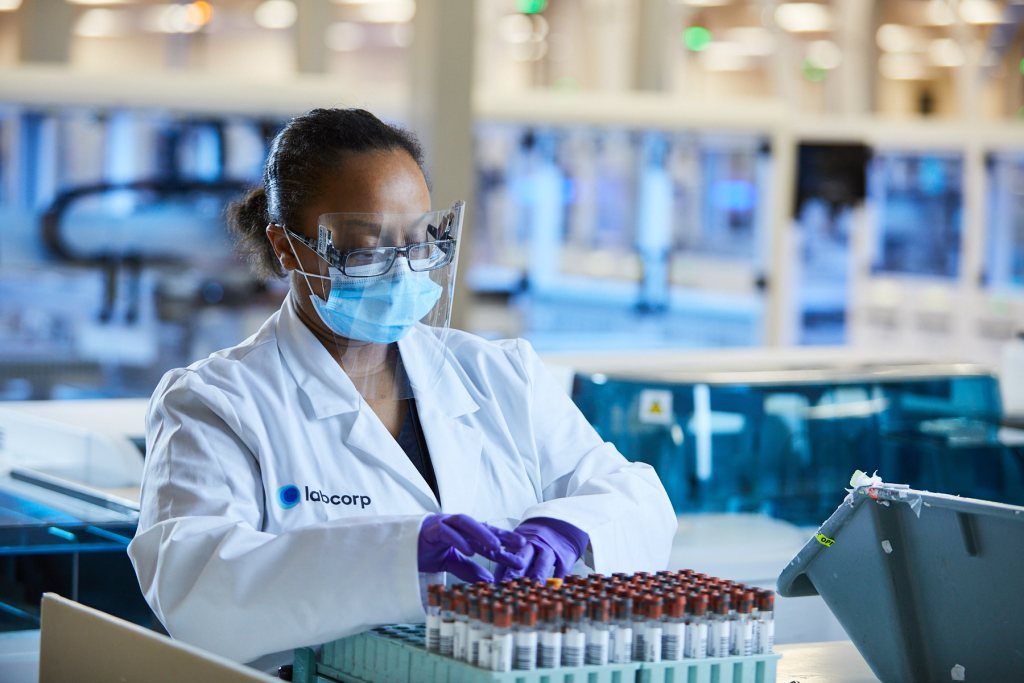
Several Labcorp drivers at the IUTAP meeting told Atlanta Civic Circle they’re continuing to push for a union because of concerns about pay, sick leave, and health insurance.
Aviles, who has helped organize the union effort, said the company didn’t reward seniority with higher pay, and that needed to change. “People are working there 20 years, and making the same as people there three months.”
Monica Patrick said that in 20 years driving for Labcorp, her pay has only increased from $11 to $20 an hour. After inflation, that’s an increase of just $2.84 per hour. For years, Patrick said, she’s had to work about 20 hours a week of overtime to keep up with bills.
Sick leave and insurance is another concern. Patrick said she wants union representation for “better pay and better benefits, with more [health insurance] coverage.”
Patrick, who just turned 50, caught COVID-19 in the summer of 2022. That fall, she started having bad dizzy spells, sometimes while driving. On Jan. 28, 2023, while working on a Saturday, she experienced such a severe spell that she had to pull off of I-285 and call her husband to pick her up.
In the months that followed, Patrick said, she learned she had a benign but inoperable brain tumor, and she lost hearing in her left ear. Patrick missed work for nearly six months, but said she had to return in order not to lose health insurance. She currently isn’t suffering the same sort of dizzy spells, but said she’s supposed to undergo an MRI every six months to monitor the tumor – and can’t afford it, even with insurance.
“I’m just hoping we get the respect we deserve,” she said. “It almost feels like we’re so beneath them – but in my opinion, we’re the ones who keep the company afloat.”
Wilson, like the Labcorp workers interviewed for this story, said drivers generally like their jobs; it’s the treatment they want to change. The Quest driver mentioned the role they played at the height of the pandemic, transporting tens of thousands of COVID-19 tests. “They say we’re important – so pay us like we are! And it’s not just about pay – it’s vacation and other things.”
At the union hall meeting last month, there was talk of workers from both companies having a picnic together, or going bowling. Afterward, Wilson confirmed that bowling was scheduled for late April.
“We need to air out misconceptions,” Wilson said. “Both companies are doing us dirty. They will continue to do us dirty, unless we band together.”