

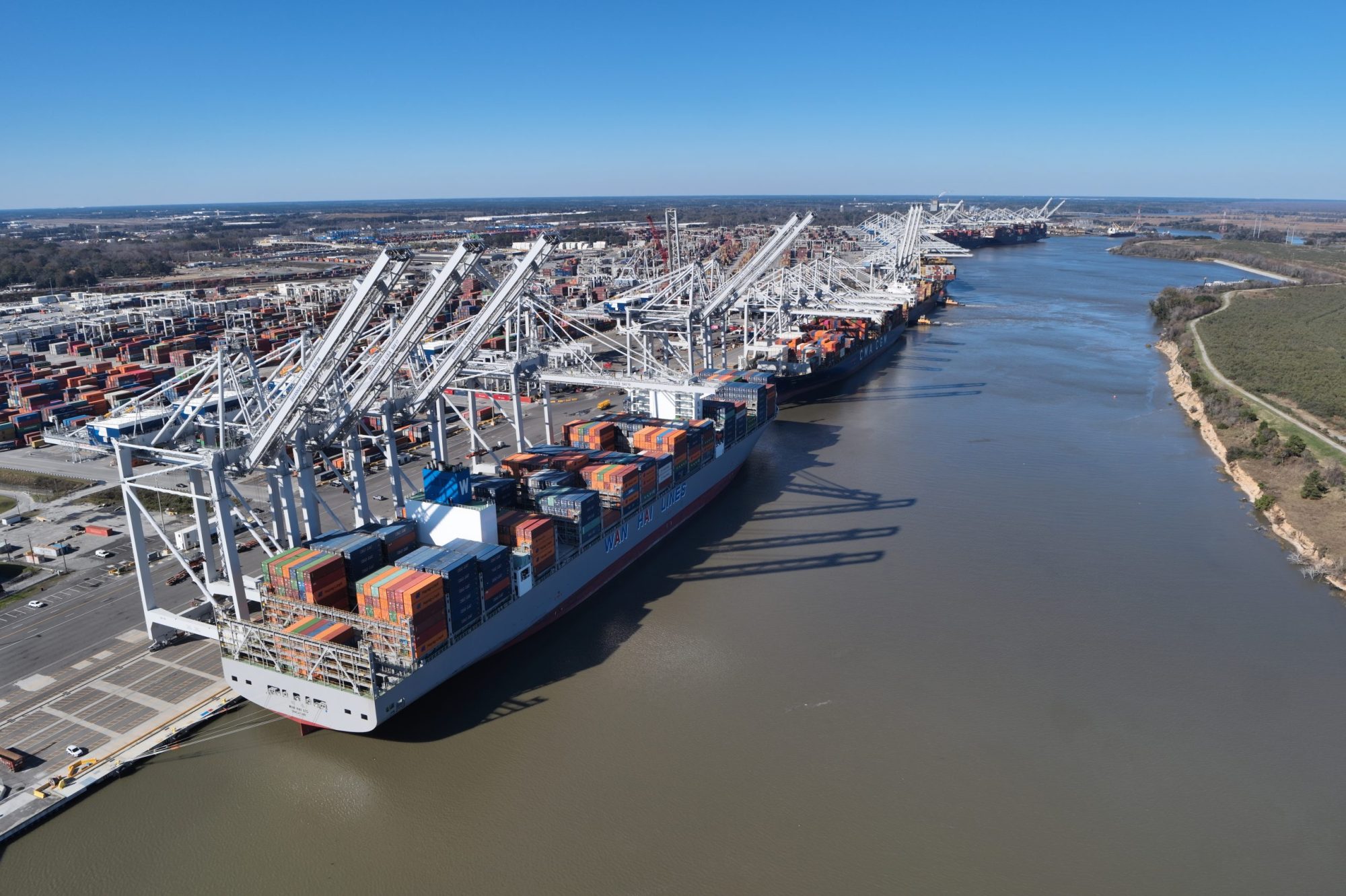


About 45,000 dockworkers walked off the job at midnight on Monday as the International Longshoremen’s Association (ILA) made good on its threat to strike over stalled contract negotiations with the United States Maritime Alliance (USMX). It’s the first ILA strike since 1977.
The ILA workers are pushing for big pay increases after years of stagnant wages, better benefits, and assurances against getting automated out of their jobs. The negotiations are between the USMX – a group of container carriers and port associations stretching along the East and Gulf coasts from Maine to Texas – and the ILA’s dock workers at those ports.
helping you understand the power –and limits– of the presidency
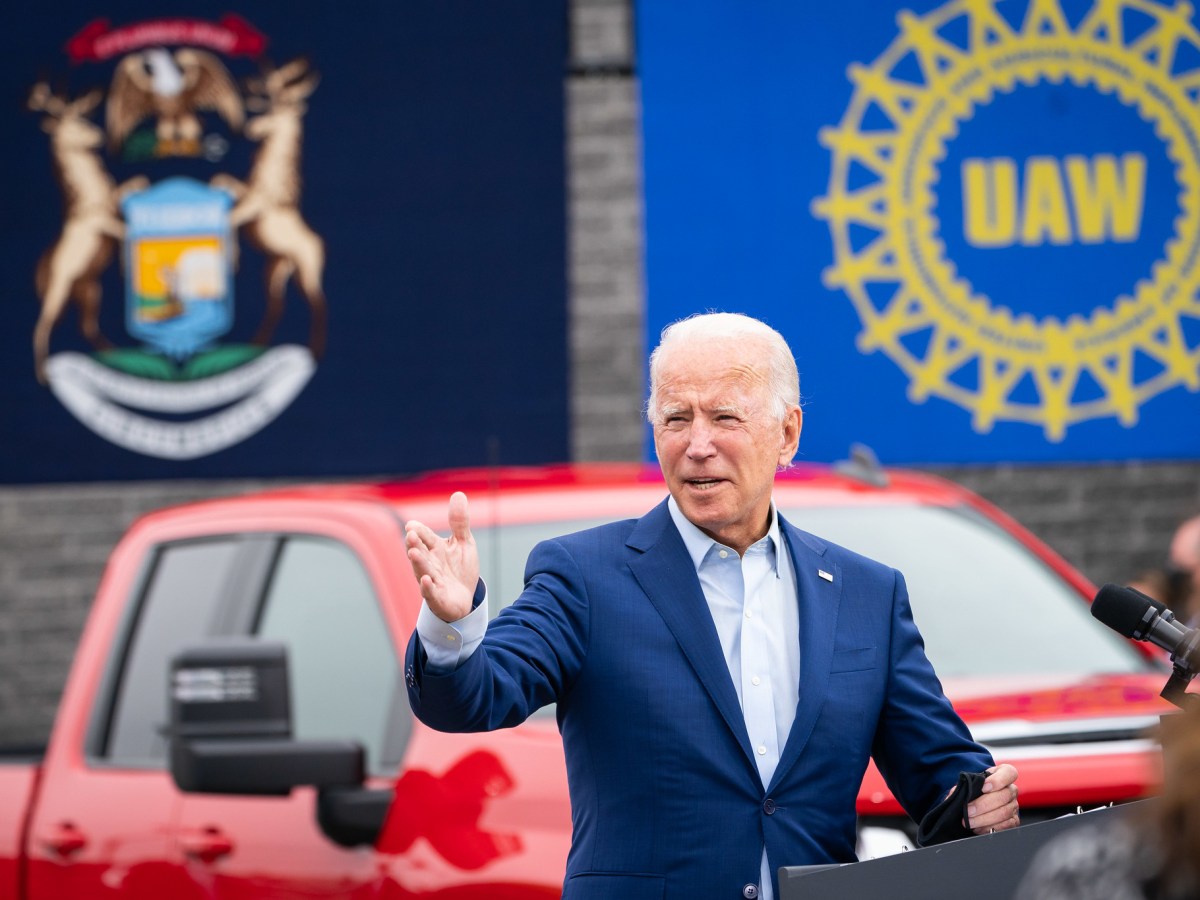
What power does the president really have over labor rights?
Here’s a breakdown of how the U.S. president impacts your work life.
What’s holding up a deal?
Pay increases are a major sticking point. The USMX has been publicizing the “near 50% wage increase” they’ve just offered the ILA, but the ILA claims that it falls far short of what’s needed for the next six-year contract. Pay increases have lagged far behind record shipping company profits, the ILA says. What’s more, most of their workers get paid by the hour and are frequently on call – but they don’t get paid if no ships are being worked.
Under the current contract, starting pay is $20 per hour and it tops out at $39 per hour with six years of service. The ILA wants a 61.5% pay increase by 2030, which would push up top pay to $63 per hour. That’s down from its initial demand of a 77% hourly pay increase.
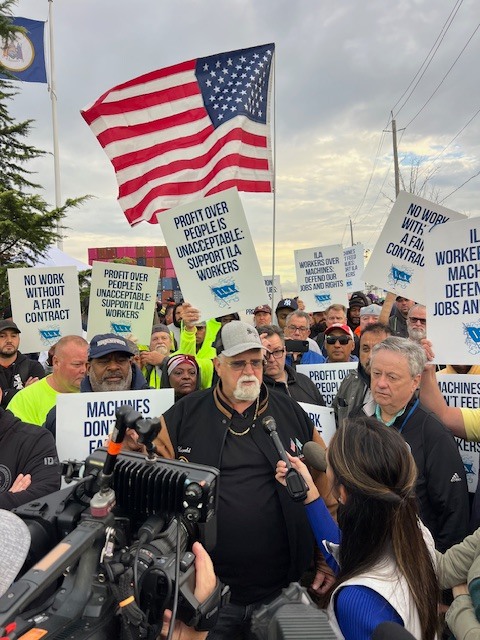
“We are now demanding a $5 an hour increase in wages for each of the six years of a new ILA-USMX master contract,” said ILA president Harold Daggett when the strike began Oct. 1. “Plus, we want absolute airtight language that there will be no automation or semi-automation, and we are demanding all container royalty monies go to the ILA.”
ILA dockworkers secure benefits based on how many hours they work. That means slow work periods and automation, which reduce worker hours, can cause significant harm to their wages and their benefit structures.
In addition to the pay increase, the ILA is 1seeking a progression system that allows members to make the top-line wage faster and guarantees against automation in order to preserve worker hours.
The union is also demanding that all container royalty payments go to exclusively to workers. The industry established the container royalty pool when they shifted to containerized shipping, which reduced employment for dockworkers.
How is Georgia affected?
Georgia’s state-owned ports in Savannah and Brunswick are both vital to cargo movement on the East Coast. The Port of Savannah is the third busiest container port in the country and the Port of Brunswick is one of the primary U.S. ports for automobile shipping.
The Georgia Ports Authority (GPA) does not belong to the USMX and therefore isn’t a part of the contract negotiations, but it still has shut down the Savannah and Brunswick terminals. That is because ILA members and GPA employees, who are non-union, work together at these two ports. ILA members do most of the loading and unloading, while GPA employees operate most of the heavy machinery.
GPB News reports that as of noon Tuesday, 10 container ships and three bulk carriers were at anchor offshore from the Port of Savannah, according to VesselFinder.
Due to the looming strike, some of the cargo that would normally come to Savannah and Brunswick has been diverted to West Coast ports. They operate with the International Longshore and Warehouse Union (ILWU) which is not on strike. A continued work stoppage may see more of that cargo go elsewhere.
What can the President do?
President Joe Biden has directly stated that he has no plans to break the strike. “No,” Biden told reporters Sunday, when asked if he would invoke the Taft-Hartley Act. “Because it’s collective bargaining, and I don’t believe in Taft-Hartley.”
The Taft-Hartley Act allows the president to end a strike that he deems a harm to national health and security. Former President George W. Bush used Taft-Hartley in 2002 to end an 11-day employer lockout at West Coast ports. Now, the U.S. Chamber of Commerce is asking Biden to use the law to intervene in the current labor dispute.
The Biden administration has intervened before to prevent stoppages of cargo movement. In December 2022, Biden blocked an impending national railroad worker strike – also over contract negotiations – but he’d have a harder time doing so with the dockworkers.
Biden used his power under the Railway Labor Act of 1926 to urge Congress to shut down the strike. Congress obliged, passing a law that forced the nation’s 12 railroad unions to accept a tentative contract agreement put forth by the railroad owners. The largest four railroad unions voted down the tentative agreement and were preparing to strike just before Christmas.
The powers that the Railway Labor Act grants the president and Congress allow Biden more leverage when it comes to labor disputes in the railroad and airline industries. But he cannot use the same powers when it comes to cargo and the ports.
The National Labor Relations Act instead covers negotiations between the ILA dockworkers and USMX. Biden can encourage good-faith negotiation between the two sides, but he cannot directly intervene unless he invokes the Taft-Hartley Act.
The odds are against that, since breaking this strike right before the Nov. 5 presidential election would hurt the Biden administration’s reputation as the most “pro-labor administration in history.”
“There is room for both companies and their workers to prosper,” said Acting Secretary of Labor Julie Su. “The parties need to get back to the negotiating table, and that must begin with these giant shipping magnates acknowledging that if they can make record profits, their workers should share in that economic success.”
The president exercises considerable power over labor rights by picking agency heads. He or she appoints the Secretary of Labor to run the Department of Labor, which determines working conditions, rights and work-related benefits for American workers.