


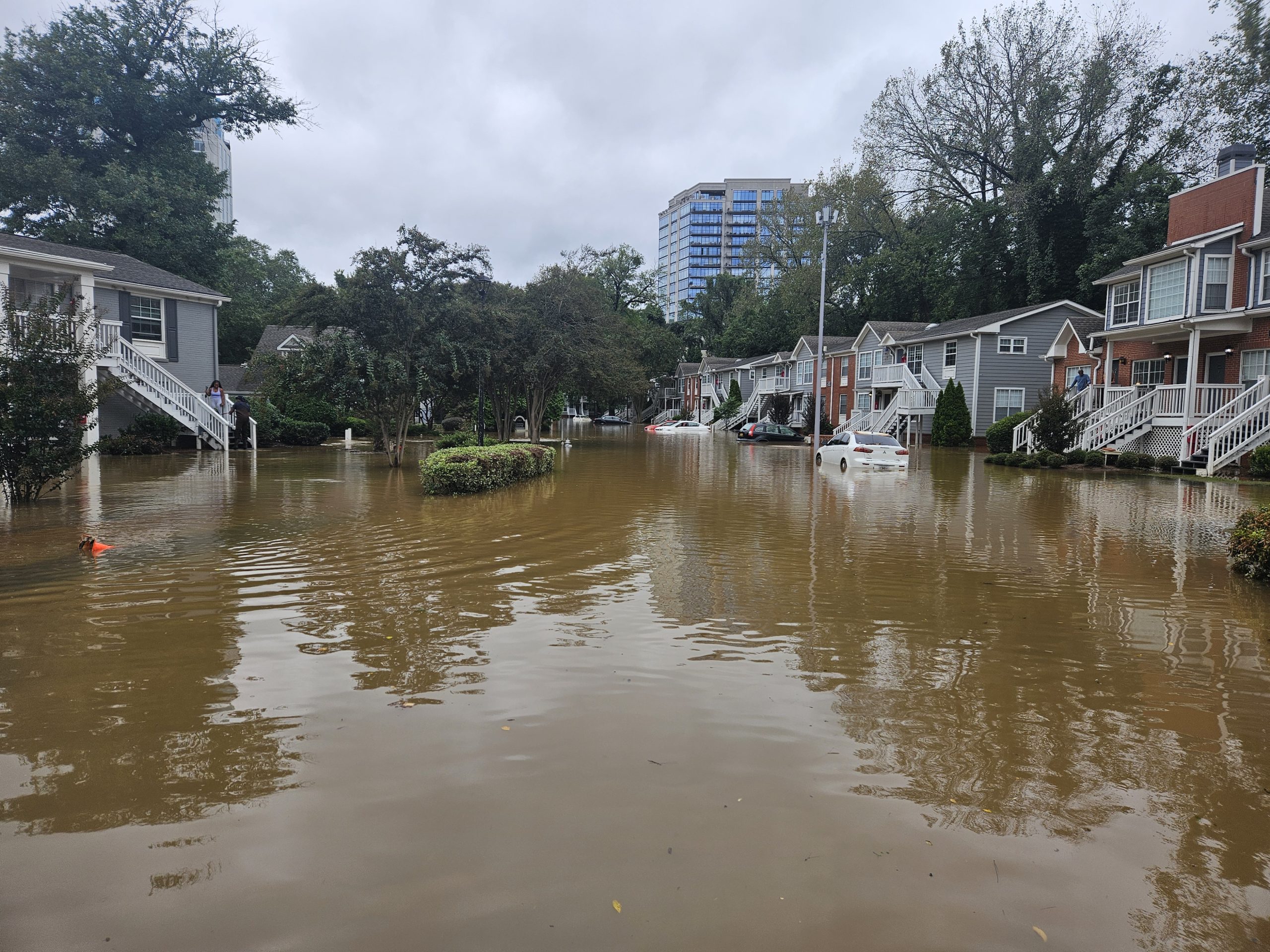

The devastating forces of Mother Nature can leave a lot of wreckage even after the sky clears — and the damage from a major storm like Helene hits lower-income renters the hardest.
To avoid being left without a paddle in the wake of a catastrophic climate event, it’s essential to find out what assistance you can receive from your landlord and the Federal Emergency Management Agency (FEMA) — and act fast.
The Georgia Legal Aid website has information on what to do about storm damage once you are out of immediate danger, whether it’s dealing with your landlord or applying for federal disaster relief aid. (Georgia Legal Aid is a joint legal information project from the Atlanta Legal Aid Society and the Georgia Legal Services Program.)
Here’s a breakdown from Georgia Legal Aid’s website:
What can you expect from your landlord after a disaster?
Has the storm flooded or otherwise damaged the home you rent? The first thing to do is to check your lease agreement to find out what your rights are.
- Read your lease. Find out what it says about natural disasters. Look for portions about:
- Rent abatement. This will tell you if you can stop paying rent or only pay partial rent until the damage is fixed.
- Lease termination. This will tell you under what circumstances you can terminate the lease.
- Paying your rent. In general, you should not have to pay rent if your rental home is not livable. But this may not be the case. Talk to your landlord before you stop paying rent.
- If the unit is damaged but you can still live there, you will likely still be responsible for paying your rent.
- Notify your landlord of damage. If your unit is damaged, you need to notify the landlord of the damage both verbally and in writing.
- Your landlord must make any necessary repairs to the unit. Georgia law says they have a “reasonable amount of time” to make those repairs.
- Must the landlord compensate renters? Generally, a landlord will not be required to pay you if part of your home is temporarily unusable. However, you should still ask your landlord for compensation for the damages to your possessions and inconvenience.
- What if the landlord isn’t making repairs? Contact your city or county’s housing code inspector. If your landlord does not make repairs in a timely fashion, you can notify the housing code inspector. A landlord must comply with applicable local housing codes.
- What if you want to move out? Ask the landlord for a release from your lease. This is a written document releasing you from the lease. The only way to completely get out of a lease is if the lease is terminated.
What if you’re unable to pay rent after a disaster?
If you cannot pay your rent because of a disaster-related financial hardship or if your personal property is damaged, you may be eligible for help from FEMA.
How do I apply for FEMA assistance?
Before you apply, FEMA recommends that you:
- Take pictures of the damages to your house and property.
- Make a thorough list of all your damaged or lost items.
- File a claim with your insurance company. Before you can get FEMA help, you have to file an insurance claim (if you have renter’s insurance).
Documents needed
To apply for FEMA aid, you will need:
- Proof of ID
- Proof that you rent or own the property that was damaged
- An insurance determination letter
FEMA Application
Here’s how to contact FEMA to apply for assistance or to check your application status:
- Online or via smartphone app.
- By phone. Call 1-800-621-3362 or 1-800-462-7585 (TTY)
- In person at a FEMA Disaster Recovery Center.
How long does the application process take?
It may take FEMA up to 10 days to get in touch after you file your application. Keep the registration number that you receive for your application on hand and stay ready to discuss the details of any damage.
After a FEMA inspector calls you, the agency will send you a decision letter within 10 days, telling you if you’re eligible for funds.
If FEMA rejects your application for assistance, you have 60 days to appeal the decision.
How do I appeal a FEMA decision?
If you disagree with FEMA’s decision about awarding you funds, you have the right to appeal.
- You must include with your appeal:
- Your full name, your FEMA application number and disaster number. Also include your pre-disaster primary address and your current address and phone number
- A written statement that explains why the decision is wrong.
- Copies of any documents that support your statement.
- Send the appeal:
- By mail. FEMA, PO BOX 10044, Hyattsville, MD 20782-8055
- By fax. Attn: FEMA Appeals Officer, 1-800-827-8112
- You will get a decision on your appeal within 90 days.