


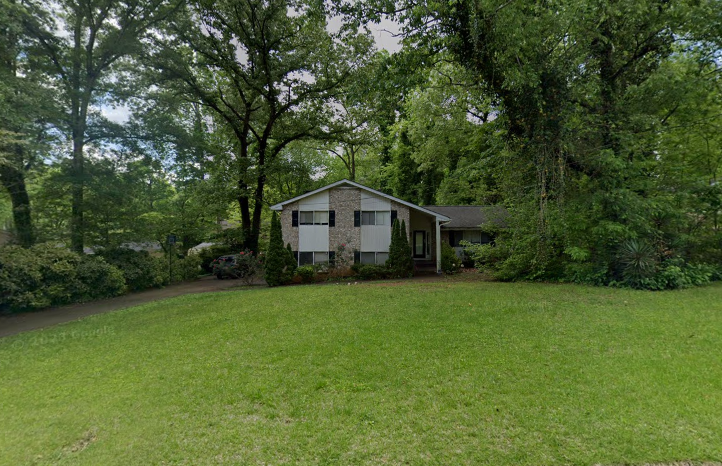

In 1995, Phil Olaleye’s parents bought a four-bedroom, two-bath house in Stone Mountain for around $90,000. It’s worth almost three times that today, according to DeKalb County property records — and now it belongs to an anonymous LLC that owns 69 other properties in the county, 58 in Fulton, and more across the state.
It wasn’t just conventional market trends like inflation and population growth that boosted the price of their old 2,100-square-foot home, which TAH 2017 Borrower LLC bought in 2017, a decade after the Olaleyes moved out. A relatively new phenomenon sweeping the nation played a critical role: Corporate investors are gobbling up single-family homes in metro Atlanta and beyond, driving up housing costs and pushing the American dream of homeownership further out of reach.
Olaleye, now a Democratic state representative for Atlanta, introduced legislation last week to loosen big money’s grip on Georgia housing markets. For him, the effort isn’t just personal; it’s a moral imperative.
“Home prices are increasing, rent prices are increasing, and there’s very little power in the hands of people — everyday people who want to purchase a home and stay in the community that they’ve contributed to,” he said in an interview.
“Their children go to school there. They worship there. But because of the outsized influence that corporate investors have in housing markets, [institutional landlords] can just ratchet up rents, and they can drive up home prices and push out of reach a family’s ability to stay in their home,” Olaleye said.
House Bill 305, the “Protect the Dream Act,” aims to prohibit investment funds with $6.25 million or more in assets, or who own at least 25 single-family homes, in any single county from buying more houses anywhere in the state. (Homebuilders and nonprofits would be exempt.)
“It should be common sense to put some guardrails and some restraints on the hedge funds, private equity, and real estate investment trust funds coming into our cities and our state and overwhelming individuals [from buying homes] in the pursuit of profit,” Olaleye said.
Investment funds account for over a third of the recent home purchases in metro Atlanta, but their growing chokehold on the local housing market has gone unhindered, in part because they use shell companies as camouflage from accountability.
At the federal level, Congressional Democrats have proposed legislation to rein in institutional investor landlords, but their efforts have routinely failed. The kind of reform that Olaleye and a bipartisan group of sponsors are proposing with HB 305 has not yet been tried in Georgia.
Historically, the Georgia legislature has resisted efforts to regulate landlord and investor activity. In fact, around a quarter of state lawmakers own rental properties.
But Olaleye believes — or is at least holding out hope — that spikes in housing prices because of the torrent of institutional investors buying up single-family homes in Georgia should galvanize the landlord-friendly legislature.
“It’s a crisis,” he said — and one that his colleagues on both sides of the aisle cannot afford to ignore.
“It’s not just affecting urban cities. It affects suburban cities, exurban cities, and rural cities. We have got to open up more homes so that people — not businesses or LLCs or shell companies, but living, breathing people — have an opportunity to purchase homes,” Olaleye added.
The Protect the Dream Act is an important step toward limiting the impact large institutional investors have on housing affordability, Olaleye said. Other legislation, such as establishing a statewide rental registry, is needed to solidify HB 305’s enforceability.
“I don’t think [HB 305] alone is a silver bullet,” Olaleye said. “The big issue is transparency around ownership, and I think a registry would be a great first step.”
This kind of database, run by local governments, is a way to cut through the veil of LLCs that some corporate investors use to evade accountability. It tracks exactly who owns what rental properties, their contact information, how much they charge for rent, and whether they maintain habitable housing units.
Housing advocates have long urged Georgia lawmakers to create a rental registry, but a bid to do that last year — Senate Bill 278 — failed at the Gold Dome. A similar proposal is expected to resurface during the current two-year legislative session, which runs until April 4 and then picks back up for 40 days in 2026.
“Those guardrails and checks that the Protect the Dream Act would roll out are only one part of that puzzle,” Olaleye said. “We’re going to need lots of other companion pieces of legislation to close up many of these loopholes.”