


This story is part of #ATLBudget, a civic engagement project in collaboration with the Center for Civic Innovation and other organizations. Together, we’re breaking down Atlanta’s budget process to show where your tax dollars go—and how you can help shape the city’s priorities. Follow #ATLBudget on Instagram and Bluesky for updates.
Atlanta’s city government has started drafting its budget for the 2026 fiscal year, which begins July 1. The process will determine how almost one billion in taxpayer dollars are allocated in the city’s general fund, which covers city services, infrastructure, and public programs.
But how exactly does the city craft its budget?
Budget timeline
Atlanta’s 2026 budget process began with a budget kick-off meeting on Feb. 25, marking the official start of departmental planning. City departments will submit their funding requests for FY 2026 in March, which the mayor’s office will review and refine during April.
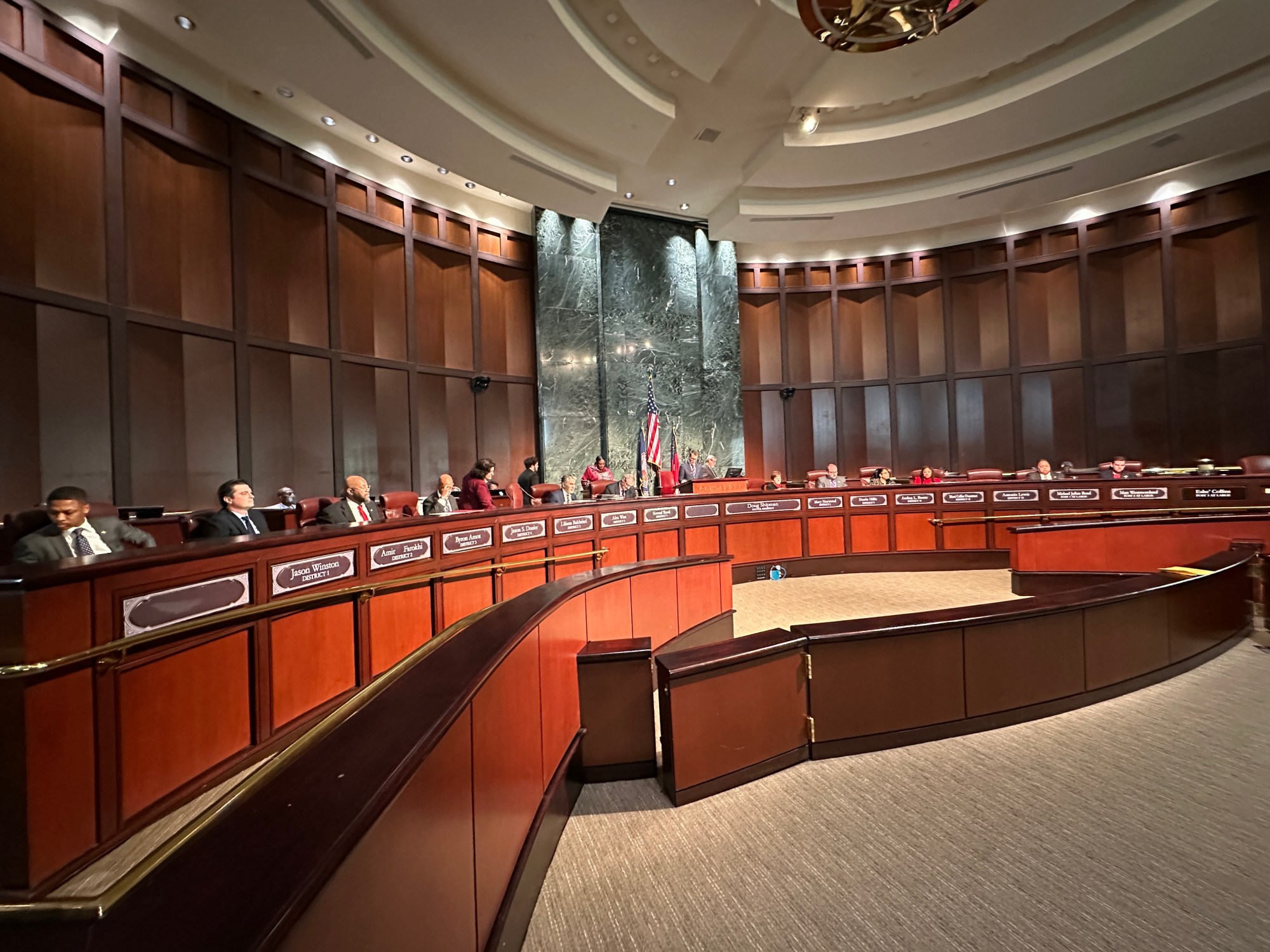
By early May, Mayor Andre Dickens will present his draft budget to the Atlanta City Council. During May and June, the council will hold departmental budget briefings, where it reviews each department’s spending plans. Usually, a couple of public hearings are also scheduled.
The city council must approve a final balanced budget, as required by state law, by June 30, before the beginning of the new fiscal year on July 1.
How does the budget work?
Atlanta’s current FY 2025 budget totals $2.75 billion, but a little over two-thirds of that goes to self-contained operating funds for things like the airport, water and sewers, and group insurance for city employees.
The remainder – totaling $854 million in FY 2025 – is called the general fund. This is where the mayor and city council have the most discretion.
The general fund pays for things like police and firefighters, parks, and city administration. The latter includes funding for municipal courts, city jail, law department, city council, and executive offices under the mayor. Police make up the largest single expenditure (30.2%) in the current 2025 general fund, followed by firefighters (13.9%), parks and recreation (6.1%), and transportation (6.1%).
Where the general fund money comes from
Atlanta’s general fund, which is what most people think of as the city’s budget, is primarily funded through property taxes; sales taxes; public utility, alcohol and other taxes; and business licenses and permits. For FY 2025, these four revenue sources made up almost 86% of the general fund.
The city’s finance department is projecting total FY 2026 revenue of $914 million from taxes, fees, and other sources:
- Property taxes – $338 million (37%)
- Local Option Sales Tax (LOST) – $159 million (17%)
- Public utility, alcohol, and other taxes – $140 million (15%)
- Licenses and permits – $132 million (15%)
- All other revenue sources – $145 million (16%)
The city’s finance department anticipates that property tax revenue will increase almost 7% for FY 2026 (up from $315.7 million in FY 2025), due to the heated housing market. It also is projecting a roughly 7% increase in sales tax revenue (up from $149 million in FY 2025), mainly from hosting the World Cup and other sporting events, with smaller revenue gains from the other taxes, licenses and permits.
If Atlanta books $914 million in revenue for its general fund in FY 2026, that would be a 7% increase over this year’s $854 million general fund. However, the city is anticipating significant shortfalls in federal funding for its overall budget. For instance, Atlanta’s current general fund includes $20 million in federal funds, allocated for infrastructure projects and programs such as the Policing Alternatives and Diversion (PAD) initiative.
With the Trump administration slashing overall federal spending, as well as federal grants to local governments, the city is planning to adjust its 2026 budget accordingly.
FY 2026 spending priorities and belt-tightening
For FY 2026, Dickens has said he will prioritize spending on policing and fire services, city infrastructure, and affordable housing.
Whether due to federal funding cuts and rising operational costs, the Dickens administration has asked all city departments to find ways to cut spending.
In a March 6 memo from Atlanta CFO Mohamed Balla and COO LaChandra Burks, all city departments were “required to assess and prepare for budget reductions.”
“We are requiring each department to outline the impact of three budget reduction scenarios: 5%, 7.5%, and 10%,” said Balla and Burks in the memo.
For the worst-case 10% scenario, they asked department heads to factor in “potential service disruptions, workforce impacts, and long-term operational challenges.” That includes limiting new hires, since personnel expenses account for 61% of the city’s general fund, reducing discretionary spending by up to 5%, and increasing oversight on major expenses, according to the city’s FY 2026 budget kick-off presentation.
The city is already tightening its belt for the final quarter of FY 2025. Earlier this month, Balla and Burks instructed department heads to limit hiring to critical and pre-approved positions, placed a temporary hold on ordering office supplies from March 15 to June 30, and increased approval requirements for professional travel, training, seminars, memberships, and related expenses.
How Atlantans can get involved
Atlanta residents will have a few opportunities to participate in the 2026 budget process. The city council generally holds a couple of public hearings in May or June, where Atlantans can voice concerns or support for the proposed budget. The council has not yet released a schedule of its upcoming budget hearings.
Atlanta City Council members can also hold meetings in their districts to gather community feedback. For those unable to attend in person, the city streams many of these meetings online, and residents can submit written comments via email.
Should Atlantans have more of a say in the city budget? Many big cities like New York and Los Angeles have adopted participatory budgeting, which allows residents to decide how to allocate a percentage of the general fund for things like public spaces or health and wellness initiatives – generally in the $1 million range.
Check out our explainer on participatory budgeting to find out how it works.