


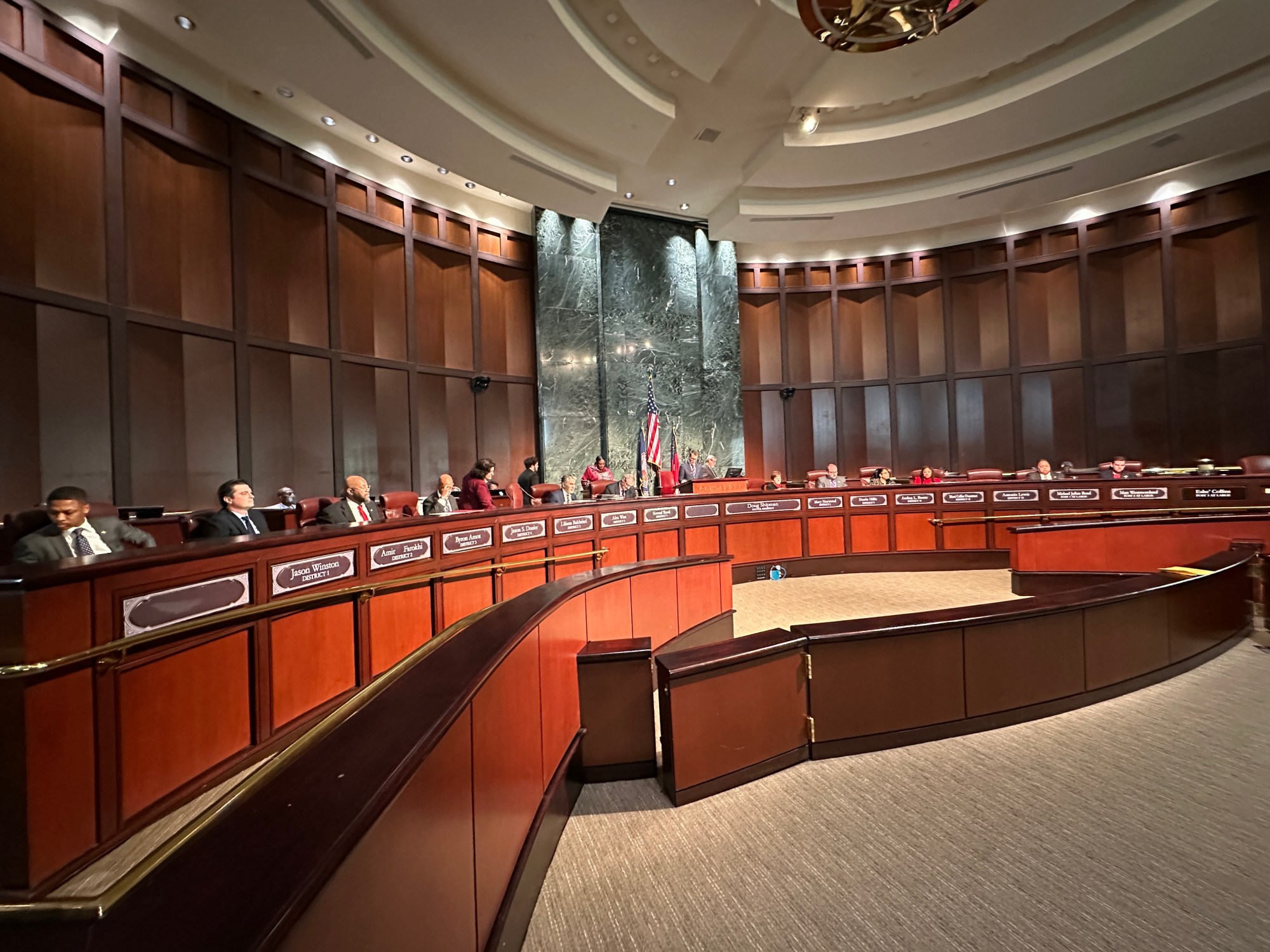

On Tuesday, Atlanta Mayor Andre Dickens released his proposed budget for the city of Atlanta’s upcoming 2026 fiscal year – a whopping $3 billion proposal that must be passed by the end of June.
Now the Atlanta City Council will review, amend, and ultimately vote on the budget over a series of public hearings between now and June 30. The new budget will take effect on July 1, when the city’s 2026 fiscal year starts.
How can you — the everyday Atlantan — have a say in this process?
Atlanta Civic Circle asked City Council President Doug Shipman, former Council President Felicia Moore, and Sagirah Jones, the president of the Atlanta Planning and Advisory Board (APAB), for their advice.
While $3 billion is a very big figure, the mayor’s $975 million budget proposal for the general fund is what we’re really interested in. That’s because Atlanta’s “big budget,” as it’s called, can be broken into several smaller, self-contained parts, such as the budgets for Hartsfield-Jackson Atlanta International Airport and the Department of Watershed Management, which are essentially self-funded by airport revenue and water bills, respectively.
It’s the general fund that funds the city’s daily operations, for things like parks, firefighters, police, the city planning department, and all of Atlanta’s other services. So that’s where our focus is, as far as public input.
First, know the big picture
As a matter of Georgia law, cities cannot run a deficit. That is particularly important this year, since federal funding remains highly uncertain.
Even so, the mayor’s $975 million draft budget for the general fund marks a notable 14.2% increase over the current $853 million general fund budget. One driver is raising pay and upgrading vehicles and facilities for police and fire services, according to a press release from the Mayor’s Office. Major revenue sources include property taxes, sales taxes, and hotel/motel taxes.
“This particular year, we know, is going to be more difficult than previous years for a confluence of factors,” Shipman said. “We have big economic questions – both generally and also regarding federal funding, and what federal funding is going to be potentially withdrawn. And so that’s putting negative pressure on the budget.”
What’s more, additional expenses, such as increased operating costs, pension expenses for city employees, and snow clean-up costs this year have shrunk the city’s revenue surplus of the last few years.
“It’s going to be a much sharper budget,” Shipman said, invoking the city council’s Finance and Executive Committee chair, Howard Shook, who told the Atlanta Journal-Constitution that instead of a “yes budget,” it’s more likely to be a “no budget.”
With that out of the way, let’s dive in. Here are a few ways for average Atlantans to have a say in the budget.

Tune in to budget hearings
Once the mayor released his proposed budget on April 29, the city council released its budget briefing schedule, where city departments make their case for the funding they want. Starting May 6, the council will spend about five weeks hearing presentations from key city departments, employee unions, and other stakeholders.
While the departmental presentations are open to the public, they do not offer a public comment period. However, Shipman notes, it’s a good opportunity to learn the funding specifics for areas you may be interested in.
The public can also weigh in during the regularly scheduled comment periods at either full city council meetings, which are held every other Monday, or at the council’s Finance and Executive Committee hearings.
Note that the council will hold three public hearings on Atlanta’s tax millage rate. You can offer input on May 21 from 6 to 6:15 p.m. or on May 28 from 12 to 12:30 p.m., and again that evening from 6 to 7 pm. Hearings will be live-streamed on YouTube.
And mark your calendar for May 21, when an in-person budget hearing for the public is scheduled from 6:15 to 7 pm.
People can also submit their comments about the budget by phone at 404-330-6043 or by email at Budgettalk@atlantaga.gov .
Contact council members directly
In addition to public comment, Shipman suggested contacting council members directly. “Reaching out to me or to the members of the Finance Committee is probably the most efficient way to inquire about specific items or weigh in on specific items,” he advised.
What if the council member for your district doesn’t sit on the Finance and Executive Committee, which handles the lion’s share of the budget process? Besides Shook, its chair, the other members are Byron Amos, Liliana Bakhtiari, Dustin Hillis, Marci Collier Overstreet, Alex Wan, and Jason Winston.
Shipman said these council members recognize the outsized power they have as far as the budget, so they’re open to hearing from all city residents. “All the members of the Finance Committee realize that they’re sort of in a unique position, and so they will entertain meeting requests and messages from all over the city,” he said.
Moore, who preceded Shipman as council president, endorsed that advice and added that there are three at-large council members that represent the entire city: Michael Julian Bond, Eshé Collins, and Matt Westmoreland.
“Don’t forget, you don’t just have one council member,” Moore said. Here is a handy Atlanta City Council contact page with phone numbers and emails for all 16 council members.
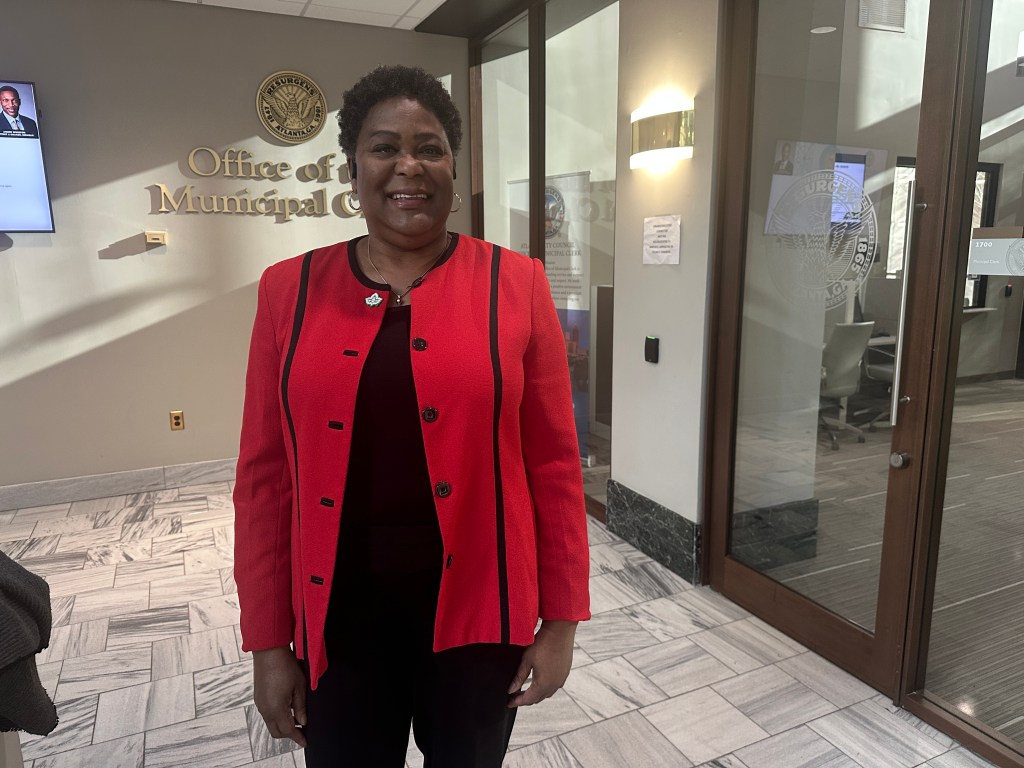
Engage early
That said, Shipman and Moore both emphasized engaging as early as possible with council members about your budget interests and concerns, because they are a lot less likely to entertain last-minute changes after weeks of negotiations.
“My biggest piece of advice is: the earlier, the better,” Shipman said.
The city council’s briefing schedule aims to wrap up the budget process by June 11 — but it leaves some wiggle room until June 30.
“Once you’re aware, get engaged as soon as you possibly can, in any way that you can – whether it be email, phone calls, scheduling meetings – to sit down to talk one on one with your council people,” Moore said.
Leverage your voice
As an Atlanta citizen, you may be an individual, but you’re not alone. Consider checking out community groups that focus on budget issues that you care about, whether it’s parks or transit.
Getting in touch with your local neighborhood association and Neighborhood Planning Unit, or NPU, is another good way to get involved. To find out your NPU based on your neighborhood, click here.
Each of the city’s 25 NPUs is chaired by a citizen volunteer, and all 25 chairs are members of the Atlanta Planning and Advisory Board, which advises the city on its comprehensive development plan. The city code says the NPUs should have input in formulating the budget, since it affects the development plan, but a formal process for that is still in the works.
In the interim, Jones, the Planning and Advisory Board president, encouraged citizens to reach out to both their NPU chair and their council member with their budget issues. The NPU chairs, she added, often can connect people to other community groups “that can provide them insight on their particular issue,” as well as their council members.
You can also speak on behalf of your own informal group of neighbors or pals who share a similar concern. Perhaps you want the city to allocate funds to fix up the park where your kids play? Or do you want to extend the summer hours of your local recreation center or the city’s lone arts center?
Moore and Shipman say it’s worthwhile to have the whole group sign a letter expressing its interests, and then send it to the relevant council members. ”You can send it to multiple council members, you can send it to all of the Finance Committee,” Shipman said.
“The most effective way is to send us a specific email,” Shipman said, emphasizing that it’s important to state clearly who makes up the group and what their concern is. ”Be specific about who’s included – if it’s a neighborhood association, if it’s just 15 residents — whatever it is, just be specific.”
“Those are read and will often change policy,” he added.
It also doesn’t hurt to follow up, Moore said. “Follow up and make sure they specifically saw your email,” she advised.