



As federal Emergency Housing Voucher (EHV) funding dries up over the next 18 months, more than 1,000 low-income Georgians could be stripped of the critical housing subsidies that separate some 60,000 Americans from homelessness.
Congress’s decision not to renew the pandemic-era EHV program in a mammoth reconciliation bill has sent homeless-prevention nonprofits and state and local housing authorities, including Atlanta Housing (AH), scrambling to shield renters from eviction.
Still, thousands of residents are likely to wind up unhoused, according to Ann Olivia, CEO of the National Alliance to End Homelessness. That is, unless Congress rejects the Trump administration’s “Big Beautiful Bill” and boosts housing funding.
If Congress approves the White House’s proposed budget, which would slash U.S. Department of Housing and Urban Development (HUD) funding by 44%, the move could devastate voucher programs across the board. The death of EHVs and other rent subsidies could precipitate “an explosion of people experiencing homelessness,” Oliva told Atlanta Civic Circle.
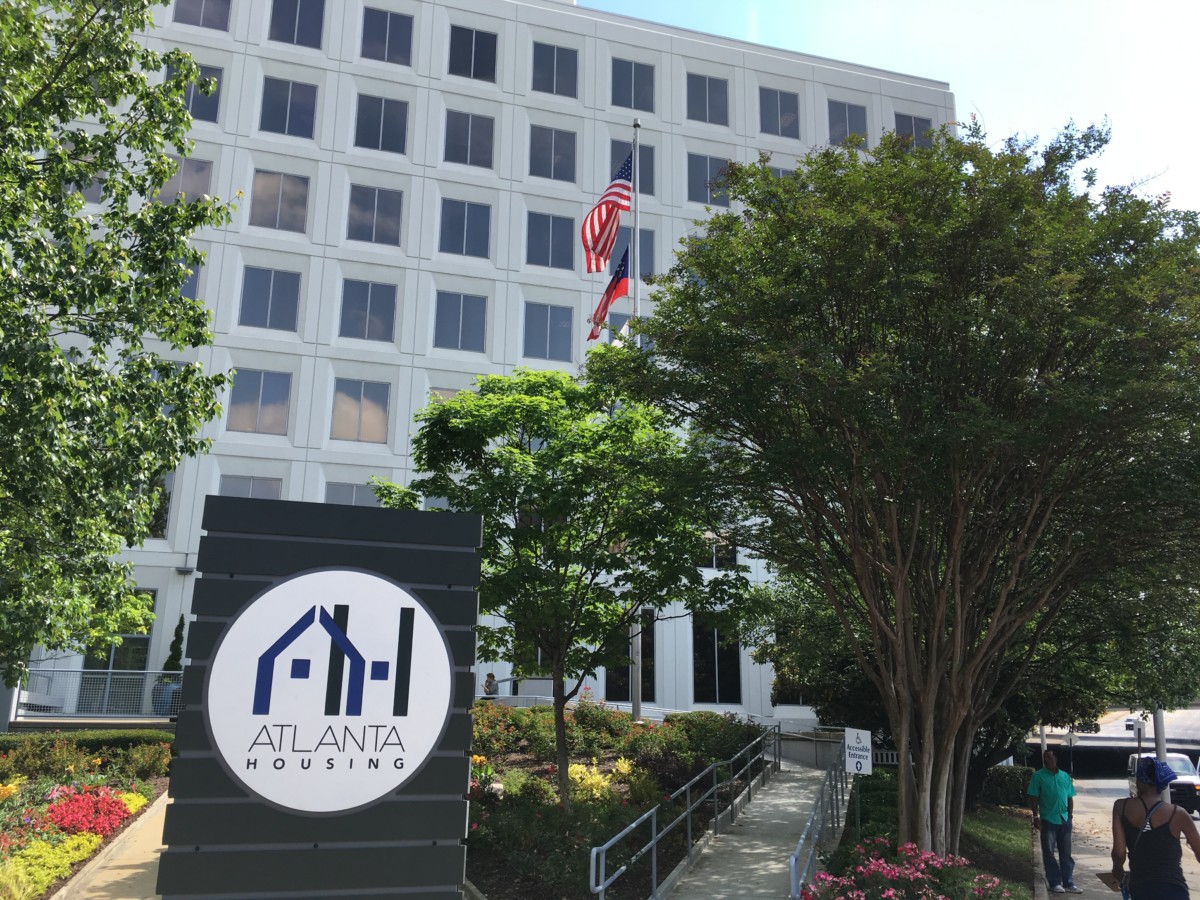
Atlanta Housing, the largest public housing authority in the Southeast, received 202 emergency housing vouchers from the feds in 2021. The local agency hopes to dampen the blow of the EHV program’s sunset by offering rental assistance to everyone who loses those subsidies, according to an AH spokesperson.
“HUD has informed Atlanta Housing that the Emergency Housing Voucher program will be funded through fiscal year 2026,” AH said in an email. “Upon its expiration, Atlanta Housing will absorb EHV vouchers to ensure the families we have housed remain housed.”
But Cathryn Vassell, the head of the homeless services nonprofit Partners For Home, said that, even with some public housing authorities stepping up to offset the impact, the loss of EHVs will still strain agencies and nonprofits who work to prevent homelessness.
Partners For Home helped the housing authority identify chronically homeless people eligible for the EHVs that AH has administered. “Getting rid of EHVs is adding undue pressure on the housing authorities and [nonprofits] who figure out how to help people out of homelessness and into stable housing,” she said.
AH did not answer Atlanta Civic Circle’s questions regarding how exactly it would support the people expected to lose their EHVs — by offering similar, tenant-based voucher support or other remedies — but the agency said it is acutely aware of the uncertainty miring federal programs and is bracing for expected funding cuts.
Widespread panic
Housing advocates and experts insist that if Congress doesn’t demand more funding for rental-assistance programs, public housing authorities will have to scale back voucher programs and watch long waitlists grow. AH already has more than 20,000 people waiting on voucher assistance.
“If we do not have enough money or funds for this program, this situation will probably get worse and worse,” said Xinyuan Zheng, a policy and program analyst for Georgia Advancing Communities Together.
Homeless populations nationwide have been surging in the wake of the COVID-19 pandemic. In Atlanta, the annual HUD-mandated Point-In-Time count found that the number of people experiencing homelessness increased from 2,017 people in 2022 to 2,894 this year.
Statewide, an estimated 12,290 people were unhoused in 2024, up from 10,689 in 2022, according to a HUD report.
The Georgia Department of Community Affairs (DCA), which received 795 of the state’s 1,039 total EHVs from the federal government, expects its EHV funding to run out by the end of 2026. According to spokesperson Justin Vining, 560 families, scattered across 149 counties in rural, suburban, and urban areas, currently rely on this federal assistance.
It’s too soon to say how DCA would adapt to these vouchers vanishing. “As the [EHV] program winds down, we are awaiting further guidance from HUD regarding how agencies should support participants,” Vining said.
Congress must act fast
When the Biden administration launched the American Rescue Plan-backed EHV program in 2021 to protect chronically unhoused people, veterans, and renters in abusive relationships, it dedicated $5 billion nationwide to the initiative. Many housing authorities expected that money to last until the end of the decade, the Associated Press reported.
Oliva, the National Alliance to End Homelessness leader, urged local officials and their constituents to lobby Congress to boost, not cut, voucher funding — and not just to save low-income people from homelessness.
“One of the overlooked areas here is not just the impact to the individuals who are in those [EHV-sponsored rentals], but also the impact [on] the local economy and the landlords who are participating in this program,” she said.
While cutting EHVs or other voucher programs would deprive some landlords of reliable government funds, housing experts have also long warned of other economic blowback from allowing unhoused populations to boom. People experiencing homelessness often seek refuge in shelters and wind up in emergency rooms or jails, which often rely on public dollars, with far greater frequency than stably housed people. It’s cheaper for the government to help people keep their housing.
“Members of Congress listen to mayors and governors and local leaders,” Oliva said. “They need to ask Congress to stop this budget from being passed and to include additional funding to keep people in their housing.”
Congressional Republicans are aiming to approve the upcoming fiscal year’s budget by July 4.