

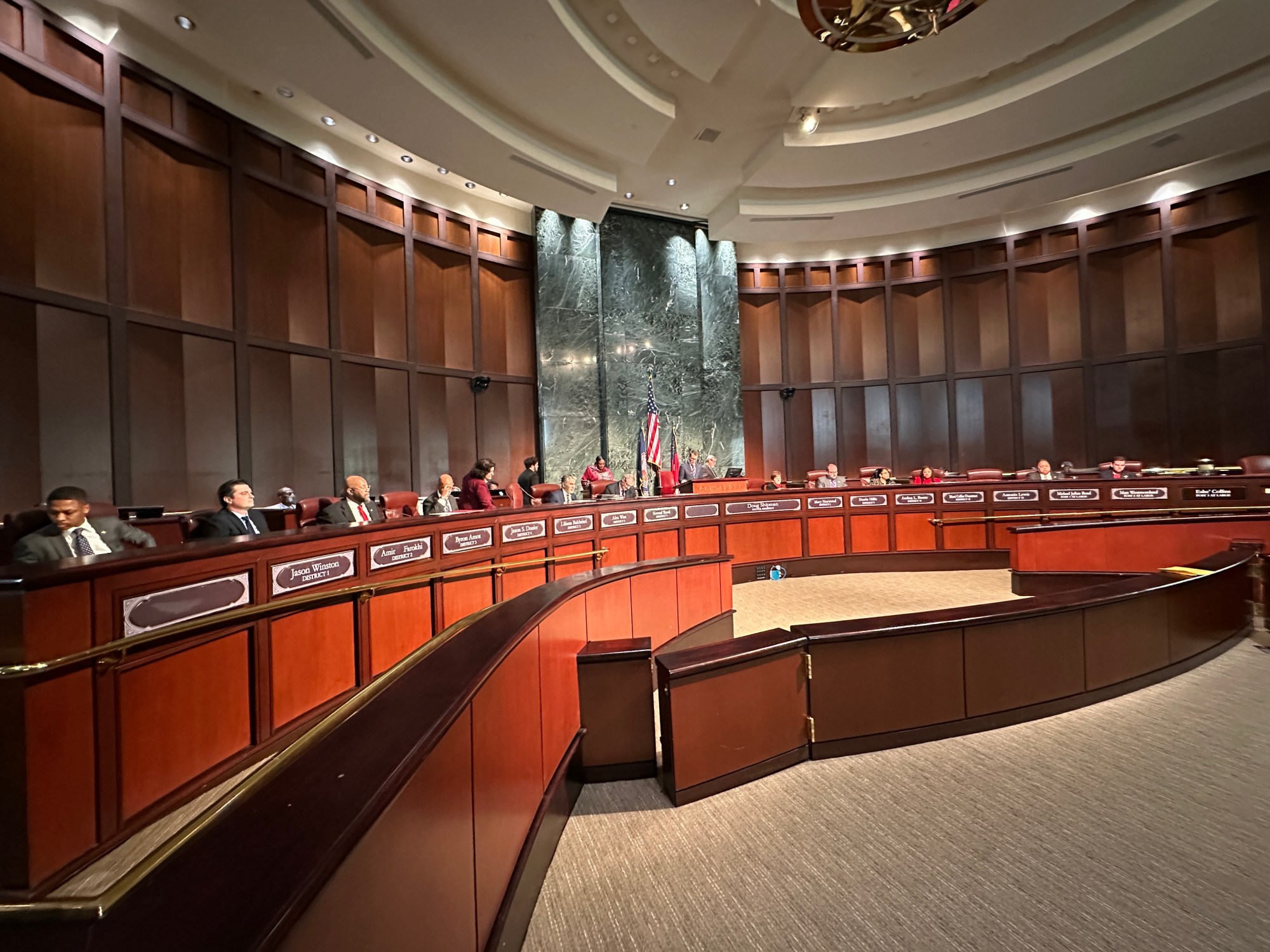


Atlanta’s municipal elections are underway, but as of Tuesday less than 8% of Atlanta voters have cast a ballot. And when the Atlanta City Council solicited public input last spring for the city’s FY 2026 budget, it received just one email, two social media comments, and one in-person public comment.
Atlantans, it seems, feel disconnected from City Hall. Could participatory budgeting give citizens more of a stake and a say in their community?. Atlanta’s FY 2026 general fund totals $975.4 million, but there is very little room for direct input from residents, beyond offering comments at two public hearings.
Cities like New York, Boston, and Chicago have successfully adopted this approach, earmarking anywhere from 1% to 15% of their discretionary budget for direct citizen input. They ask residents to propose ideas — like a new bike lane or a playground — and then put the proposals to a vote. Almost half of New York’s 51 city council districts, for instance, are deciding how to spend about $24 million in capital funding on schools, libraries, parks, and other public spaces.
In Atlanta, former Councilmember Amir Farokhi successfully piloted participatory budgeting in District 2, asking his constituents in 2019 to decide how to spend $1 million for transportation improvements. He expanded that to park projects for the district in 2021. But Farokhi faced pushback from other council members on expanding participatory budgeting citywide. Some wanted to limit the options their constituents could choose, while others raised concerns about allocating equivalent funds in their districts.
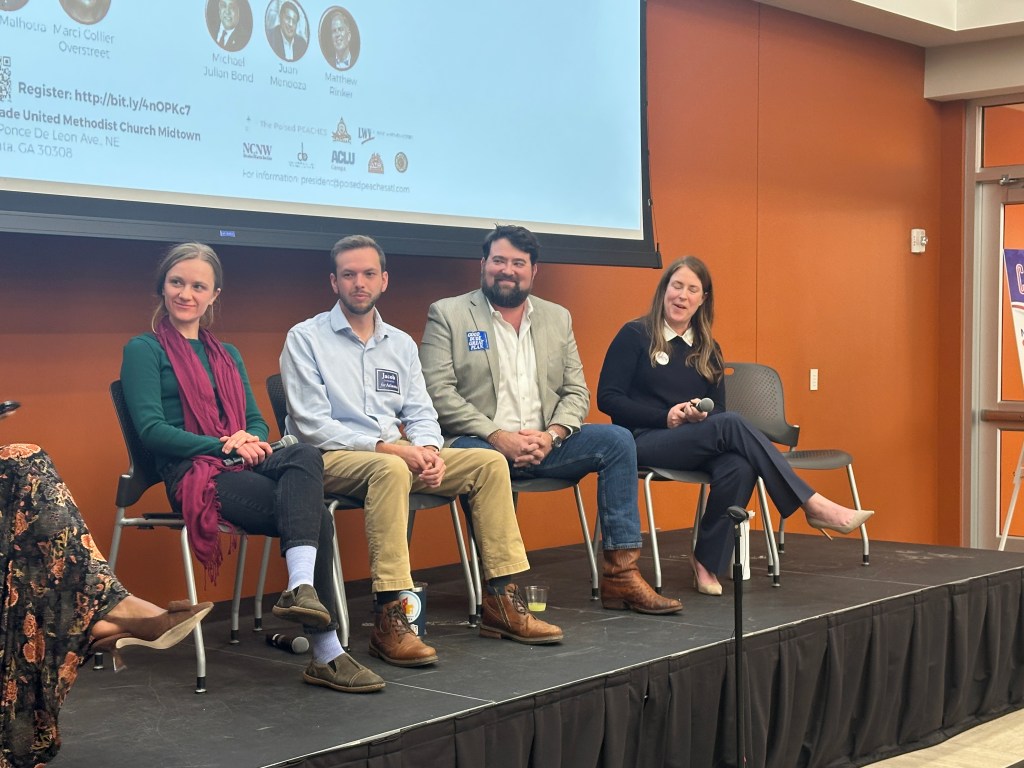
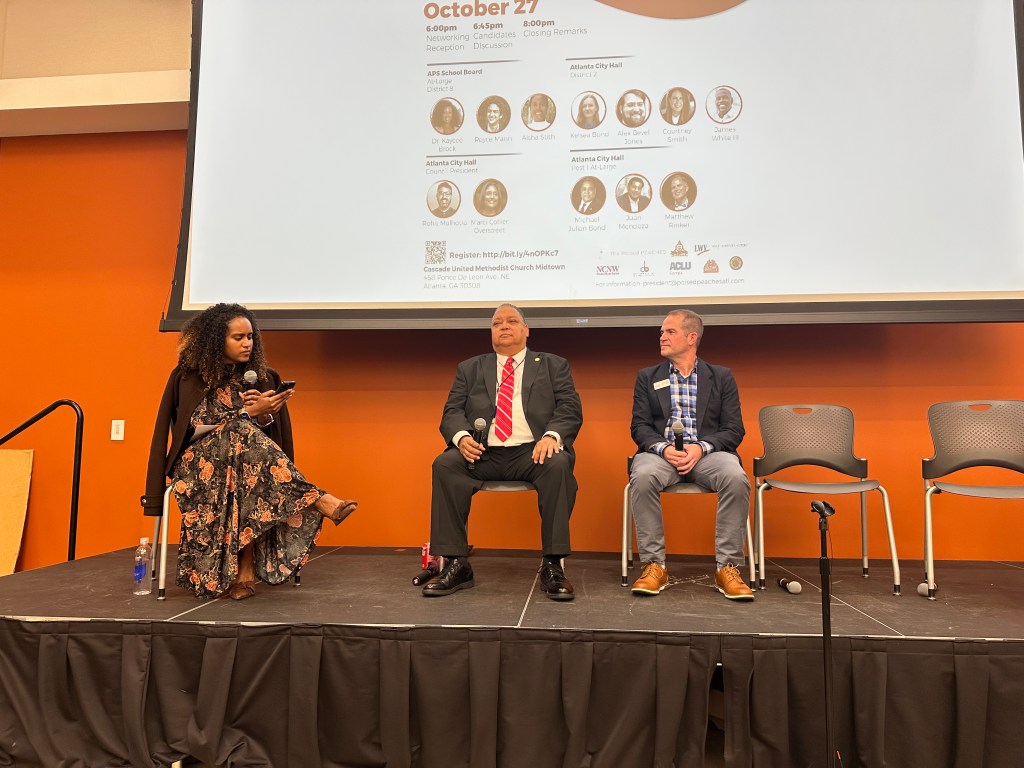
We asked Atlanta City Council candidates running in contested districts what they think about participatory budgeting, and what other ideas they have to boost civic participation. All of them favor trying it out – but with varying levels of enthusiasm and some caveats. Here’s what they had to say.
District 2 (Midtown)
Note: District 2 candidate Rod Mack was disqualified.
Kelsea Bond: Bond strongly favors both citywide participatory budgeting and making the city’s annual budget process more accessible to Atlantans. “We should plan budget hearings for various departments during more accessible times of day and invite the broader public to attend, host town halls and info sessions, and send out polls to determine how our city budget should be spent,” they said.
Jacob Chambers: He is open to the idea, with a caveat. “To be effective, participatory budgeting must reflect the will of the broader community, not just a small group of engaged residents,” he said. Chambers suggested starting with smaller scale participatory budgeting by council district, like that pioneered by Farokhi in District 2.
Chambers also suggested making council meetings more accessible to the public through “virtual attendance, recorded comments, and flexible scheduling for major votes and hearings.”
Alex Bevel Jones: “All options should be on the table,” Jones said, without explicitly addressing participatory budgeting. He favors more transparency for how the city budgets and spends on projects.
Courtney Smith: Smith wants to “beta test” participatory budgeting across all council districts, building off the positive response in District 2 to Farokhi’s two initiatives. “I think the lessons learned and processes employed are scalable,” she said.
James White III: White favors participatory budgeting. He said he’d work with the Mayor’s Office to make sure that all Atlanta residents are both included and benefit by designing “an inclusive, transparent process that reaches historically underserved communities, leverages both in-person and digital engagement, and ensures residents see tangible results from their input.”
District 3 (West Atlanta)
Byron Amos (incumbent): “I may be able to support exploring participatory budgeting […] especially in historically underserved neighborhoods,” Amos said. He proposed allocating $5 million to $10 million citywide to pilot “a neighborhood-based budget council” focused on infrastructure, public safety, and arts programming.
Perrin Bostic: “I support exploring participatory budgeting,” Bostic said, adding that he’d work with the Mayor’s Office to design a process. Like Amos, he wants to focus on historically underserved neighborhoods.
District 7 (Buckhead)
Jamie Christy: Christy supports a citywide pilot program for participatory budgeting “with clear spending limits and transparent reporting.” She suggests establishing “a limited discretionary fund for each district to use in participatory budgeting.” Christy also wants to modernize the city’s websites.
Allen Daly: Daly supports participatory budgeting and thinks each council district should pilot its own program. “Atlanta should follow New York’s lead in developing these programs at the council-district level,” he said. “People are unengaged because they perceive politicians as detached and unresponsive to local needs,” Daly added, saying he will “show up” for constituents.
Thad Flowers: Flowers supports exploring participatory budgeting. “A portion of [the city’s] funding can absolutely be used to give Atlantans a more direct role in budget decisions,” he said.
Rebecca King: King supports trying out participatory budgeting citywide, using Atlanta’s 25 Neighborhood Planning Units (NPUs) and their representative body at City Hall, the Atlanta Planning Advisory Board (APAB), as the foundation. To facilitate that, King suggests providing NPU and APAB members training, resources, and direct liasons to city departments.
Thomas Worthy: Worthy would support participatory budgeting only if residents want it. “We must be careful that the process doesn’t slow down essential improvements or stall projects that communities have waited too long to see completed,” he said.
District 9 (Northwest Atlanta)
Charles Bourgeois: Bourgeois also supports trying out participatory budgeting through the city’s existing NPU system. “The NPU system already sets Atlanta up to succeed in being participatory,” he said.
Dustin Hillis (incumbent): Hillis supports participatory budgeting and says it “should start with a pilot program focused on neighborhoods or NPUs.” Each type of participatory budgeting project should be assigned a project manager from the appropriate city department, he added.
District 11 (Southwest Atlanta)
Note: District 11 candidates Keith Lewis and Sherry Williams were disqualified. Candidates Steven Dingle, Harold Hardnett and Reginald Rushin did not respond.
Toni Belin-Ingram: Belin-Ingram supports participatory budgeting and having a pilot program in District 11. She also wants to expand Atlantans’ participation in their NPUs “through digital engagement, [providing] childcare at meetings, and partnerships with schools, churches, and nonprofits to expand outreach.”
Curt Collier: Collier supports participatory budgeting and would allocate funds for it to each council district. “Each district should have a dedicated portion of the city budget set aside for community-directed projects, with outreach targeted to seniors, working families, and residents who often feel left out of city decision-making,” he said.
Andre Burgin: Burgin supports participatory budgeting, He said the city council should pilot the process in a few council districts before expanding it citywide.
Nate Jester: Jester supports participatory budgeting, adding that he would go ahead and kick it off in District 11. “I plan to start with my own discretionary budget as a councilmember,” he said.
Wayne Martin: Martin supports “phased-in” participatory budgeting. He added that he would hold quarterly town hall meetings about the city’s budget to engage residents.
District 12 (South Atlanta)
Note: District 12 Councilmember Antonio Lewis did not respond.
Delvin Davis: “I will implement participatory budgeting in District 12 if elected,” he said. Davis wants to hold in-person and online forums and deploy “multilingual outreach to make sure historically underserved residents have an equal voice.”
Stephanie Flowers: “I’ll fight for a participatory budgeting pilot in District 12,” Flowers said, adding that she’d work with the Mayor’s Office and the NPUs to design the process.
Post 1, At-Large (citywide)
Note: Post-1, At-Large Councilmember Michael Julian Bond did not respond.
Juan Mendoza: Mendoza strongly supports participatory budgeting. “We could establish micro participatory budgeting within each council district and expand if successful,” he said.
Matthew Rinker: Rinker supports exploring participatory budgeting. He also wants to make the city’s overall budget process more accessible to the public. “A first step would be to make sure that budget hearings are conducted at a time that most citizens can attend,” he said.
Early voting for Atlanta municipal elections runs through Oct. 31. Election Day is Nov. 4. To find out more about the candidates and their responses to Atlanta Civic Circle’s candidate questionnaire, visit our Election Hub.