
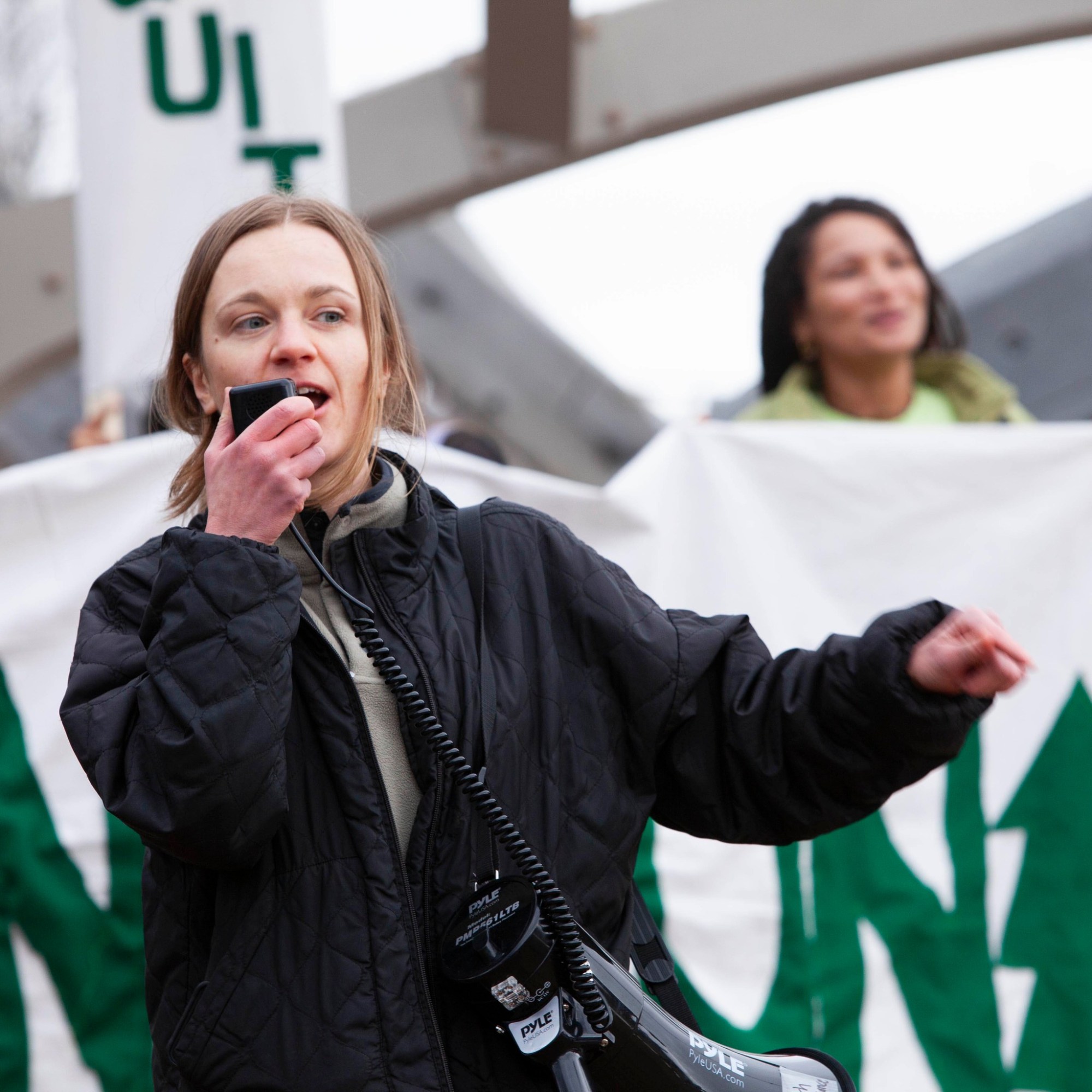

This story is the first in an occasional series on how Kelsea Bond, Atlanta’s first socialist city council member, is navigating the switch from community activist and political outsider to their new role as a City Hall insider. This story was reported over the course of three months and dozens of conversations with Bond.

Kelsea Bond, the first Democratic Socialist elected to Atlanta City Council — and the only socialist elected last year in the South – aims to shake things up at City Hall. After winning Midtown’s District 2 seat with a whopping 64% of the vote, the 32-year-old data analyst and labor organizer started mobilizing Atlantans before they even took office on Jan. 5. Using the same grassroots tactics that got them elected, Bond has already motivated their constituents to show up and speak out about how their tax dollars get spent.
“There has never been a moment like this on Atlanta City Council, where we have an organizer on the inside working on the outside with a movement — with labor movements, with community organizations — to cause trouble in and outside of City Hall,” Bond told an adoring crowd of supporters packing the back room of Manuel’s Tavern for their Jan. 9 inauguration party.
“We did what nobody ever thought was possible, because working people here in Atlanta are mad,” they said. Bond, one of the few renters on the city council, told Atlanta Civic Circle that their simple statement — “I couldn’t afford to raise a family in this city if I wanted to” – resonated most strongly with voters.
Bond wants to make Atlanta more affordable for working people and promises greater transparency at City Hall. They won District 2 in a landslide by confronting the Atlanta establishment. They harnessed voters’ anger at the city’s mounting affordability crisis and issues, like Mayor Andre Dickens jettisoning Eastside Beltline rail and scuttling a citizen referendum over the controversial Atlanta Public Safety Training Center, also known as Cop City.
“We’re mad that they ignored 100,000 people and built Cop City because corporations wanted it,” Bond told their supporters at Manuels, a longtime Democratic hangout. “We’re mad about the fact that the city upholds the will of Coca-Cola and Home Depot and Delta at the expense of working people that are getting pushed out every single day,” they added, referencing some of the top funders for the police training facility’s construction.

“We have a lot on our agenda for this year, and again, I’m gonna need y’all’s help,” Bond concluded, directing their supporters to take out their phones and sign up to volunteer on their website. During their campaign, Bond mobilized over 200 volunteers to knock on doors. Now they are asking Atlantans to get involved at City Hall.
“Most politicians just suck,” said one of the Manuels revelers, 26-year-old software engineer Mathewos Samson. “But when I saw someone running for city council who had actually been protesting Cop City and organizing workers, I was like, holy shit — this person’s really about it.”
Samson, who lives in the Old Fourth Ward, said Bond stood out in a field of District 2 candidates he viewed as interchangeable. “The thing that really excited me about Kelsea is that none of the other candidates were going to challenge the Atlanta Way,” he said. “Even the progressives on city council — none of them are about it the way Kelsea is.”
Samson was so enthusiastic about Bond that he volunteered as a door-knocker – his first time ever canvassing for a politician. That inspired him to join Bond’s political party, the Democratic Socialists of America. Bond’s political ascendance, like that of fellow Democratic Socialist, New York City Mayor Zohran Mamdani, signals that socialism is no longer a scary word for many Atlanta voters.
But to Bond, it’s organizing — not the star power of individual politicians — that is the key to lasting change. “I know we all idolize Zohran Mamdani. He’s so cool,” Bond said to laughter from the Manuels crowd. “But we have to be our own heroes: I am only as powerful on the inside of City Hall as you guys are able to organize and show up for me.”

Bond’s path from Democrat to leftist
Bond grew up in a progressive Decatur household with the belief that Democrats were “the good guys.” Their staunchly Democratic family is steeped in public service: Bond’s mother and grandmother taught in public schools, their father works for the state government, and their grandfather was a city manager for Macon and Tifton.
Bond says their shift from liberalism to socialism crystallized while studying economics in Paris for their junior year at the University of Georgia. They’d become disillusioned by Barack Obama’s presidency as they learned more about his deportation track record (still the highest of any US president) and his unprecedented drone strikes on civilians in the Middle East.
Bond found themself asking: “Are these even the good guys?”
Living in France offered a counterexample: a multiparty political system, routine workers’ strikes for better pay and working conditions, and social welfare programs, like universal healthcare and nearly no-cost university tuition that felt normal, instead of radical.
One watershed moment in Paris, Bond says, happened when they had an asthma attack. They were shocked to find an inhaler cost just eight euros (about $10) – a fraction of the US price. “I became completely sold on universal healthcare,” Bond says. “I came back to the United States with a completely new perspective on what is possible.”
That perspective turned into action during the political whiplash of 2020. The collapse of Bernie Sanders’ presidential campaign, the onset of the COVID-19 pandemic, and the eruption of Black Lives Matter protests that summer pushed Bond from quiescent protester to engaged organizer.
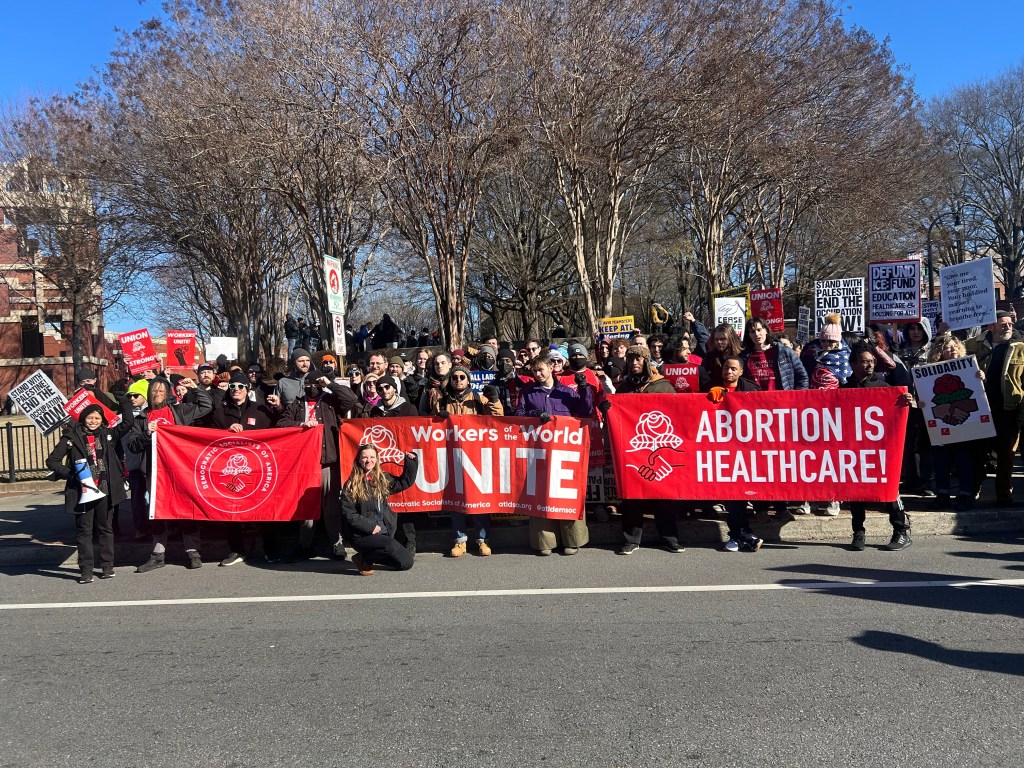
Watching massive and sustained Black Lives Matter protests produce only symbolic corporate responses instead of real changes to policing policy, Bond says, convinced them that demonstrations alone are not enough. They joined the DSA that summer, drawn by its emphasis on labor organizing.
When the Atlanta City Council in 2021 approved funding the police training facility, despite massive public opposition, it reinforced Bond’s sense that the left lacked real leverage. That changed later that year after they provided solidarity support for striking Nabisco and John Deere workers who ultimately won contract gains. Then, through the DSA, they helped to organize Atlanta’s first two unionized Starbucks stores in 2022, both in Midtown. Bond says those experiences clarified for them where power actually resides: in workers’ ability to collectively withhold their labor — not just moral appeals.
Meanwhile, Bond, who holds a master’s degree in economics, kept their day job as a policy analyst for Georgia agencies. In 2023, as a data analyst at Georgia Tech, they helped restart the employee union, United Campus Workers, and worked on state legislation to legalize public sector bargaining rights (still banned in Georgia).
‘Be our own heroes’
Now Bond is applying their labor organizing skills to politics. “When the campaign ends, voter participation dissipates,” they say. Instead, Bond wants “to keep people engaged and give them an action item beyond voting.”
Bond started activating constituents as soon as they won their election. In late November, they successfully mobilized supporters to block the Dickens administration from rushing a controversial proposal through city council that would extend the life of Atlanta’s eight tax allocation districts (TADs) to 2055.
The Dickens administration says the TAD extensions would generate $5.5 billion in new public-private investment within these designated zones by continuing to divert their property tax revenue from the city, Atlanta Public Schools, and Fulton County. Critics say the extensions would shortchange public schools and disproportionately benefit private developers.
Via DSA emails and their social media, Bond called on supporters to flood the public comment period at a Nov. 25 city council meeting. The strong turnout pushed the council to delay the TAD extension vote until after the new council — including Bond — was sworn in. Now, a vote is not expected until after a TAD study committee delivers its report to city council on March 30.
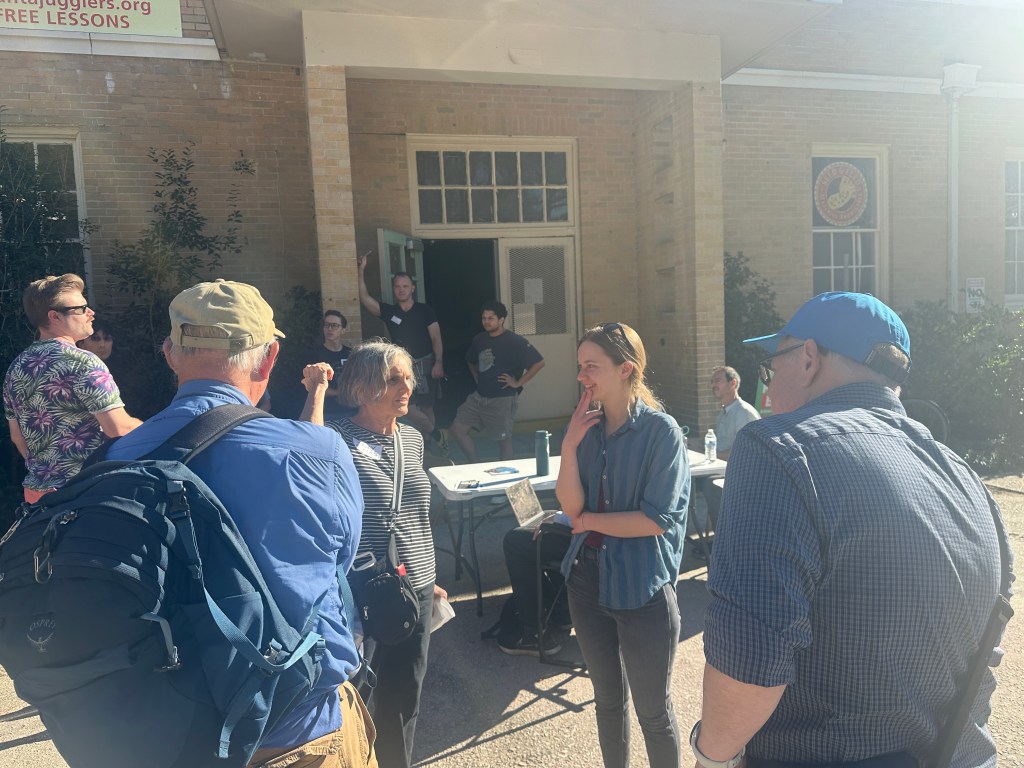
Bond also engaged constituents through neighborhood forums and a November town hall at the Little Five Points Community Center. About 100 attendees broke into smaller groups to strategize around their top priorities, whether it was transparency around TADs, Eastside Beltline rail, or housing affordability. The format, which Bond calls “people’s assemblies,” traces back to Athenian direct democracy. It has reappeared in formats ranging from New England town halls to Soviet workers’ councils.
Bond has also continued supporting working people. They’ve joined the picket line for Starbucks workers on strike since November and attended a January rally for unionized Avis airport workers, calling for higher pay.
City Hall from the inside
But Bond doesn’t aim to always be the oppositional voice on the 15-member city council. In fact, their most recent mobilizing action was to support the mayor. Dickens criticized the Fulton County Commission for reneging on supportive services for homeless Atlantans who’ve been rehoused by the city. In response to the public outcry, the Fulton commissioners reversed course at their Jan. 21 meeting, adding $2.4 million to its 2026 budget for homeless services.
To learn how city government works, Bond, before taking office, invited their new City Hall colleagues to meet, whether over lunch, coffee, a phone call or, at City Hall. “There are certain things you can only learn through conversation. There’s no manual on how to be a city council member,” Bond says.
Bond rendezvoused with new City Council President Marci Overstreet, the mayor, and his chief of staff, Courtney English. They also met with eight of their fellow councilmembers, including District 8 Councilmember Mary Norwood, a conservative city council veteran since 2002 and a fellow zoning committee member. “She’s been around a really long time in politics, so there are things only she knows, history that she’s lived through,” Bond says.
They also met with their District 2 predecessors — Amir Farokhi, who resigned last summer to head The Galloway School, and his interim replacement, Carden Wyckoff — as well as former council president Doug Shipman. Over coffee, Farokhi offered Bond some sound advice: “Don’t only listen to the loudest constituents.”
As a new council member, Bond underwent a day-long orientation on Dec. 17 with fellow freshmen Wayne Martin and Thomas Worthy to learn ethics rules and parliamentary procedure. The day ended with a mock council meeting — including simulated public comment from constituents. “They were trying to mentally prepare us for public comment,” Bond says, expressing relief that there wasn’t a mock leftist activist modeled after their former self.
Along with the zoning committee, Bond’s has been appointed to the council’s utilities, and community development committees. “The zoning agenda packets are pretty undecipherable,” they say. It’s for that kind of unglamorous but important committee work that council members rely on their staff. Bond has hired two fellow Democratic Socialists: Marco Orrel as chief of staff and Bianca Garcia as a policy assistant and constituent services liaison.
While strolling through the Midtown PetSmart in late January, Bond, who was recovering from the flu, said they were still furnishing their new office. They had already made one key decision: installing three aquatic frogs as office pets.
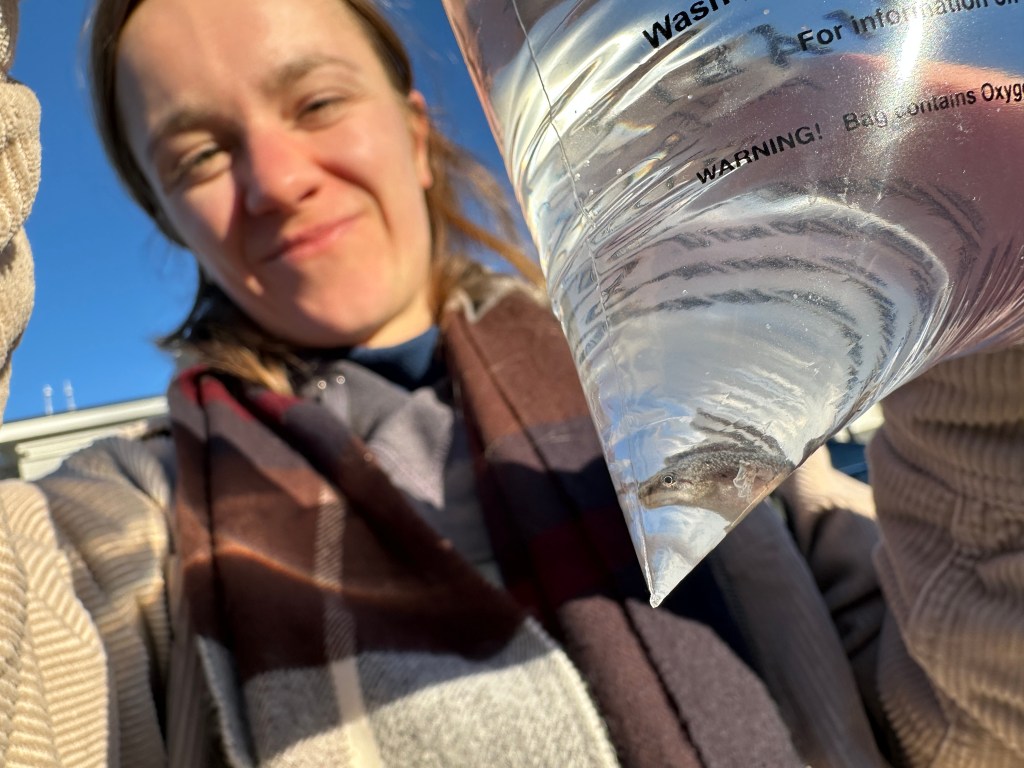
Two of the frogs, Frogerich Engels and Frog Hampton, are named after socialist giants Friedrich Engels and Fred Hampton. The third, Jason Funderberker, is from Bond’s favorite Cartoon Network show, Over the Garden Wall. The show tells the whimsical story of two half-brothers on a journey with their pet frog through the unknown. The older one, Wirt, ultimately figures out how to take active control of his life, rather than be a passive bystander.
Was the name choice a nod to a journey of political activation? Bond simply replied: “People who know the show will think it’s funny.”

Leave a comment