


EDITOR’S NOTE:
This story was reported over the course of nearly three months, supported by public records obtained by Atlanta Civic Circle, and dozens of on- and off-the-record conversations with former and current city officials, neighborhood leaders, developers, housing experts, and nonprofit researchers. It endeavors to demystify the complex — often painfully dense — relationship between tax increment financing and the Dickens administration’s vision for the $5.5 billion Neighborhood Reinvestment Initiative. This story represents just the start of a long reporting journey tracking the mayor’s push to extend its eight Tax Allocation Districts until 2055 in pursuit of that ambitious community revitalization plan.
“A tale of two cities”
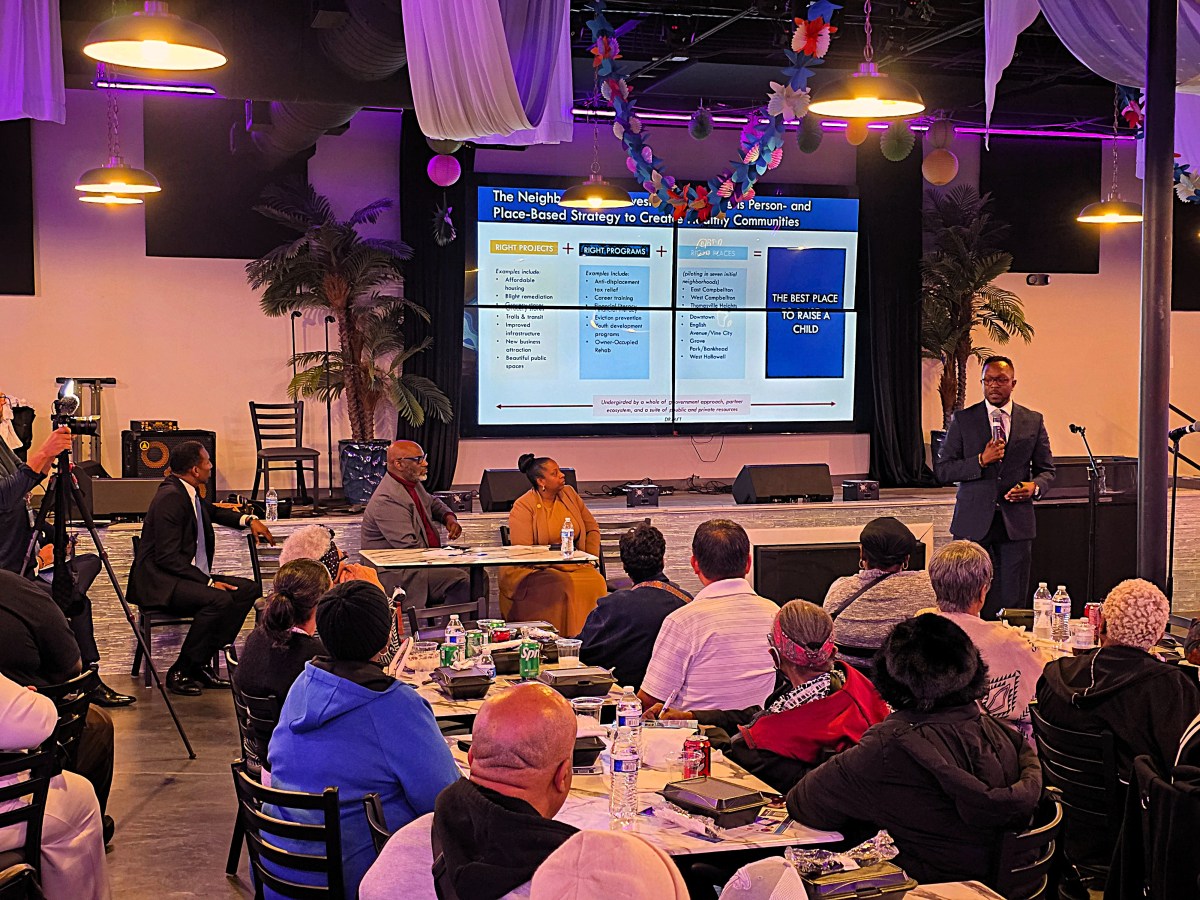
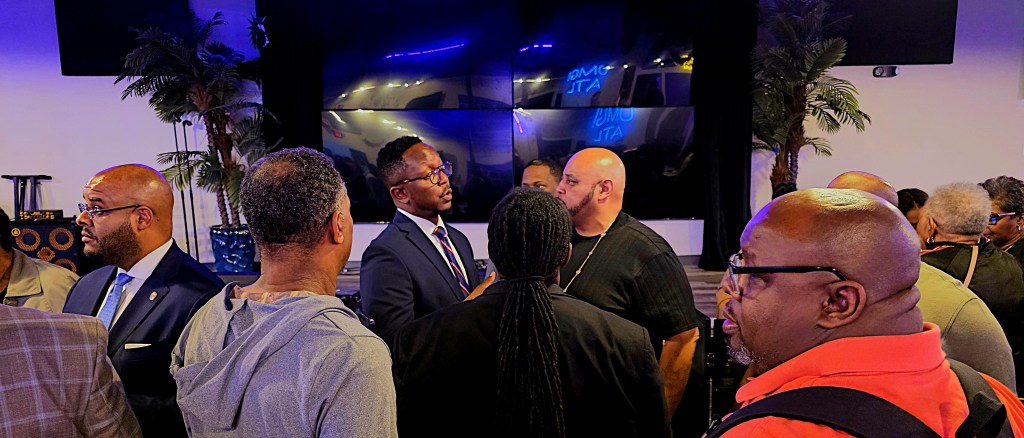
On a breezy Tuesday evening early this month, Mayor Andre Dickens marched into a southwest Atlanta nightclub to a greeting of whoops and applause.
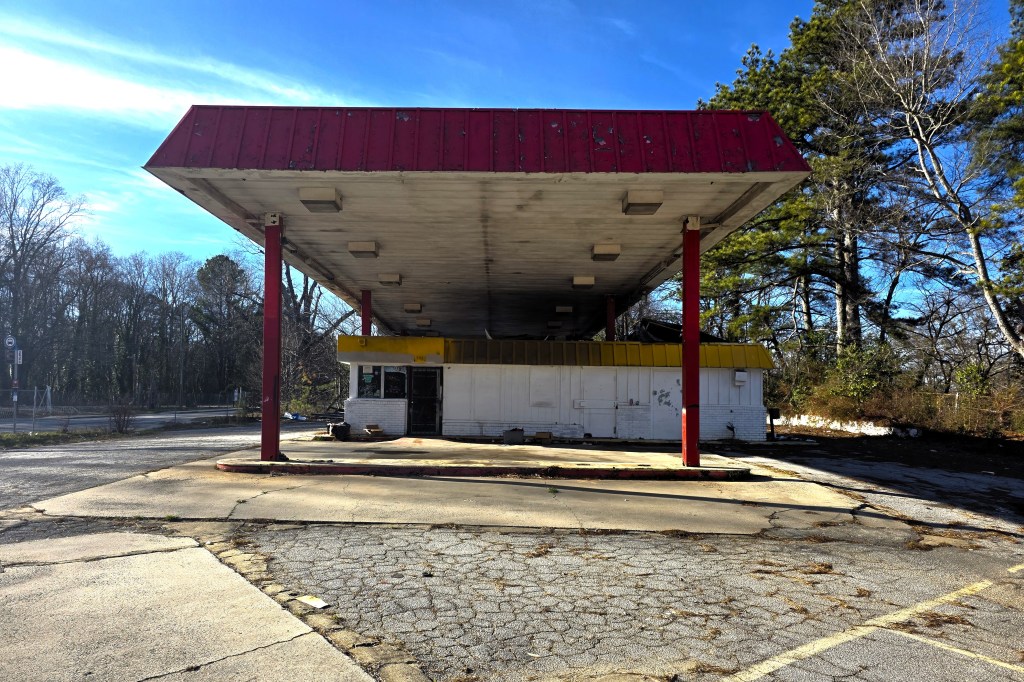
The club, OMG! That’s Good!, was packed — but no one had come to party. Residents had gathered to hear about the city’s plan to pump an unprecedented amount of money into the struggling Campbellton Road corridor — a stretch through neighborhoods like Adams Park, Pomona Park, and Venetian Hills, where liquor stores, shuttered businesses, and neglected properties line the road.
Through a PA system, Dickens delivered a familiar message: Atlanta was trapped in a “tale of two cities” — one wealthy, the other impoverished and underinvested — divided by race, income, wealth, and even life expectancy.
The $5.5 billion Neighborhood Reinvestment Initiative that he announced last September, Dickens said, would rewrite that story, promising $1.5 billion for trails and greenspace, $1.8 billion for transit expansion, and, perhaps most importantly, $1.3 billion for affordable housing.
To pay for it, the mayor said, the city must extend the lifetimes of its eight Tax Allocation Districts (TADs) — public financing zones that capture future growth in property tax revenue to fund development projects — until 2055.
For the mayor, the strategy is a no-brainer. But threaded through the applause was an undercurrent of disbelief. Many residents said they had heard similar promises before.
One community leader asked what happened to the medical center once proposed near a local Kentucky Fried Chicken. Another wondered why neighborhood schools were closing — and what the city would do about it.
“The TAD has been here many years, but the community has not benefited,” one neighbor said.
Critics in many of the city’s most underinvested neighborhoods are asking how much benefit residents of the current TADs have received over the 20 to 34 years they’ve already been operating.
They’re also asking why all eight TADs should be extended for longer — particularly when the three highest grossing ones, the Beltline, Westside, and Eastside TADs, have already generated massive development, along with gentrification and displacement.
The Partnership for Southern Equity found in a 2023 study that the eight Atlanta TADs have caused “poor communities to subsidize their own displacement,” rather than delivering much benefit. “If the goal is to address income inequality, then there’s a disconnect between TADs being the silver bullet and that expressed goal,” said Suzanne Burnes, the group’s Just Growth director.
How it works
The funding for Dickens’ Neighborhood Reinvestment Plan hinges on extending the lifetimes of Atlanta’s eight TADs until 2055 – well beyond their current 2030 to 2050 expiration dates.
TADs generate what’s called “tax increment” revenue that Invest Atlanta, the city’s economic development agency, uses to fund development projects, usually through public-private partnerships. Over its lifetime, each TAD collects future increases in property tax revenue, above a baseline set at the start date, from the city, Fulton County, and Atlanta Public Schools (APS) to fund development within the TAD.
The additional TAD revenue would go into a locally controlled development fund managed by Invest Atlanta, says Courtney English, the mayor’s chief of staff. With federal support uncertain and state dollars limited, he adds, that money is key to revitalizing lower-income areas of the city, without raising property taxes.
“We need as much affordable housing as we can get,” English told Atlanta Civic Circle. “We need to eliminate food deserts by building grocery stores and increasing access to fresh food, particularly in underserved communities. We need access to high-quality early-childhood education centers, parks, trails, green space, and transit options.”
Extending the TADs for Dickens’ $5.5 billion neighborhood revitalization plan would require approval from APS, which collects half of Atlanta’s property tax revenue, and Fulton, which collects one quarter — with the other quarter going to the city. Both APS and Fulton leaders have expressed reluctance to forego future property tax revenue for longer than already agreed.
If APS and Fulton reject extending all eight TADs, they’d collect only Atlanta’s diverted property tax revenue. Using the Dickens’ administration’s math, that would generate only $1.375 billion, with $343.8 million for housing, through 2055.
A tale of rich TADs and poor TADs
At the March 3 community meeting at Campbellton Plaza, the mayor told southwest Atlanta neighbors that the city “doesn’t have a growth problem; we have a balanced growth problem.”
Critics say the TADs themselves reflect that balanced growth problem, in what could be considered a tale of two types of TADs.
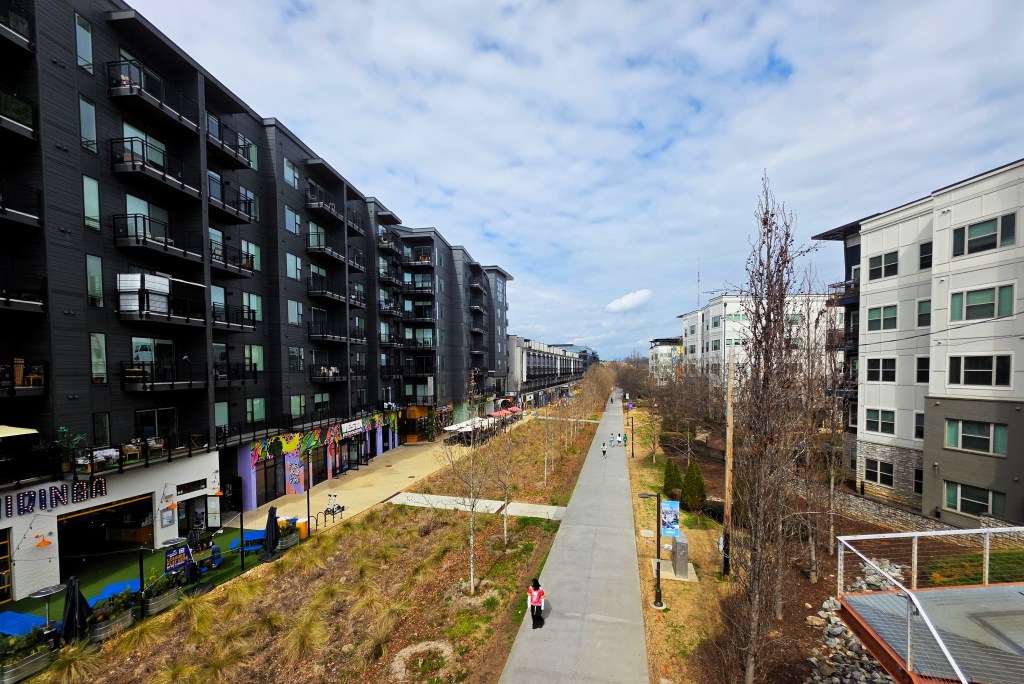
For the wealthiest districts — the Beltline, Eastside, and Westside TADs, currently set to expire over the next five to 13 years — TAD funding has supercharged private development. But it has also fueled gentrification and displacement, as property values spike.
“There aren’t enough guardrails currently to prevent the displacement, especially of legacy residents in Atlanta,” said Alex Camardelle of Kindred Futures, an Atlanta nonprofit focused on Black wealth-building. So far, he added, the Dickens administration hasn’t shown how TADs can both stimulate private development and prevent displacement.
But that kind of large-scale transformation hasn’t happened for high-poverty neighborhoods in the Perry-Bolton TAD northwest of Georgia Tech, and the four corridor TADs that run along Campbellton Road; Donald Lee Hollowell Parkway and Martin Luther King Jr. Drive; Metropolitan Parkway; and around Mercedes-Benz Stadium. The Perry-Bolton TAD currently sunsets in 2041, and the corridor TADs in 2050.
Skeptical residents ask whether extending the lifetimes of these far lower-grossing TADs will change that. “Why do we need to renew TADs that have already been in place for 30 years where there’s been zero benefit, or very little benefit?” asked one Perry-Bolton TAD resident, Torrey Sumlin, who leads Neighborhood Planning Unit G (NPU-G).
“The benefit has barely scratched the surface, and you’re asking me to support TADs for another 30 years. I’ll be dead before y’all do what you’re supposed to do,” he said.
Not all TADs are equal
Skeptics fear that extending all eight TADs would only accelerate already explosive development in wealthier neighborhoods, while poorer communities fall by the wayside.
Since their inception, Atlanta’s eight TADs have generated roughly $1.85 billion in tax increment revenue, according to unaudited financials from the city of Atlanta. Most of that money — almost $1.65 billion — has flowed to the three big revenue-generators, the Beltline, Westside, and Eastside TADs, closer to Atlanta’s core with a stronger existing commercial base.
What’s more, Invest Atlanta has issued $848 million in bonds for the Beltline, Westside, and Eastside TADs against projected property tax growth to further subsidize economic development projects.
The Perry-Bolton and corridor TADs, which cover higher-poverty areas where it’s harder to attract private investment, have collected just $202.2 million total.
Invest Atlanta has issued just $21 million in bonds for Perry Bolton over its 24-year lifetime — and zero bonds for the corridor TADs. Since tax-increment revenue collection has been very low for the corridor TADs, “bonding capacity was/is negligible,” the agency said in an email statement.
The revenue disparities underscore that the TADs were created for different purposes. The main goal of the Beltline TAD was to finance the 22-mile, multi-use trail. Almost 65% of the $865 million it’s collected in tax increment revenue has been used for that.
The Westside and Eastside TADs have aimed to catalyze redevelopment in disinvested neighborhoods near downtown, while the Perry-Bolton TAD launched to drive the redevelopment of the former Perry Homes public housing property, owned by Atlanta Housing (AH). AH’s development partner, Brock Built Homes, has transformed it into the massive West Highlands residential development, where home prices start from the high $600,000s.
For the Perry-Bolton TAD, the $126.3 million in tax increment revenue it’s collected since its 2002 inception has helped to fund the Moores Mill Village shopping center, upgrades to English Park, and greenspace around West Highlands.
But longtime residents in other Perry-Bolton neighborhoods, said Sumlin, the NPU-G chair, have watched some historic Black communities decline, as homes deteriorate and sidewalks crack. The new Publix in the Moores Mill shopping center, he added, doesn’t make up for unrealized improvements elsewhere.
The primary purpose of the four corridor TADs is to fund housing and community facilities, and to revive aging commercial strips. But they’ve only generated between about $8.9 million and $33.5 million apiece over two decades, leading some neighbors to wonder whether their local TADs are functioning properly, and if keeping them alive past their 2050 expiration date would expedite overdue projects, like reviving Campbellton Plaza or nearby blighted properties.

Invest Atlanta says one reason the corridor TADs’ revenue collection is lower is because APS didn’t start diverting its half of Atlanta property tax revenue to them until 2024 — long after their 2006 launch. What’s more, APS’s tax increment contribution is capped at $5 million annually until 2028 and then at $6.5 million until 2050.
That math has critics like Camardelle wondering whether lower-income TADs will ever be able to collect enough cash to realize the mayor’s Neighborhood Reinvestment Initiative vision.
How much affordable housing?
One major aim of Atlanta’s TADs is to expand housing in underinvested neighborhoods. From 2014 to 2025, they helped to finance 6,476 rental units priced at below-market rents — on average, 540 units per year. Roughly four-fifths of them are affordable for people making 60% or less of the area median income (AMI). For a single Atlantan, AMI is $80,000.
But are highly developed TADs, like the Beltline and Westside, gentrification engines that hike housing costs more than they foster affordability? In 2025 alone, these two TADs spent over $38 million to subsidize roughly 1,300 housing units — but fewer than 400 were designated as affordable.
For instance, Invest Atlanta allocated $4 million in Westside TAD funds last year to subsidize affordable rent for 66 units (at 60% of AMI) at the $134 million Generation Atlanta apartments overlooking Centennial Park. Market-rate rent for one-bedrooms there starts at about $1,800.
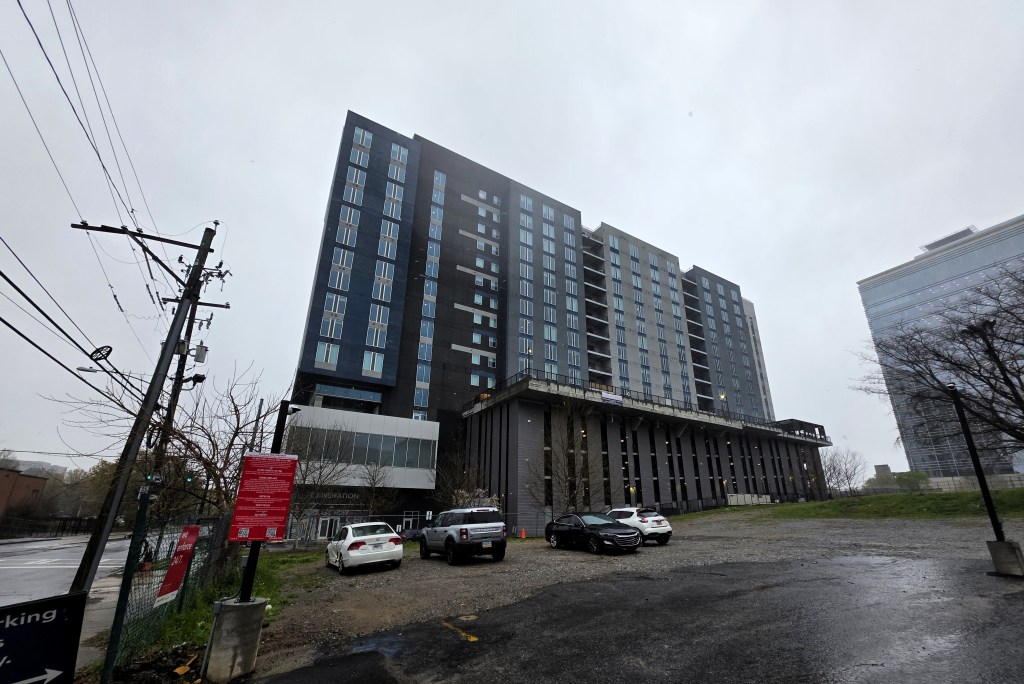
But John Ahmann, CEO of the nonprofit Westside Future Fund, views TADs as essential to funding housing in historically disinvested neighborhoods like Vine City and English Avenue. “There are a lot of projects, specifically affordable housing projects, that cannot get done without this tax increment financing,” said Ahmann, who’s also on the Neighborhood Reinvestment Initiative Commission, a board tasked with establishing the initiative’s broad goals.
Between 2022 and 2025, Ahmann said, the Future Fund used $10.3 million in Westside TAD financing to realize $82.3 million in total investment for 229 affordable housing units (priced at or below 80% AMI) in English Avenue and Vine City. More time for the Westside TAD to collect revenue means more subsidy, which means more housing, he said.
That said, the Eastside TAD didn’t spend a dollar on housing last year. Its largest allocation from Invest Atlanta was $3 million for downtown streetscape improvements. The Perry-Bolton TAD spent a substantial $20 million last year on housing, for homeownership initiatives, land acquisitions and 134 apartment units — of which 104 are designated affordable.
Affordable housing created via TADs
Approved projects: 2014–2025. Source: Invest Atlanta.
Here are how many housing units that TADs have funded at rental or sale prices affordable to Atlantans making less than the area median income (AMI).
The city’s corridor TADs spent a combined $13 million last year on housing-related projects, but only $5 million of that funding is tied to clearly identifiable housing production, netting 242 units: $3 million for 112 rapid-rehousing units at 405 Cooper St. in Mechanicsville, and $2 million for 130 units at the Metropolitan Place Apartments at 2333 Metropolitan Pkwy.
The remaining $8 million went toward land acquisition and pre-development initiatives. For example, Invest Atlanta’s largest allocation for the Campbellton TAD last year — $5 million — was a loan to a developer to buy 26 acres near Greenbriar Mall for a $500 million mixed-use overhaul, which includes 1,069 apartments. The majority of those will rent at market rate, with 15% priced below market. That translates into rents of $1,506 to $2,236 for Atlantans making 80% AMI or less.
Why extend all eight TADs?
Former Atlanta City Council President Doug Shipman says the key question for extending the city’s TADs through 2055 isn’t whether they can spark economic development, but whether the Dickens administration has demonstrated why each of the eight districts needs more time to collect property tax revenue.
“It’s a lot of eggs in one basket,” Shipman said. “If you were actually trying to make this case, the first thing that should be done is have Invest Atlanta run the analysis by TAD on how much money per year would be generated.” That should be paired with specific projects and measurable policy outcomes, he said.
Some elected leaders are asking whether City Hall has produced the evidence to justify locking up decades of future property tax growth. The city’s most recent TAD performance audit was in 2012, when the City Auditor found that the city and Invest Atlanta did not systemically track whether the TADs’ redevelopment goals were being met. City Auditor Amanda Noble said her office will issue a follow-up report in June.
Several city council members, including District 2’s newly elected Kelsea Bond, say they want to see that data and specific project details before voting on whether to extend the eight TADs’ lifetimes.
“I am open to being persuaded,” Bond said. “But basically, I’ve seen nothing. If we’re going to dedicate $5 billion of future tax revenue to this big question-mark plan, our constituents at the very least deserve some sort of project list or mathematical breakdown.”
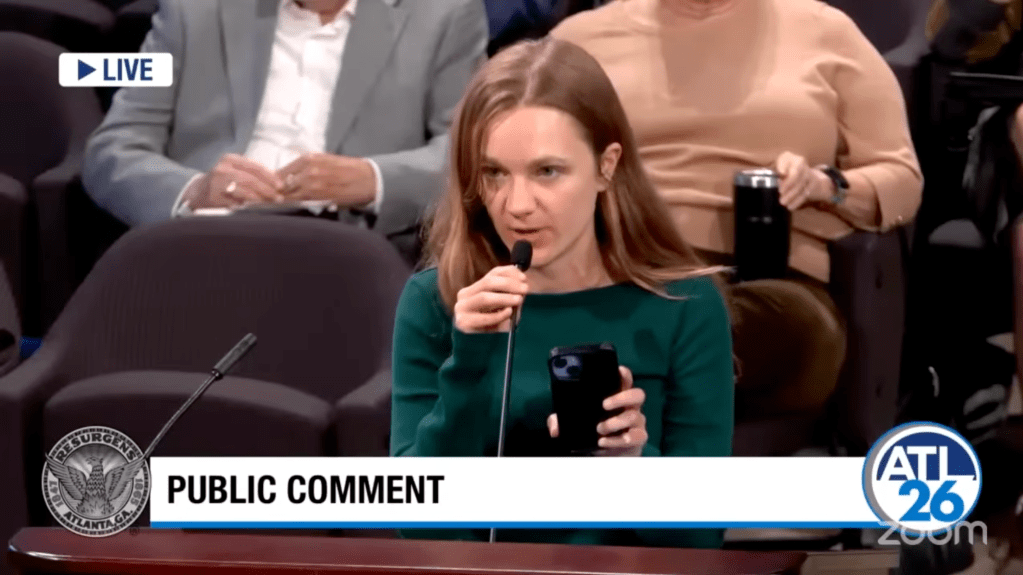
When the mayor’s office tried to push the TAD extension proposal through a city council vote last November, Bond organized public opposition. The council tabled the vote to allow more time to consider Dickens’ new proposal.
The Atlanta City Council subsequently formed an oversight group, the Neighborhood Reinvestment Initiative Commission, to map out broad development and implementation goals for the initiative, which depend on the estimated $5.5 billion in additional revenue from prolonging the TADs’ lifetimes. The task force is also assessing if extending all eight TADs through 2055 is the best way to achieve those goals.
The task force is scheduled to recommend guiding principles for the TADs by March 31. However, the group’s public meetings to date indicate that members are deeply divided over whether extending the lifetime of all eight TADs is the best strategy to realize the amorphous goal of spurring economic activity where it’s needed most.
Along with Ahmann, the 13-member task force includes English, City Councilmembers Matt Westmoreland and Jason Winston, APS board member Ken Zeff, Fulton County Commissioner Dana Barrett, and others from philanthropic foundations, civic groups, and real estate developer Carter USA.
While English insists that pushing back the TADs’ expiration dates offers the best opportunity to raise revenue and fast-track projects, Barrett and Zeff, the Fulton and APS task force members, have raised concerns at the meetings about forfeiting additional property tax revenue.
Mission accomplished?
Once a TAD has stimulated sufficient development in an underinvested area, it’s supposed to end. For instance, Invest Atlanta closed the Atlantic Station TAD in 2024 after a 25-year run, saying it had achieved its purpose.
At that point, the Atlantic Station TAD had generated the seed funding to transform a contaminated steel-mill site in Midtown into a high-end mixed-use development. The property’s value jumped from $7 million in 1999 to $843 million in 2024, according to Invest Atlanta, increasing property tax revenue from $350,000 to over $25 million for the city, Fulton County, and APS.
So why extend the timeline for all eight TADs – including highly developed areas like the Beltline and Westside TADs? English says it’s because they haven’t yet completed their missions, whether it’s to revive blighted commercial corridors, build affordable housing, or stimulate transit and infrastructure projects.
If the Beltline’s highly developed Eastside Trail were itself a TAD, English said, its job would be done. But the district covers neighborhoods where development has lagged.
“The Eastside Trail is only about 2% of the entire TAD,” he said. “But if you were to cross over to Pittsburgh Yards, that needs help. Where the Beltline touches Peoplestown or Mechanicsville, those folks certainly need help. Where it goes through Mosely Park, Washington Park, Adair Park — those all represent opportunities to develop additional affordable housing.”
English said the same logic applies to the Westside TAD – the city’s oldest, which launched in 1998. Thanks to $1.2 million in TAD support, he said, Rodney Cook Sr. Park replaced a flood-prone site in Vine City. There’s more work to do in surrounding areas, he added, like neighborhoods flanking the Atlanta University Center that need infrastructure improvements, housing, and grocery stores.
The Atlanta City Council hasn’t scheduled a vote on extending the eight TADs yet, as it awaits the Neighborhood Reinvestment Initiative task force’s March 31 report and the city’s TAD audit in June.
APS and Fulton must also decide if they want to extend their TAD participation — and their diverted tax increment revenue makes up 75% of the TADs’ funding.
Besides APS and Fulton buy-in, the billions of dollars Dickens hopes to reap from extending all eight TADs until 2055 depend on continued property value growth, successful bond issuances, and development deals that have yet to materialize.
What kind of accountability and transparency will the city and Invest Atlanta demonstrate in how they allocate the TAD revenue? And what kind of input will the TAD residents have?
Those factors will determine whether the mayor’s Neighborhood Reinvestment Initiative closes the city’s “tale of two cities” — or simply opens a new chapter.
How to get involved: Residents can weigh in on the city’s $5.5 billion reinvestment plan at the Neighborhood Reinvestment Initiative Commission’s public meetings, which are sometimes held virtually. Details and schedules are posted on Invest Atlanta’s website. Community groups are also hosting TAD Town Halls, including the Center for Civic Innovation, Working Families Power, Housing Justice League, and others. They’ll explain how Tax Allocation Districts work and gather neighborhood feedback.
Great article Sean and ACC. TADs exist to fund projects that raise property values in an area so a larger tax base can generate more revenue once it closes.
If a TAD isn’t raising the tax base, it isn’t working.
If a TAD has raised the tax base significantly, it needs to close.
Finally, raising the tax base raises costs for legacy residents and drives gentrification and displacement. You cannot address the needs of legacy residents by pricing them out. Nothing about this proposal makes any kind of sense.
For anyone curious about what the Area Median Income levels in the story translate to in terms of dollars – https://atlantalandtrust.org/wp-content/uploads/2025/07/2025-HUD-AMI-Income-Limits-Chart-effecitive-6-01-2025.pdf
Additional $5.5-$12 Billion floated by the Mayor’s office for this, we are accruing an estimated $1.5+ Billion amount in addition of More MARTA sales taxes than anticipated when approved in 2016, yet they refuse to commit to unblocking Eastside BeltLine Rail to Ponce City Market.
All eight TADs are currently under audit for a reason — accountability has been lacking, and the results speak for themselves. The situation with the Greenbriar–Mural project is a clear example: public dollars have been committed, yet the private developer has not fulfilled their financial obligations. At this point, the City should reassess, divest from stalled projects, and redirect those funds back to Campbellton Road, where they were originally intended and are urgently needed.
Equally concerning is the continued pattern of disengagement and disregard for the community. Hosting a public meeting in a nightclub, with little attention to professionalism or accessibility, sends the wrong message to residents who have been asking for transparency and respect. Even more telling, many in attendance were City employees who live near — but not within — the Campbellton Road corridor, highlighting the longstanding imbalance in investment and attention given to our community.
This is not just a matter of oversight — it reflects a deeper failure in leadership and priorities. The residents of Southwest Atlanta deserve thoughtful planning, transparent decision-making, and investments that directly benefit the people who have sustained this community for decades. It is time for leadership to be held accountable and for the community to come together, organized and informed, to demand better outcomes and a future that reflects our collective vision—not one imposed without us.