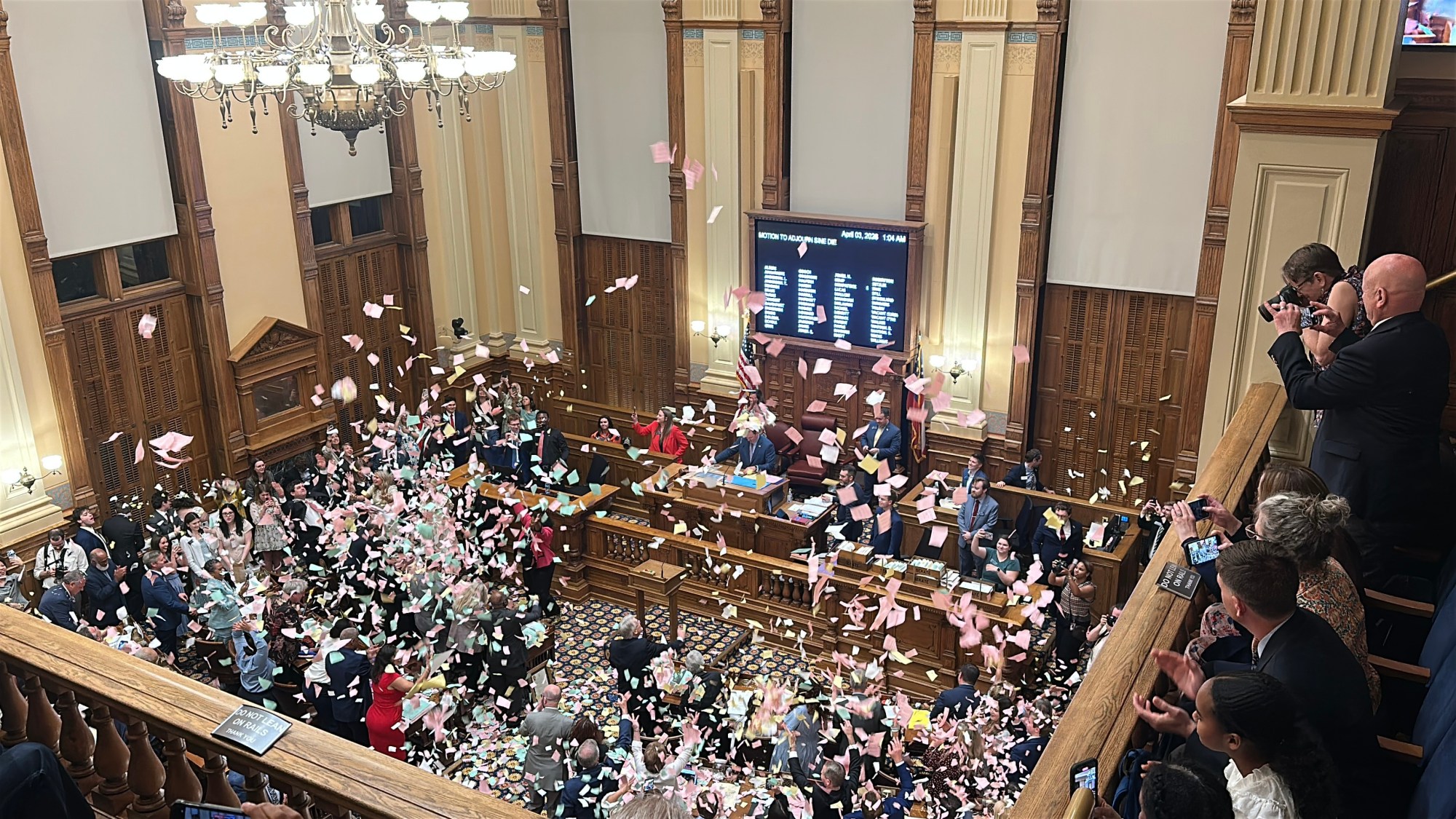

The Georgia Legislature did not adjourn its 2026 session until 1 a.m. Friday, as lawmakers scrambled to pass the state budget and last-minute bills by Sine Die, its April 2 conclusion.
Most of the housing, civil liberties and elections bills that Atlanta Civic Circle has been tracking ultimately stalled. Notably, the Senate and House failed to agree on an election law compromise to extend a July 1 deadline for the state to remove QR codes from ballot printouts.
That deadline, mandated by an omnibus 2024 election law, looms large over the upcoming November midterm elections. The 2024 law also requires using the ballot printouts, not an electronic voting-machine tally, for any election recounts – but it provided no plan nor funding for the transition.
That left it up to lawmakers to figure it out. Enter Senate Bill 214 — a Republican-backed bill to switch Georgia elections from voting machines to hand-marked paper ballots. The House, with bipartisan support, substituted a lengthy elections reform package that extended the July 1 deadline to remove the ballot QR codes to 2028. However, Lt. Gov. Burt Jones refused to put it to a final yes-no vote in the Senate on Sine Die.
That means Kemp could call a special legislative session before July 1 to resolve the impasse.
Late on Thursday night, state lawmakers did approve a $38.5 billion state budget for fiscal year 2027, which starts July 1. Now it’s up to Gov. Brian Kemp to veto or sign into law the final bills from the legislature — or do nothing and allow them to become law 40 days after the session’s end.
What final bills passed by Sine Die?
Here are three civil liberties, elections, and housing bills that passed and now await Kemp’s signature.
Senate Bill 443: Increases protest penalties
This Republican-backed bill, which passed on March 23, increases the criminal charges and penalties for obstructing a roadway – a common charge against protestors. The GOP-backed bill raises simple obstruction from a misdemeanor to a high and aggravated misdemeanor, carrying a maximum fine of $5,000 and/or an up to 12-month jail sentence. If convicted, the offender can also be sued in civil court for property damage. Read more about the bill here.
House Bill 369: Make district attorney elections non-partisan in metro-Atlanta counties
The legislature last week passed this last-minute Republican-backed bill to make district attorney elections nonpartisan for the five-county metro-Atlanta area. Why nonpartisan DA races — and only in Fulton, DeKalb, Cobb, Gwinnett and Clayton Counties? Because Republicans think they can’t win DA elections in these counties with an (R) next to their name.
The House on March 27 approved a substitute version of HB 369 — originally a bipartisan bill to regulate food trucks — that the Senate had passed March 25.
The Republicans behind the bill were able to target solely the five metro-Atlanta counties by making the provision apply only to counties that appoint county medical examiners, instead of electing coroners. Two Republicans voted against the bill, Rep. Don Parsons (R-Marietta) and Jordan Ridley (R-Woodstock). Kemp on April 1 declined to say whether he would veto the legislation.
House Bill 295: Allows property owners to seek compensation if local governments don’t enforce anti-homelessness laws
This controversial Republican-backed bill underwent multiple rounds of minor changes, ping-ponging between both chambers, before finally passing after midnight on Sine Die.
HB 295 allows property owners to sue local governments for expenses or loss of property value if they don’t enforce laws aimed at keeping unhoused people off the streets. Those laws include: public camping, panhandling, loitering, public urination, obstruction of public thoroughfares, possession or use of controlled substances, public intoxication and shoplifting.
Atlanta’s Policing Alternatives and Diversion Initiative (PAD) and other critics say the bill would divert local government funds away from housing and supportive services for unhoused people to legal fees. It would also increase pressure on cities to ticket, arrest, or otherwise displace people who have nowhere to go, they add, while discouraging community outreach and diversion strategies.
If you feel strongly about a bill that made it through the Georgia Legislature, you can contact the Governor’s Office to urge Kemp to either veto or approve it.