


How much is AI driving rent hikes?
RealPage’s rent-pricing programs powered by artificial intelligence boosted metro Atlantans’ monthly rents by $181 — more than in any other major US city — in 2023, according to an alarming new White House report.
The property-management software company enables individual landlords — corporate or otherwise — to act as cartels in local rental markets by providing them with vast amounts of aggregated rent-price data. That allows landlords in markets like metro Atlanta to “act as if they are a single dominant landlord, and use their collective market power to increase profits by setting higher prices,” the White House Council of Economic Advisers (CEA) found.
Nearly one in every four rentals nationally uses a RealPage pricing algorithm to set rates nationally, the report adds, which has prompted a U.S. Department of Justice (DOJ) lawsuit accusing the company of monopolizing the nation’s multifamily rental market. In metro Atlanta, that figure is even higher, the report found: Over 70% of multifamily units locally are priced based on the RealPage software’s recommendations.
“Algorithmic pricing weakens competition because it can facilitate price coordination among landlords who would otherwise be competing [for tenants],” the report explains. It’s a practice that the CEA estimates cost renters at least $3.8 billion in higher rents for 2023 alone, boosting the average U.S. renter’s monthly housing payment by $70.
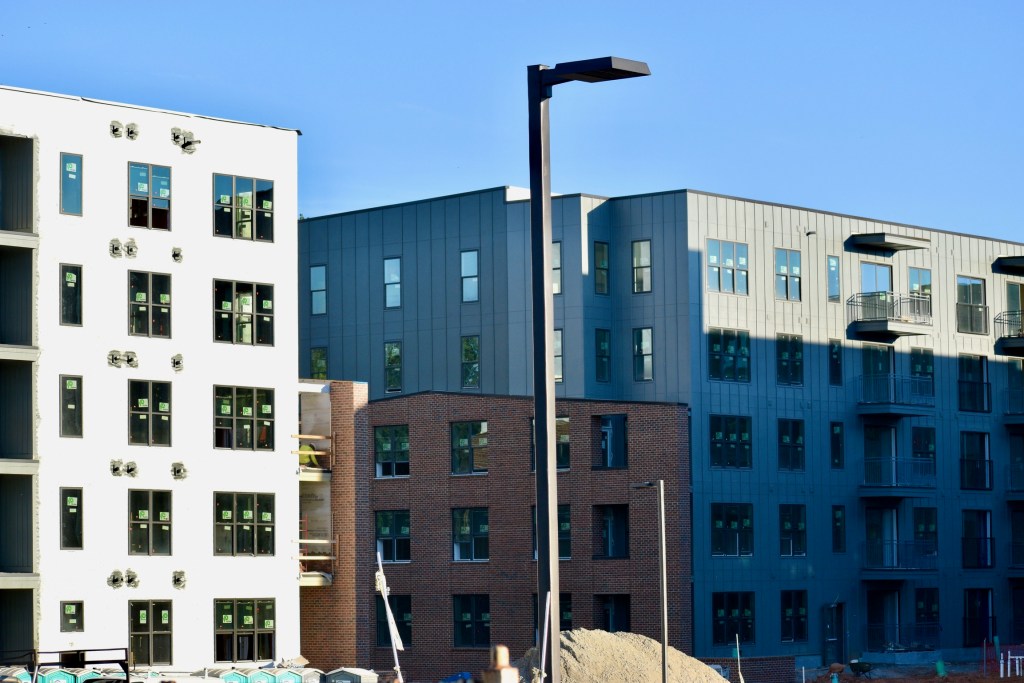
📸: Emilia Weinrobe
Atlanta-based corporate landlord settles with DOJ
In related RealPage news, the DOJ last week expanded a lawsuit targeting the software company for monopolizing the rental market to include six major corporate landlords.
But Atlanta-based Cortland Management, which was accused of using the company’s price-setting software to collude with other mega-landlords, has already settled and agreed to stop using RealPage’s and other similar algorithms, according to The Atlanta Journal-Constitution.
Cortland — along with Greystar Real Estate Partners; Blacksone’s LivCor; Camden Property Trust; Cushman & Wakefield and Pinnacle Property Management Services; and Willow Bridge Property Company — was alleged to have “participated in an unlawful scheme to decrease competition among landlords in apartment pricing, harming millions of American renters,” the DOJ said in a press release. Together, the six landlords operate over 1.3 million units in 43 states and the District of Columbia.
In addition to barring Cortland from using price-setting software, the settlement dictates that the company must “cooperate with the government” in the case.
ICYMI: Glimmers of optimism for 2025 housing policy in 2025
Georgia’s annual legislative session began on Monday, kicking off 40 days of lawmaking that will affect everything from taxation and education to election laws and housing policy.
In an end-of-year essay, I posited that a horribly bleak 2024 for housing could foretell a more promising 2025 for policy interventions at the local, state, and federal levels:
If nothing else, as the housing affordability crisis escalates to adversely impact just about everyone except the richest of the rich, elected officials of all political persuasions should now find it increasingly difficult to turn a blind eye to the policy gaps making it worse.
How emergency warming centers work
When temperatures dip below 40 degrees, Atlanta Mayor Andre Dickens’ Office of Emergency Preparedness (OEP) sets up cots and heaters in some of the city’s recreation centers to provide emergency warming centers for unhoused people.
Before the winter storm struck the South on Friday, Old Fourth Ward’s Central Park Recreation Center opened first, followed by the Old Adamsville Recreation Center on the Westside and the Selena Butler Park rec center, also in Old Fourth Ward.
Check out Atlanta Civic Circle’s Q&A with OEP Deputy Director Asher Morris to find out how Atlanta’s emergency warming center operations work.

📸: Emilia Weinrobe
One warming center’s uncertain future
The fate of one of Atlanta’s primary emergency warming centers hangs in limbo. After the Atlanta City Council abruptly passed legislation aiming to prevent warming centers from opening near schools, the Old Adamsville location could face permanent deactivation, according to Councilmember Andrea Boone, the resolution’s author.
The city hasn’t yet taken the Westside warming center out of commission: It’s currently designated as an overflow location for when the Central Park rec center, which has 125 cots, reaches capacity. Old Adamsville provides another 100 beds for unhoused people seeking shelter from the cold when the Old Fourth Ward site fills up.
Boone told Atlanta Civic Circle she intends to activate more warming center space elsewhere when Old Adamsville is eventually deactivated, but she has not yet said where.
GSU study links opioid epidemic to homelessness
A Georgia State University (GSU) researcher has identified a link between the opioid epidemic and rural homelessness, the school announced in a press release Monday.
GSU’s April Ballard, a public health professor, found that 54% of over 3,000 people who use drugs reported experiencing homelessness in the past six months. Ballard drew on data from the federally funded Rural Opioid Initiative, which covers eight rural areas across 10 states.
That figure suggests that Point in Time counts — annual, government-funded headcounts of unhoused people taken every January — “significantly underestimate homeless populations in rural areas,” GSU said.
“Rural houselessness is very much an issue in the United States, and there are unique challenges that come with it, such as lack of awareness and a lack of resources,” said Ballard, who co-leads GSU’s Center on Health and Homelessness. “When you add the opioid epidemic on top of it, it really exacerbates the problem.”



Copyright (C) 2024 Atlanta Civic Circle. All rights reserved.
You are receiving this email because you opted in via our website.
Our mailing address is:
Atlanta Civic Circle
191 Peachtree Street, NE
#450, C/O Saba Long
Atlanta, GA30303
