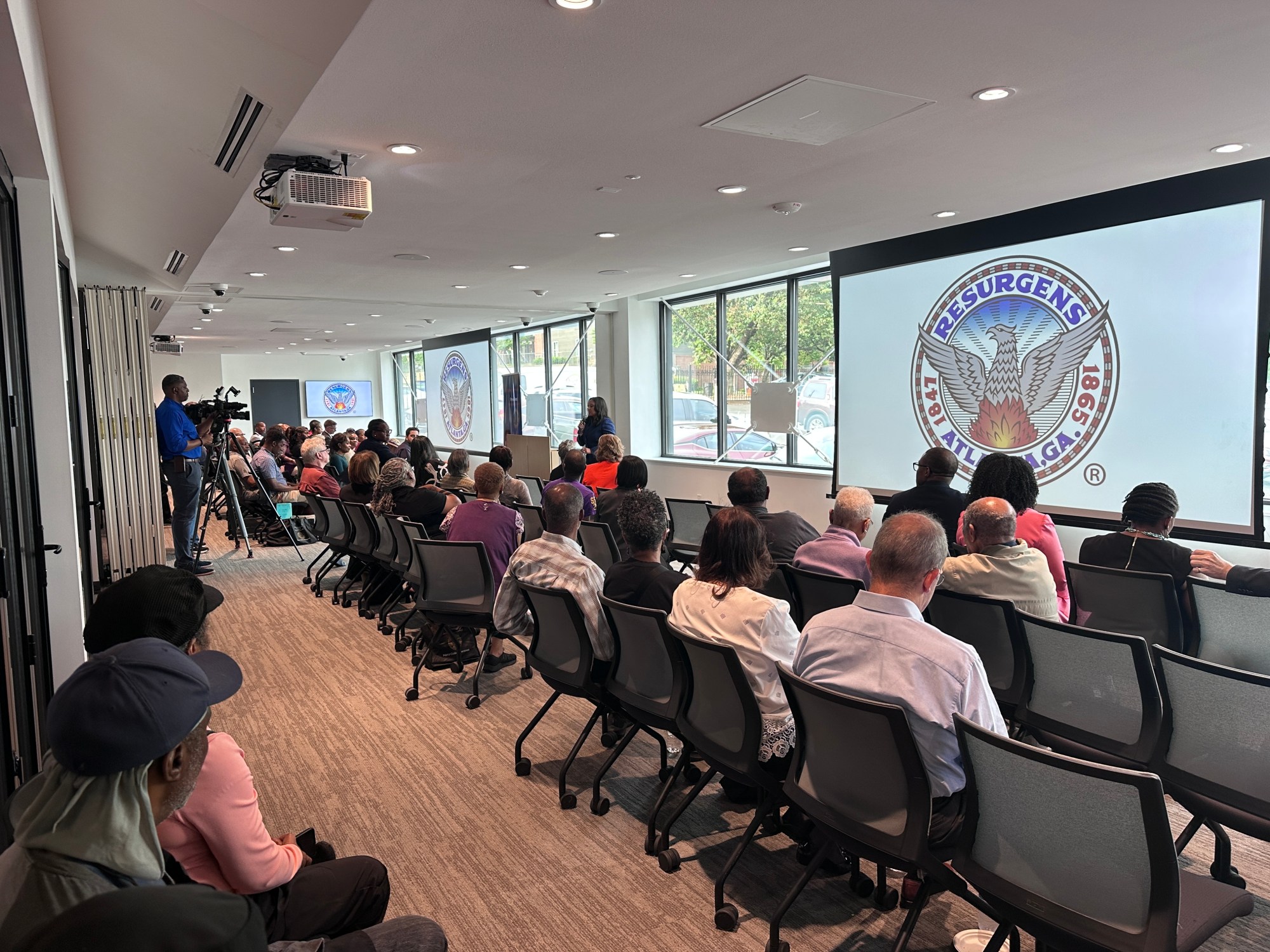

Atlanta City Council President Marci Collier Overstreet billed her first-ever town hall on Wednesday evening as “City Hall meeting residents where they are” to bring “resources to the community.”
Part Atlanta government expo and part Q&A, the two-hour event on April 29 focused on connecting Atlantans to the right offices for their concerns — and not just city departments.
The nearly 70 Atlantans who attended the town hall at the Russell Innovation Center for Entrepreneurship were served up a buffet of city department heads, community representatives, and local elected officials — in addition to Krispy Kreme donuts and a swag bag with Overstreet’s name and official seal on a notebook and water bottle.
Overstreet introduced city department heads and their liaisons, plus representatives from Neighborhood Planning Units (NPUs), MARTA, and community groups like the Policing Alternatives and Diversion Initiative (PAD). Several Atlanta City Council members, Atlanta School Board Chair Jessica Johnson, state Sen. Sonya Halpern (D-Atlanta), and staff from US Rep. Nikema Williams also attended.
Overstreet also said the Neighborhood Planning Unit (NPU) system needs to be overhauled. Atlanta’s 25 NPUs are citizen advisory councils that make recommendations to the mayor and Atlanta City Council on zoning, land use, and other planning issues.
Population changes since the NPU system launched in 1974 have caused wildly unequal populations per NPU, ranging from a few thousand to tens of thousands of Atlantans, the council president said, so representation across NPUs is no longer proportionate. What’s more, she added, participation is low.
“Our NPU system is so precious that everyone kind of believes that we should never touch it,” Overstreet said. “Well, even the census comes out every 10 years, right? So I have a big, bold idea. Let’s make sure we change at least the boundaries of our NPUs every 10 years to match where the council [district] lines change.”
West View resident Emma Jean Davis, 86, agreed that NPUs needed to be updated, saying they were “too political.”
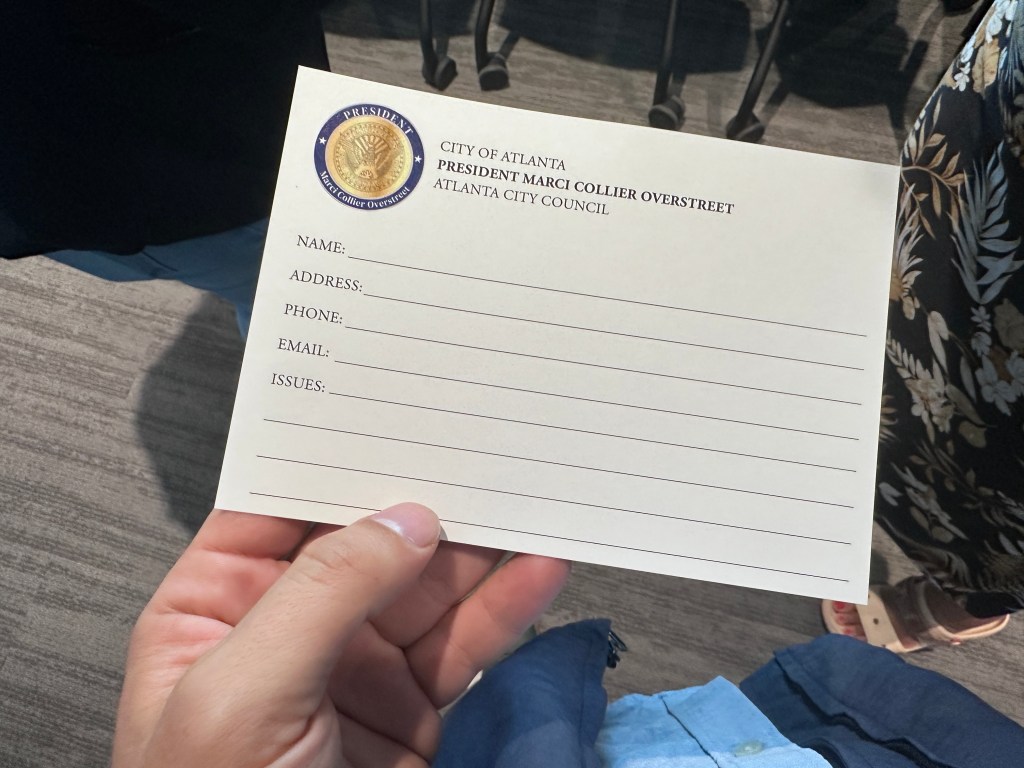
Most of the audience’s questions, submitted in advance on notecards, were about fixing potholes, sidewalk and road conditions, or improving local schools. There were also individual queries, like how to become a vendor for Hartsfield-Jackson Atlanta International Airport.
For a question about road conditions in Southwest Atlanta, Overstreet turned to Atlanta Department of Transportation (DOT) Commissioner Solomon Caviness. He said areas covered by the mayor’s proposed Neighborhood Reinvestment Initiative are being prioritized for road and sidewalk repairs. “We’ve done a scan of the city to identify the roadway conditions, sidewalks, etc, and we’re using that for [also guiding] investment,” the Atlanta DOT commissioner said.
Southwest Atlanta resident Steven Dingle, a music producer who unsuccessfully ran for Overstreet’s old District 11 city council seat last year, said there was value in hearing from city department and community representatives. “You have to address constituents as if they know nothing,” he said.
“I understand that you still have to tell them what departments do what, who to contact for what,” Dingle added. ”The Atlanta City Council president can help be a facilitator through all those departments.”
The Atlanta DOT and other city departments also had information tables in the foyer outside the event.
More communication
Davis, the West View elder, said during the Q&A that she has plenty of Atlanta issues beyond NPUs and wants the city to do a better job keeping residents informed. “I have a whole lot of concerns, more than can fit on a notecard,” she said.
She added that she wants to get civic information in the mail, without having to go online, since digital formats can be hard for older Atlantans to access. “Like today — my access to my fingers — I’m having physical issues [and] I don’t want to be going on the phone and on the laptop to try to find out information,” she said.
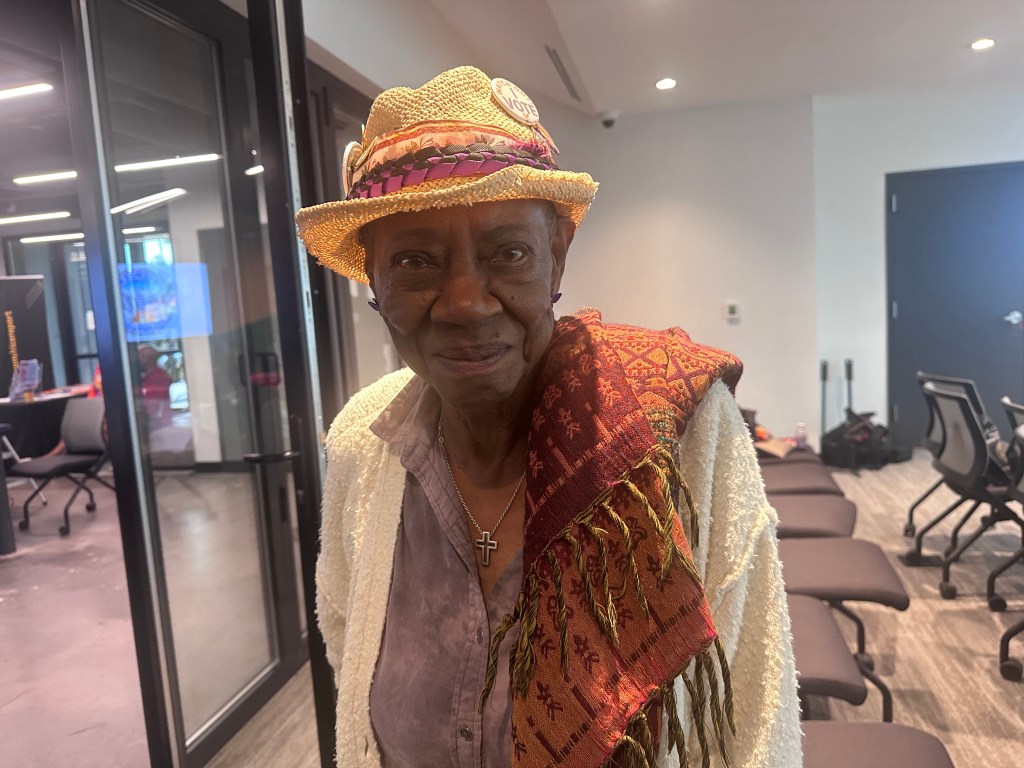
“Just like they mail me when they are asking for my vote, then I want them to send me something that I can look at and read and digest,” Davis said.
Overstreet said her office would email a synopsis of the audience questions and answers to everyone who provided an email address.
“What I hope you felt today is, supported — or, at least, heard,” Overstreet said. ”We’re not going to fix the world tonight.” After the town hall she lingered to meet constituents who wanted to speak to her one-on-one.
Atlantans needing assistance with a city issue can call the Office of Constituent Services at (404) 330-6023. To contact city council members, including the council president, go here.