


Legislature considers housing bills
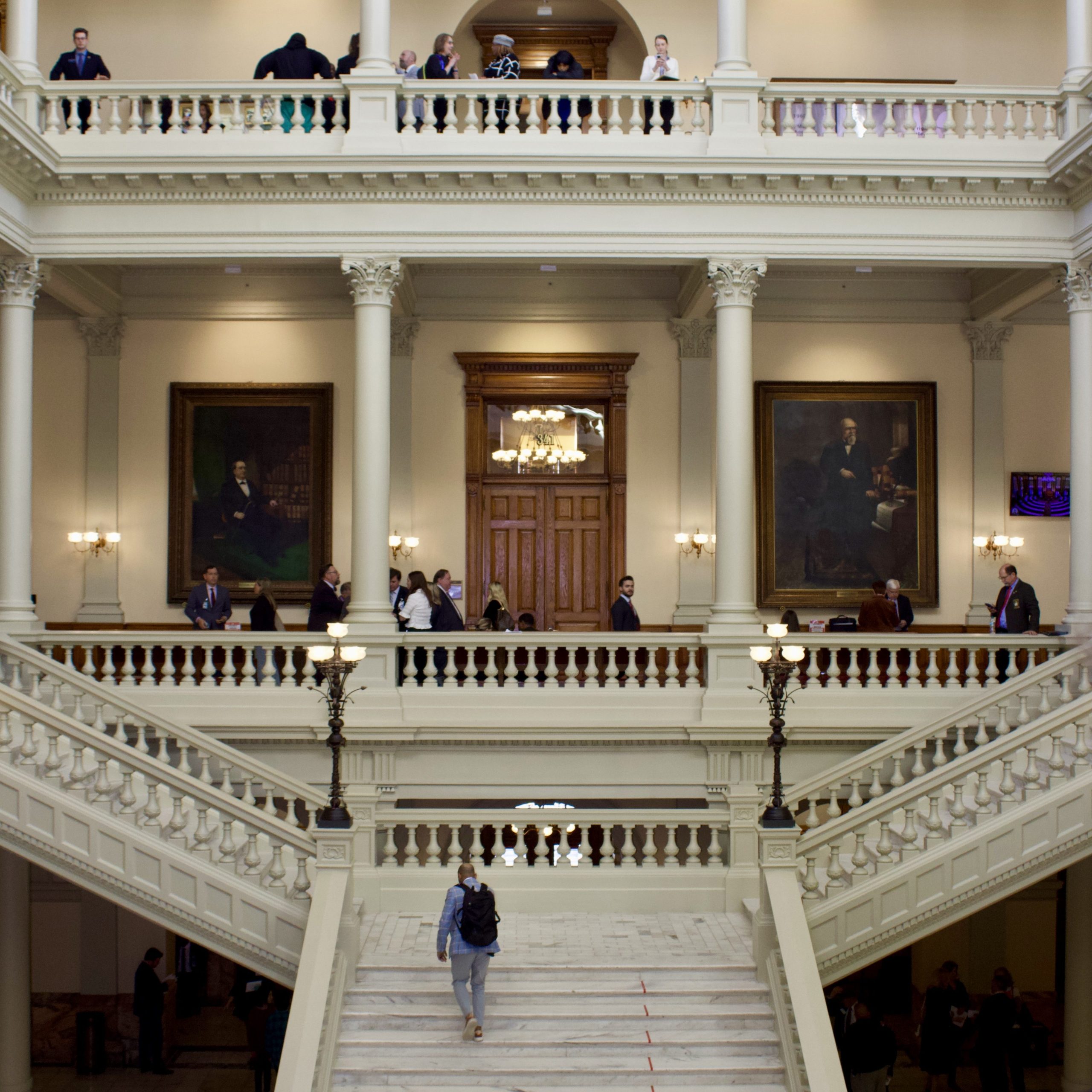
A Georgia House legislative committee will hear three housing-related bills today at 3 p.m. that focus on reining in institutional investors’ outsize influence on Georgia’s rental housing markets.
The state House’s Governmental Affairs Committee will consider the following:
- House Bill 305: Championed by Rep. Phil Olaleye (D-Atlanta), the “Protect the Dream Act” would prohibit investment funds with $6.25 million or more in assets, or that own at least 25 single-family homes in any single county from buying more houses anywhere in the state. Homebuilders and nonprofits would be exempt. The bill aims to temper the influence that institutional investors have over Georgia’s housing markets.
- House Bill 399: Rep. Mary Margaret Oliver (D-Decatur) drafted this bill as companion legislation to HB 305. It would require out-of-state landlords that own or operate 25 or more single-family or duplex homes in Georgia to employ in-state staff to respond to tenant communications, such as maintenance issues.
- House Bill 374: This bill, authored by Rep. Martin Momtahan (D-Dallas), would allow local governments to establish residential rental registries — databases tracking landlord, property owner, and property manager information. It would also impose fines for entities that fail to provide that information. This would increase transparency and accountability, enabling local governments to better monitor institutional investors that own residential housing in Georgia.
The hearing will take place at the Coverdell Legislative Office Building, located next to the Capitol at 18 Capitol Square SW.
HUD cuts could spike homelessness
Congress only has until March 14 to pass a final FY 2025 spending bill, and the House’s proposed budget would cut U.S. Department of Housing and Urban Development (HUD) funding by $2.3 billion, or 3%, at a time when housing costs nationally are skyrocketing. HUD is the primary source of rental assistance to low-income Americans, disbursed through grants to local housing authorities to administer.
The House’s proposed cuts to HUD funding would place nearly 750,000 Americans at risk of losing critical rent voucher assistance, according to the Center on Budget and Policy Priorities, a progressive national think tank. Families with children would be hit especially hard.
For Georgia, the proposed House spending bill could strip HUD rent subsidies from 7,900 households — or nearly 20,000 people — and 3,600 of those are families with kids, according to Will Fischer, the Center on Budget and Policy Priorities’ housing policy director.
“This is going to force them to divert resources from other basic needs, like food or medicine,” he told Atlanta Civic Circle. “Some people will have to take on debt in order to cover that, in addition to other expenses.”
“A lot of these folks could end up becoming homeless,” Fischer added. “If we lose this [HUD voucher] assistance, these people are going to be paying 50, 60, or even 70% or more [of their monthly incomes] on rent. That’s something that is just too much for most households with low incomes to be able to afford,” he said.
State lawmaker still working to define housing “habitability”
When state lawmakers passed the Safe at Home Act last year, it made Georgia one of the last states in the country to require rental housing to be “fit for human habitation.” But House Bill 404 didn’t define habitability.
Rep. Terry Cummings (D-Mableton) told Atlanta Civic Circle in early February that she was drafting legislation to set specific standards for what makes a rental unit livable. She said her bill would require landlords to “maintain building structure, heating, and plumbing in working order” and “keep structures free from mold, mildew, and pests.” Cummings said in a text Monday that she’s “tweaking the language” and plans to file the bill soon.
While Cummings’ bid to amend HB 404 could provide much-needed clarity on how landlords must maintain their properties, Michael Waller, who heads the Georgia Appleseed Center for Law and Justice, said that first, it’s important to fully understand how judges are interpreting HB 404, which took effect on July 1.
“We think having a well-crafted definition of habitability would benefit renting families and landlords,” he said. “But right now, it’s too early to know how the Safe at Home Act is playing out in the courts.”
Today’s newsletter was written by Sean Keenan and edited by Meredith Hobbs.



Copyright (C) 2024 Atlanta Civic Circle. All rights reserved.
You are receiving this email because you opted in via our website.
Our mailing address is:
Atlanta Civic Circle
191 Peachtree Street, NE
#450, C/O Saba Long
Atlanta, GA30303
