


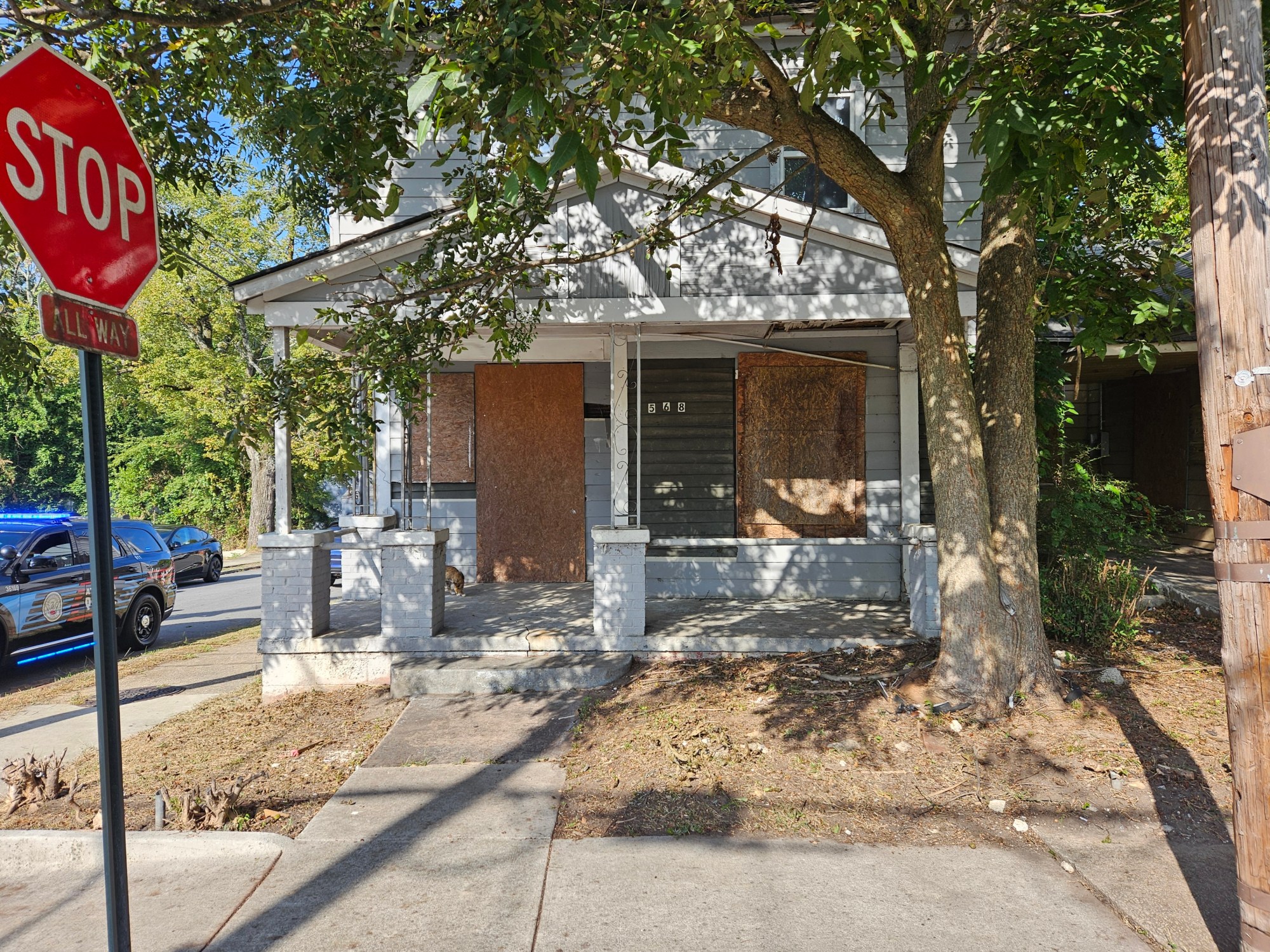

Atlanta has effectively declared war on eyesore properties and the negligent landlords who allow them to slip into dangerous disrepair, City Councilmember Byron Amos proclaimed at a Monday press conference.
“Make no mistake about it: this is a war on blight,” he said. “There’s a new sheriff in town.”
By “sheriff,” Amos means a slate of new municipal tools designed to punish property owners who knowingly allow their houses, apartment buildings, or vacant lots to deteriorate, grow over with weeds and kudzu, or otherwise devolve into safety hazards that hurt neighboring property values.
Last month, the Atlanta City Council adopted an ordinance creating a “blight tax.” It empowers municipal judges to hike an offending owner’s property tax bills by up to 25 times the city’s millage rate. The intent is to “encourage property owners to remediate or redevelop blighted properties,” according to the legislation.
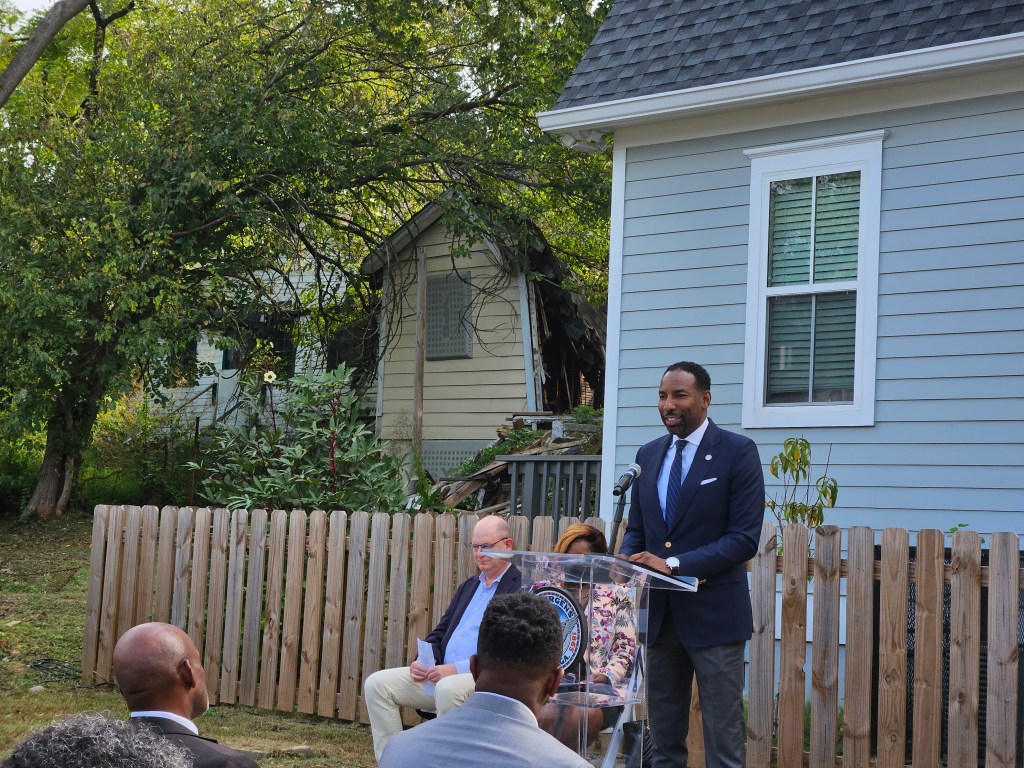
Councilmembers followed up with a Sept. 3 resolution to launch a “blight condemnation program.” The measure draws on the city’s eminent domain powers “to take ownership of properties whose condition is so harmful to our communities that we simply cannot wait for neglectful owners to take action,” as Mayor Andre Dickens put it during the Sept. 16 press conference.
City officials have identified some 3,000 blighted properties across town, with around 540 in the Westside neighborhoods of English Avenue and Vine City alone.
The blight fight
The new legislation penalizing negligent property owners will make it easier for the city to mandate that problem properties are repaired or redeveloped to benefit communities historically starved for investment, said John Ahmann, the head of the nonprofit Westside Future Fund.
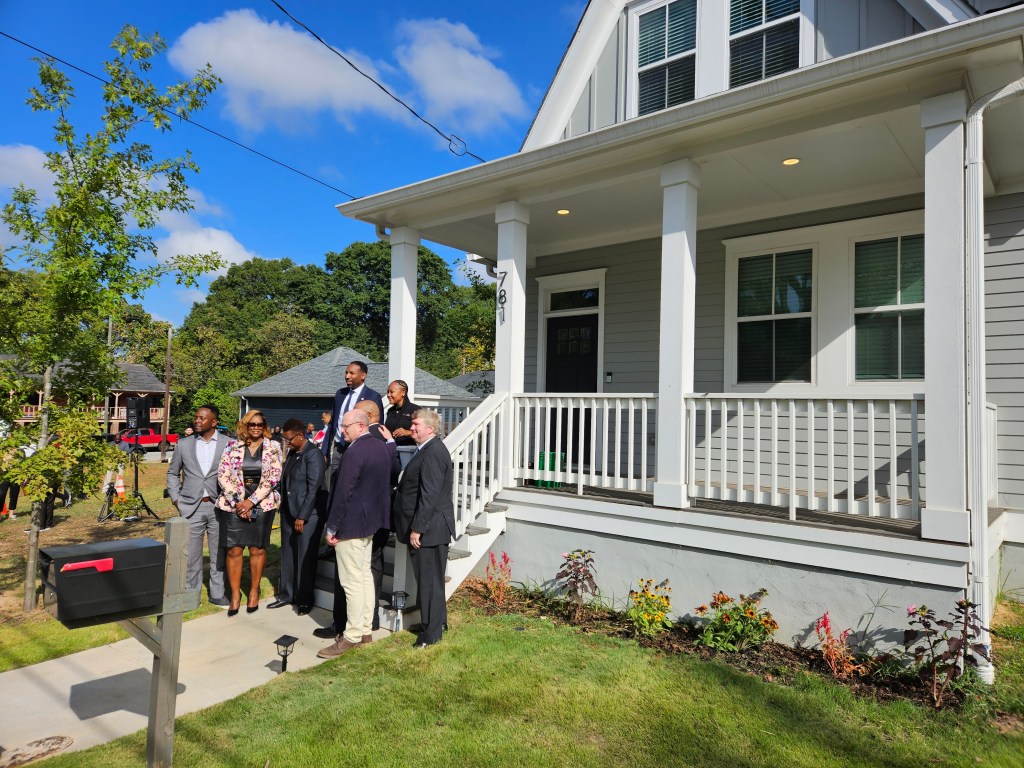
The Future Fund has spent over $25 million buying vacant and blighted land in Westside neighborhoods to tee up the development of “high-quality housing,” he said at the press conference. He’d just given Dickens administration officials a walking tour of English Avenue to point out renovation projects and a smattering of overgrown and littered sites.
Even with cash in hand, revitalization efforts aren’t always successful, Ahmann added. “We’ve offered to buy the land across the street, but that person won’t sell,” he said, pointing to a property with a tractor trailer in the yard collecting foliage, dust, and graffiti.
Hidden property owners
It can be difficult for the city to identify a negligent property owner, because corporate landlords — many from different states or even other countries — routinely camouflage their ownership of residential properties, hiding behind layers of shell companies.
Creating a rental registry to monitor landlord behavior and rent prices would likely make it easier for the city to hold owners accountable. However, Georgia law prohibits that kind of oversight, as part of a decades-old ban on rent regulation.

“It’s a huge problem,” Dickens said at the press conference. “That’s why we have this blight tax that will stay with the property. [The solicitor’s office] has had a tough time chasing down these individuals.” Because the tax is tied to the properties themselves, the owners can’t sell or redevelop them without paying the piper.
Increase in code enforcement
The city has made some headway in the fight against blight by increasing housing code enforcement. The Safe and Secure Housing initiative it launched last year added seven new code enforcement staff and a team of private attorneys to the city solicitor’s office.
To date, the crackdown effort has brought code enforcement and oversight actions against dozens of additional properties citywide — most of them listed in The Atlanta Journal-Constitution’s “Dangerous Dwellings” database of problem apartment complexes.
Still, waging war against blight can at times feel sisyphean, said Atlanta Deputy Solicitor Erika Smith.
“It’s easier to fight crime sometimes than it is to fight blight,” she told Atlanta Civic Circle in an interview. “Like with crime, it’s going to be continuous. You’re never going to rid yourself of it. But I do think there can be a reduction.”
Oftentimes, blight begets blight, Smith said, due to the “broken-window effect, where residents think, ‘If you’re not keeping up your property, I’m not keeping up mine.’”
Conversely, when the city succeeds in eradicating blight from a neighborhood, or even a street, the results are positively catalytic, Smith said.
“I’ve seen an abandoned apartment complex torn down at the corner of [Martin Luther King Jr. Drive] near I-20 to build some beautiful apartments,” she said. “It was a drug-filled apartment complex, and then it became abandoned. So the city tore it down, then it got into some good people’s hands — and now you’ve got some beautiful townhomes and apartments sitting there.”
“I’ve seen how blight can affect neighborhoods, but I also know how eradicating blight can turn a neighborhood around,” Smith said.
How do I report a property. The house next door is disgraceful. I’d like to send a picture of it to somebody!
Thanks,
Eloise Mills
Ardent Properties owns the site of the Buckhead Houston’s restaurant. It closed some 7
years ago. WHY has this property been allowed to become the derelict eyesore it is.
Property owners should have 4 years to develop or sell. After that time, they should be
responsible for razing existing buildings, planting ground cover and maintaining same with no overgrowth. Or, lease to urban community garden groups. Significant and escalating fines should be charged for non-compliance.