


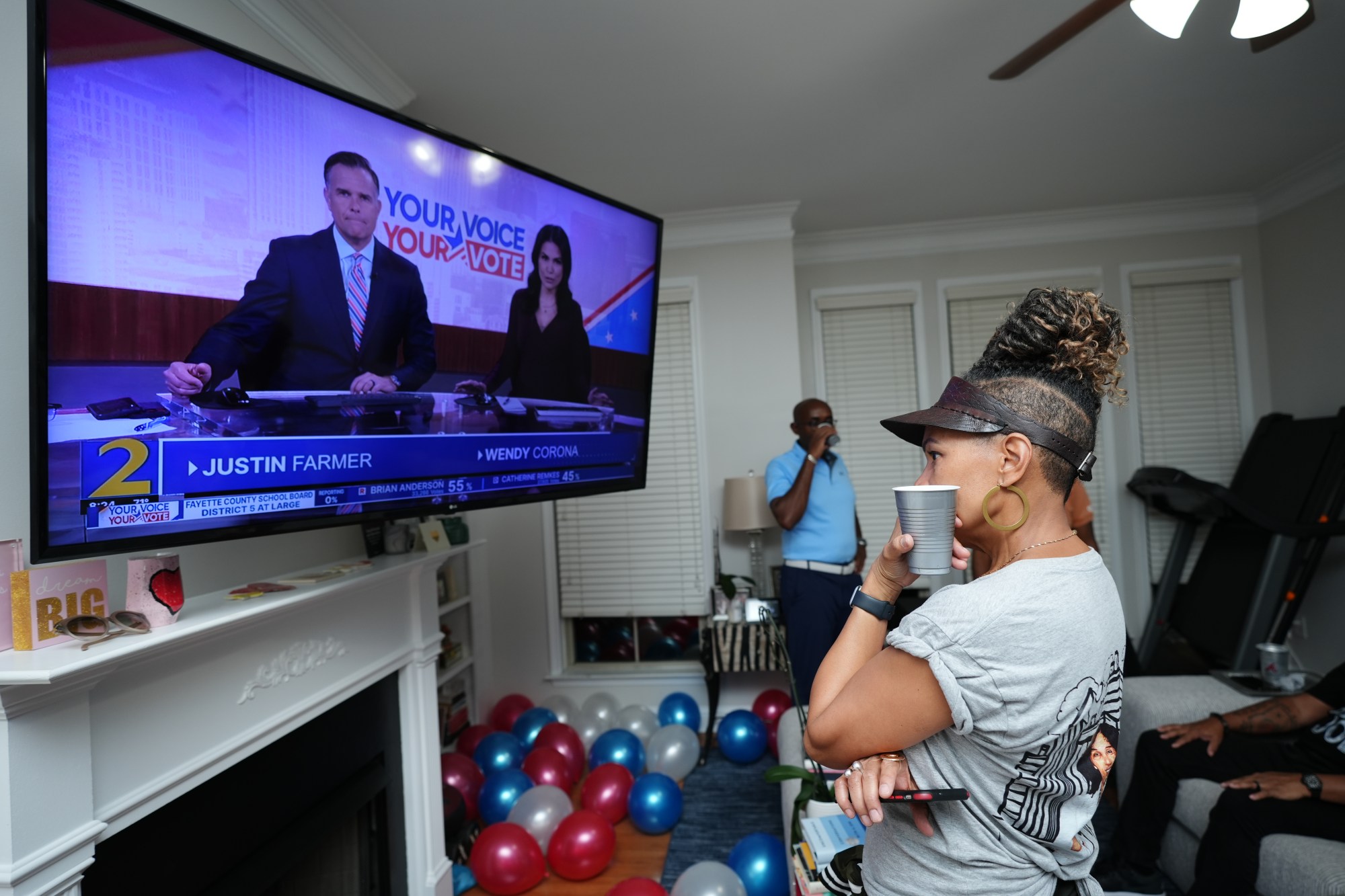

The emotional buildup around the high-stakes presidential election made it feel like the be-all, end-all on Tuesday, but plenty of other races on the ballot affect Atlanta voters.
Six metro races in Atlanta, East Point, DeKalb and Gwinnett Counties are yet to be decided, and will head to runoff elections on Dec. 3. A runoff occurs when no candidate in a three or more person race wins more than 50% of the vote. The top two vote-getters move on to a runoff election. Remember, the last day to request an absentee ballot is Nov. 22.
We’ve also got updates on four Gen Z challengers who ran for the state legislature, plus ballot referendums.
Metro-Atlanta runoff elections
For the Atlanta City Council Post 3 At-Large seat, city of Atlanta voters in Fulton and DeKalb Counties will choose between Eshé Collins and Nicole “Nikki” Evans Jones in the runoff. Collins is the director of the Equity Assistance Center-South at the Southern Education Foundation and an Atlanta School Board member, while Evans Jones is a small-business owner and retired Atlanta Public Schools educator.
Collins received 25% of the vote, while Evans Jones received 40%. They outperformed Black Futurists Group founder Devin Barrington-Ward, business owner Amber Higgins-Connor, and activist Duvwon Robinson.
City of East Point residents will also vote in a runoff election between Jermaine Wright and Shean Atkins for an open city council Ward B At-large seat. In that four-way race, Wright took the top spot with 31.9% of the vote (4,494 votes). He will face off against Atkins, who received 30.8% (4,341 votes).
Atkins eked it out against third-place finisher Marie Terry, who was just 114 votes shy of securing a runoff spot, with 4,227 votes, or 30%. Stanley Elder finished fourth with 7.4% (1,042 votes).
DeKalb County voters will decide two county commission seats, for District 3 and District 7, as well as a municipal seat for the city of Doraville in their own runoff elections.
In the District 3 race, Andrew Bell received 23.8% of the vote (17,288 votes), and will face off against Nicole Massiah, who received 42.3% (30,693 votes).
In the District 7 race Jacqueline Adams received 46% of the vote (72,886 votes) and will face LaDena Bolton who received 26.2% (41,570 votes).
Doraville will be holding a runoff for the special election for the City Council District 1, Post 2 seat. Former Doraville city council member Andy Yeoman received 41.1% of votes while his opponent, Secretary for the City Planning Commission Taylor Ray, received 33.2% of the vote. Third place finisher Billie Adams, who will not advance to the runoff, had 25.7% of ballots cast in his favor.
Gwinnett County voters in the newly created city of Mulberry will have a runoff for a city council seat if they live in the municipality’s District 5. Doug Ingram will be up against Michele Y. Sims in that race.
Gen Z update
Upstart Gen Z Democrats challenged entrenched Republican incumbents in four state legislative races. They won two and lost two.
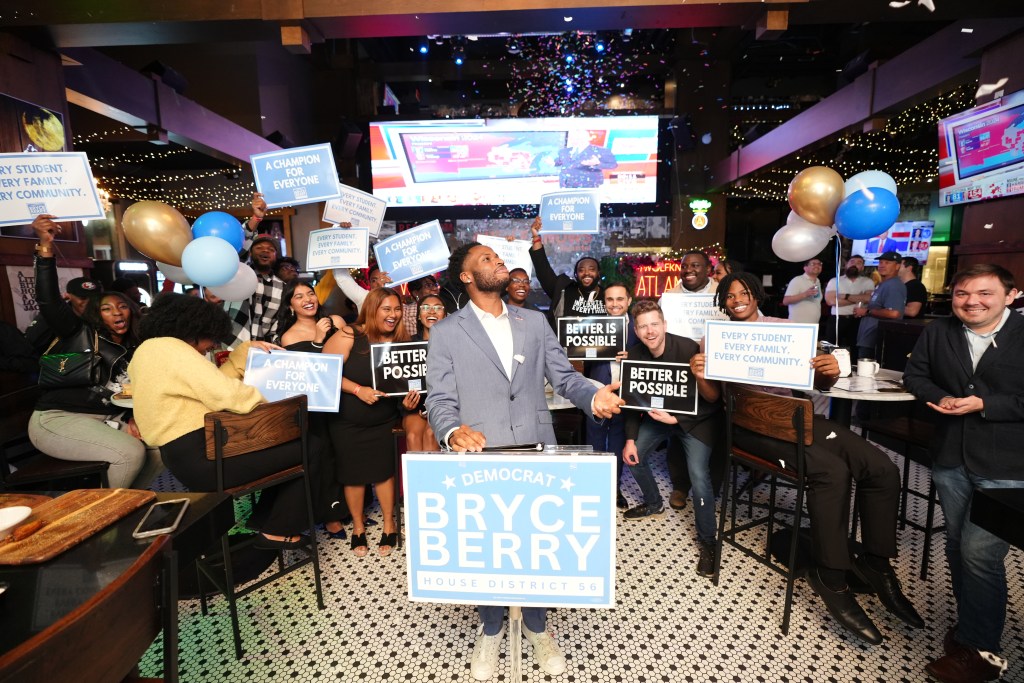
Georgia House District 56: Bryce Berry, a Gen Z Democrat, secured a decisive victory over incumbent Mesha Mainor, a Democrat who switched her affiliation to Republican. Berry captured 83.8% of the vote (19,025 votes) compared to Mainor’s 16.2% (3,760 votes). Berry’s win marks a shift in the deep-blue Atlanta district — showing strong support from younger, progressive voters.
Georgia House District 42: In another Gen Z win, Gabriel Sanchez defeated Diane Jackson with 63.3% of the vote (16,658 votes) against Jackson’s 36.7% (9,661 votes) in a Cobb County state House race. While he caucuses with the Democrats, Sanchez is a member of the Democratic Socialists of America (DSA) — likely the first elected to the legislature in Georgia history.
Georgia Senate District 48: Ashwin Ramaswami, a 25-year-old Democrat, ran a competitive race for this John’s Creek state Senate seat, but ultimately lost to the Republican incumbent, Shawn Still. Ramaswami garnered 46.4% of the vote (44,622 votes), trailing Still’s win with 53.6% (51,632 votes).
Ramaswami has said he was inspired to run after Still was charged with interference in the 2020 presidential election in Georgia. Still has pled not guilty to felony charges for his alleged role as a ‘false’ elector for Donald Trump in a Fulton County RICO case.
Ramswami was subject to racist and false attacks in political mailers sent in the last month of the campaign — mailers which Still denied sending, despite links between the direct-mail firm for one of the mailers and his campaign.
Georgia House District 158: Democrat Madeline Ryan Smith faced a tough race against long-time incumbent Butch Parrish for this rural district southeast of Atlanta, near Savannah. She lost with 27.1% of the vote (6,704 votes) to Parrish’s 72.9% (18,036 votes).
Statewide ballot measures
Georgia voters approved all three measures on the ballot statewide – to relocate the state tax court, increase the property-tax exemption for businesses, and cap home-value assessments for property tax purposes in a new homestead exemption that’s now a constitutional amendment.
As a refresher, here’s our explainer recapping the proposals.
No-go for Cobb, Gwinnett transit referendums
Voters in Cobb and Gwinnett Counties both rejected an additional penny sales tax for 30 years in mass-transit funding referendums aimed at easing congestion by greatly expanding speedy bus and shuttle coverage. Voters remained unreceptive, even as Cobb’s population nears 1 million and Gwinnett’s has surpassed that.
Cobb’s Mobility Special Purpose Sales Tax (MSPLOST) would have raised $10.3 billion over 30 years for 108 miles of new bus rapid transit (BRT) routes, local on-demand shuttle services (microtransit), and six transit centers across the county.
Gwinnett’s Transit Special Purpose Local Option Sales Tax (TSPLOST) aimed to generate $12.4 billion over a 30-year period. The funds were earmarked for 75 transit projects, including 115 miles of quick-ride bus service, 26 miles of BRT, and microtransit.
Residents in both counties appear to be holding onto the suburban character of their rapidly growing counties, with many home and business owners voicing strong opposition to mass transit proposals. Opponents argue that such projects could misuse public dollars, bring unwanted noise, increase crime rates, or fail to effectively address local transit needs.
As Nashville greenlights transit tax
Meanwhile, Nashville approved its own $3.1 billion “Choose how you move” transit plan, with 66% of voters supporting the initiative. It will be funded by a half-cent sales tax increase that’s set to start in February and go for 15 years.
The plan includes upgrades to the city’s bus systems, sidewalks, and traffic signals. This investment aligns Davidson County with its neighboring regions in terms of the tax rates to fund mass transit expansions. Local transit proponents have held up the Tennessee transit plans as models for what’s needed in congested metro-Atlanta regions like Cobb and Gwinnett.
This story was updated to include the Doraville City Council special election runoff and the Mulberry City Council – District 5 runoff election. A previous version of this story misstated that the Gwinnett County Soil and Water Commissioner race went to a runoff, it did not: In that race the top two vote-getters are elected to the position.