

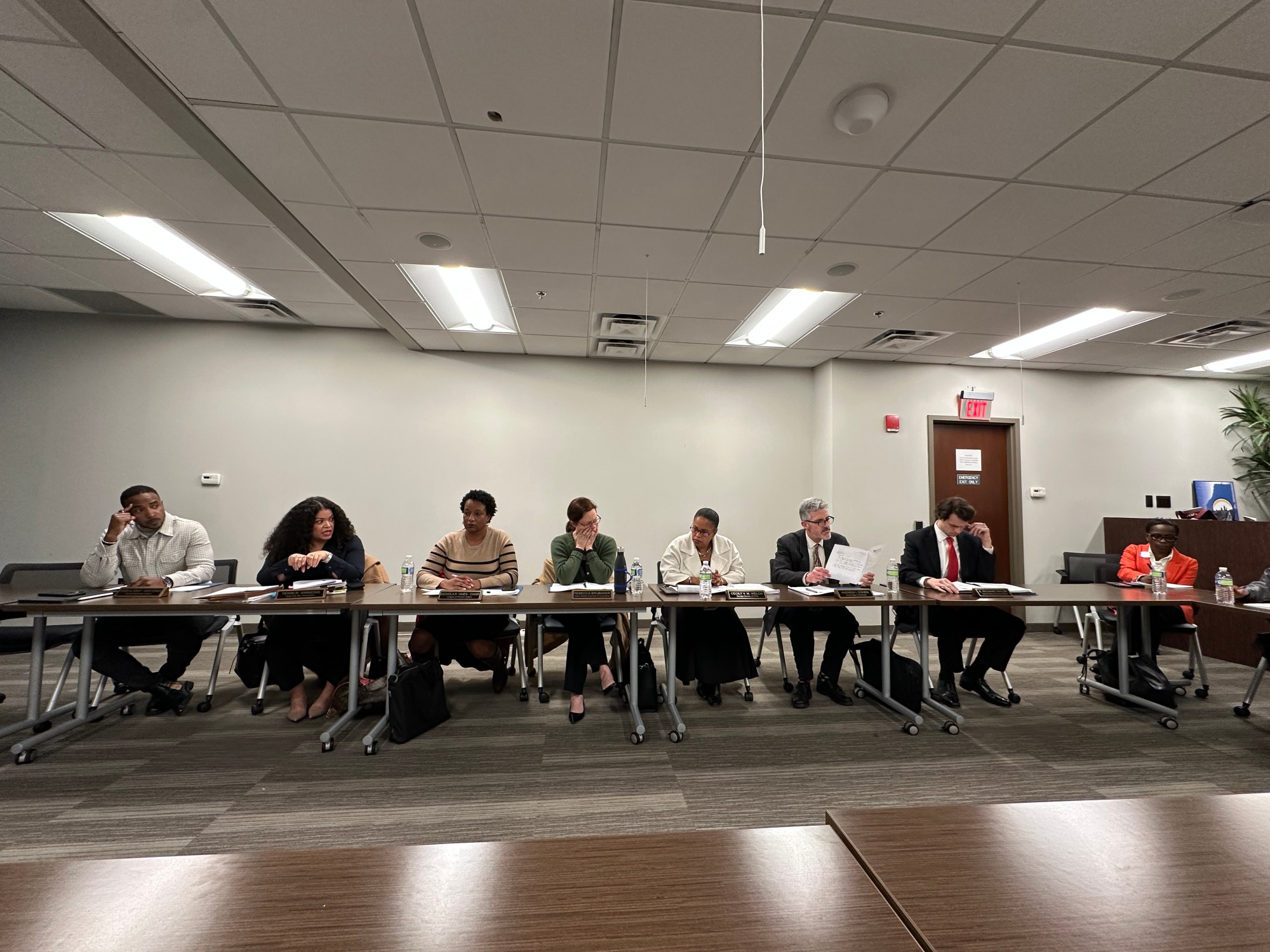


During a specially called meeting Thursday night in a basement conference room at Atlanta City Hall, the citizen board that oversees Atlanta’s Office of the Inspector General (OIG) and Ethics Office grappled with its own future — amid ongoing tensions between Mayor Andre Dickens’ administration and Inspector General Shannon Manigault.
The governing board called the meeting to address improperly issued subpoenas by the OIG, decide whether to hire an independent lawyer to advise the city’s watchdog agency and discuss the Atlanta City Council bill that might dissolve it four days later. The day after the meeting, three of the board’s nine members resigned: board chair Nichola Hines, Cecily Welch, and Terri Simmons. Simmons’ resignation is effective Monday.
Hines, speaking on behalf of the trio, told Atlanta Civic Circle that they’d simply had enough of the city ignoring the board.
“Every talk we’ve had has gone unheard or dismissed,” she said. “Some of us resigned because we could no longer serve in a system where our expertise and oversight was disregarded, others left because of the increasing demands created by excessive special call meetings, administrative obstacles, and continued resistance to our role made service unsustainable,” she said.
Hines also noted that two other members have resigned since December.
The board, which hires and fires the city inspector general, is set to be reconstituted as two separate boards if Atlanta City Council adopts a contentious bill to overhaul both the OIG and Ethics Office during the Feb. 17 full council meeting. Hines and Simmons specifically cite the bill in their resignation letters.
The OIG’s error in subpoenaing bank records without notifying the record-holders — contrary to Georgia law — has prompted a legal challenge, a cease-and-desist letter from the city attorney, and public criticism of Manigault’s leadership. It also has fueled false rumors that Manigault had placed the inspector general on administrative leave, or that she was considering resigning.
At the Feb. 13 meeting, several board members said no city officials had ever directly raised concerns with them about Manigault’s leadership — until now. Board chair Hines, speaking to Atlanta Civic Circle after the meeting, also said the city has provided no guidance on how the transition would be handled if the bill passes.
The bill, introduced Jan. 6 by City Councilmember Howard Shook, seeks to redefine the roles and powers of both offices, which requires amending the city charter. The measure would dissolve the existing nine-member governing board and replace it with a seven-member OIG board and a five-member Ethics Office board. (Atlanta’s seven major universities and the Georgia Society of Certified Public Accountants would lose their two nominating seats entirely.)
The bill, driven by accusations from the mayor’s office that Manigault has exceeded her authority in investigating city employees, would place strict limits on the OIG’s third-party subpoena powers, as well as create a burdensome process for the OIG’s access to city records which both Manigault and the legislation’s other critics have said would hamper the OIG’s ability to root out waste, fraud, and abuse.
On Monday, the Committee on Council and then the full city council could both make further changes to the bill before the full council is scheduled to vote on the final version that afternoon.
OIG under scrutiny
The Feb. 13 OIG governing board meeting followed mounting controversy over the OIG’s administrative subpoenas for third-party bank records, after it incorrectly instructed banks not to first notify the account-holders. — which violates Georgia law. The OIG has said that instruction was a mistake.
The OIG board voted 6-1 to approve hiring law firm Radford Scott as independent counsel for the OIG, citing a conflict of interest between Manigault and the city attorney. (Two of the nine board members, Natalie Lewis and Lisa Liang resigned in December and January.)
Atlanta City Attorney Patrise Perkins-Hooker on Feb. 3 issued a cease-and-desist letter to the OIG over more than 50 OIG administrative subpoenas to financial institutions, alleging that the OIG failed to notify the records-holders in advance, in violation of Georgia law. The OIG has responded by saying it had not been aware of the law and that it immediately took steps to correct the error.
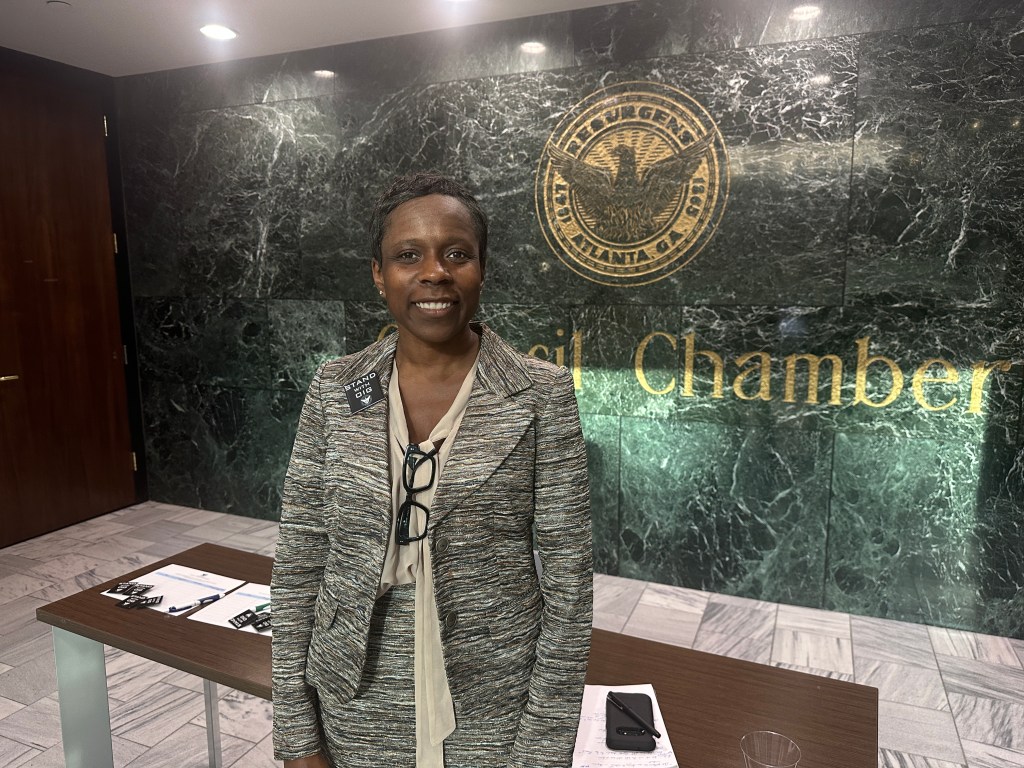
Manigault, her office and the city are now facing a civil lawsuit filed by Stephen Katz on behalf of multiple clients including lobbyist Bernard Tokarz, who’d been the subject of an OIG investigation. The suit alleges that the OIG improperly subpoenaed bank records from both Tokarz and his clients, violating their privacy rights. Tokarz contracts with the city and is the volunteer chair and treasurer for City Councilmember Michael Julian Bond’s campaign committee.
Addressing the subpoena error Thursday night, Manigault told the board that the subpoena form was based on standard language used by inspector general offices nationally and that her office updated it after the city attorney’s notification. She has previously told the city council that this error underscored the OIG’s need for an independent in-house lawyer, a measure not included in the reform bill under the council’s consideration (though it was a recommendation by the city council’s own task force).
Manigault has also publicly stated that some of the matters were referred to criminal prosecutors. An open records request revealed that 51 of the 61 third-party subpoenas the OIG has issued in the five years since the city council created the watchdog agency were for investigations of criminal allegations.
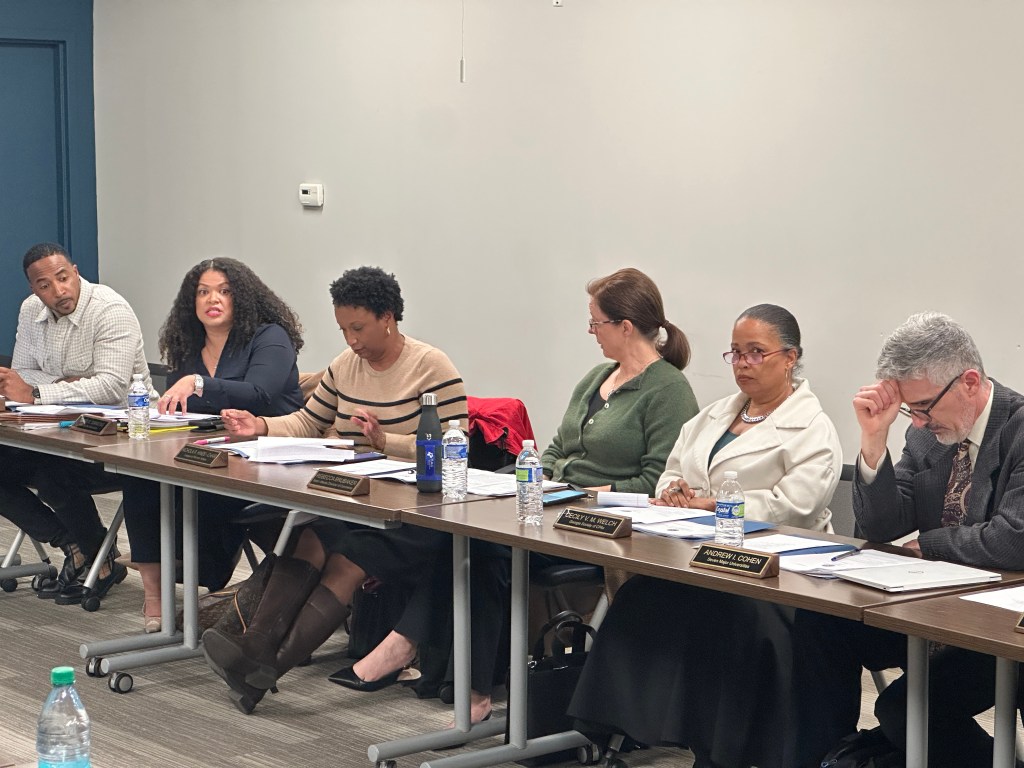
Tensions and speculation
The subpoena controversy sparked speculation last week that the OIG board had placed Manigaulton administrative leave or that she was considering resigning. In a Feb. 7 letter to Mayor Dickens, the city council and the administration, OIG board chair Hines said Manigault had actually taken routine time off.
In the letter, Hines condemned the spread of “misinformation,” noting that Manigault’s time off had been shared with only 11 individuals before being “publicly misrepresented.”
Hooker, the city attorney, told Atlanta Civic Circle, as she left the Thursday OIG board meeting that if Manigault were to resign, the board has the power to appoint a new inspector general — or an interim leader – even though the board itself may soon be reconstituted.
At the meeting, the city attorney met with the board for about 15 minutes in a private executive session. Afterward, board member Todd Gray, the Atlanta Business League’s appointee, moved to place Manigault on administrative leave “based on the information given in executive session.” Gray insisted the move was not punitive but intended to “set a precedent” for pending accusations against the inspector general.
The board voted down Gray’s motion by 6-1. “I think it would be irresponsible,” said board member Terri Simmons, the Gate City Bar Association’s appointee, citing a lack of proven misconduct and due process. “She [Manigault] can’t even respond to the allegations, because they were made in executive session,” Simmons added.

Frustration over lack of dialogue
Along with Manigault and city attorney Hooker, the mayor’s chief of staff, Odie Donald, and several OIG staff attended Thursday’s board meeting at City Hall. At the end of the meeting, several OIG board members and staff expressed frustration at the mayor’s office and city council’s lack of communication. By that time, Donald and Hooker had left.
Board member Richard Taylor, the Atlanta Planning and Advisory Board’s appointee, said that the city had only now presented its concerns about the subpoenas to the board. “We just finally got to hear the city of Atlanta’s side,” he said.
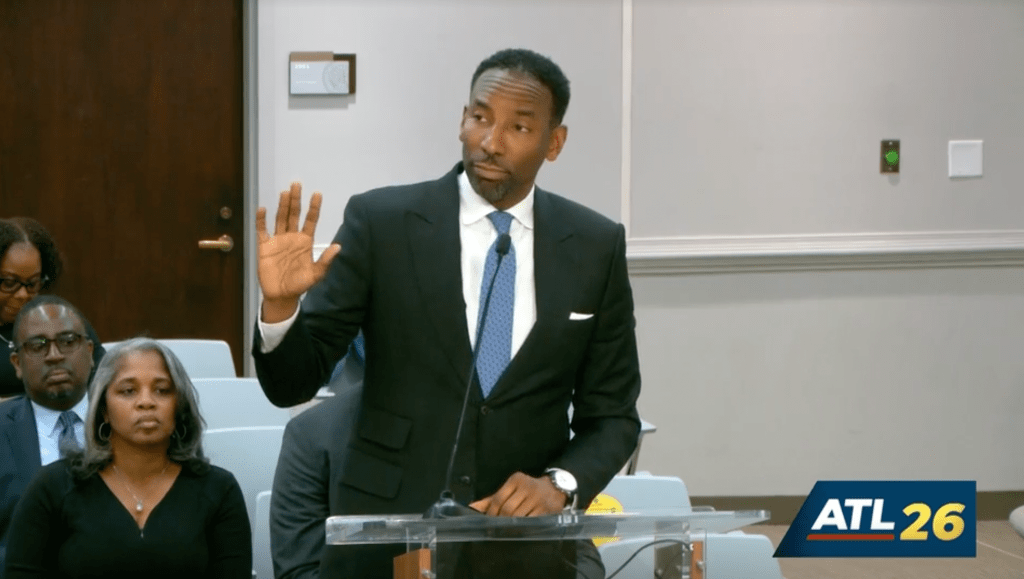
Taylor voiced frustration over the ongoing conflict between the city and the OIG. “I don’t think it can work, where it’s just constant head-butting. There’s got to be a way to come together,” he said.
Board chair Hines emphasized that the board has never received an official complaint from the mayor’s office or city council about either the inspector general or her office itself — even though the board oversees the OIG. “No one’s made an official complaint. The executive branch themselves never complained to us,” she said.
Hines added that the city’s employee-union representatives also haven’t raised any concerns directly with the board, although they have criticized the OIG in public meetings.
Another board member, Simmons, said the city council also hasn’t asked the board for input on the legislation that’s up for a vote on Monday. “We’re not being looped in on this stuff,” Simmons said. “We have been allowed to speak at the latest round of council meetings, but only for public comment.”
Roslynn Anderson, an OIG business manager who attended the board meeting, said the lack of productive dialogue with the city’s executive branch is an issue. “We have availed ourselves to have those conversations, and I’ll say it again, emphatically, that it has gone ignored,” she said. “If you were to ask anyone from city council, anyone from the mayor’s administration, what our offices look like — they couldn’t tell you.”
“I have spent the better part of my tenure as an employee of the Office of the Inspector General, hearing things stated as if we are the adversarial office, and I just want it to be known, since my first day, that’s not the case,” added Anderson, who has worked for the OIG for almost five years.
This story has been corrected to reflect that Bernard Tokarz was not City Councilmember Michael Julian Bond’s chief of staff. He is the volunteer chair and treasurer for Bond’s campaign committee. Atlanta Civic Circle regrets the error.