


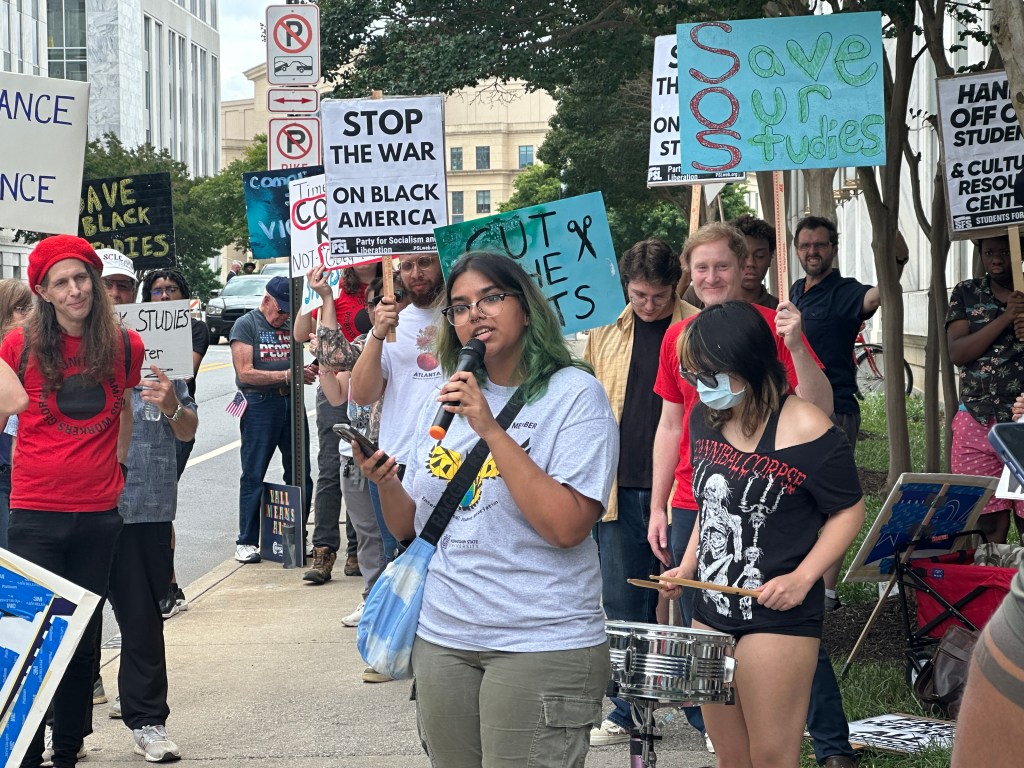
Nearly 100 Kennesaw State University students and faculty, along with concerned citizens and two state representatives, picketed outside the Georgia Board of Regents office near the State Capitol on Wednesday, demanding a reversal of the university’s decision to eliminate three degree programs.
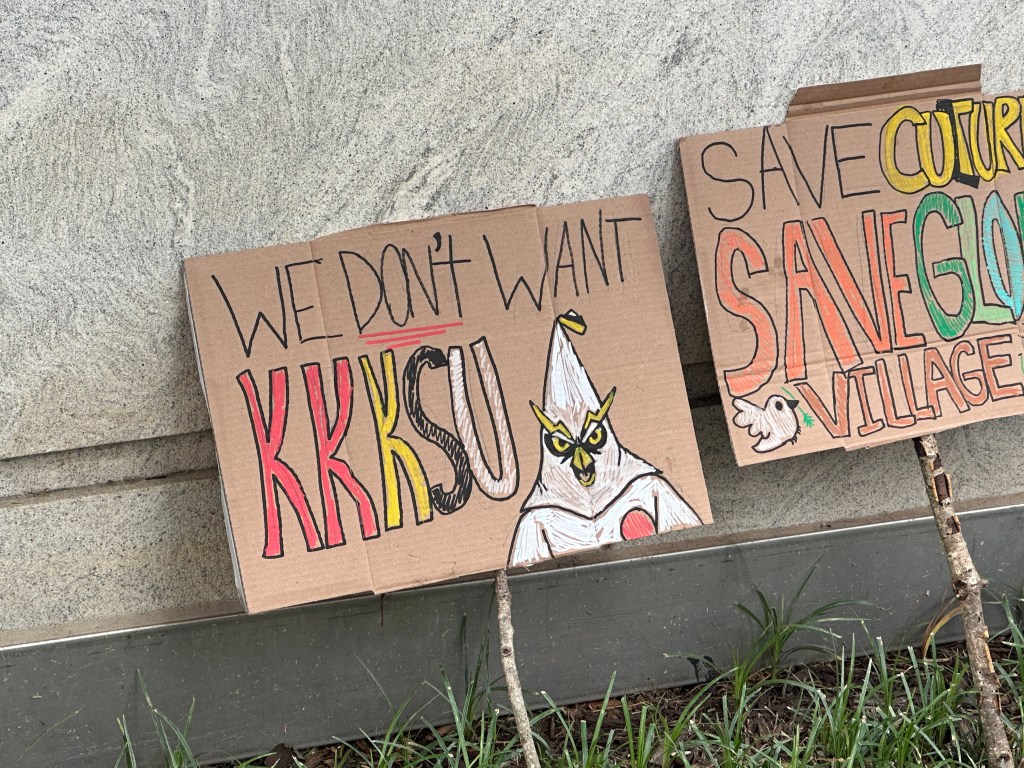
Last month, KSU announced it would discontinue undergraduate majors in Black Studies, philosophy, and technical communication. The protestors are also seeking transparency from the university administration over the “quiet dismantling” of KSU’s identity-based resource centers for LGBTQ people, women, students of color, and international students.
Protesters called the moves a violation of both KSU and Board of Regents policy, and acts of “preemptive compliance” with President Donald Trump’s “anti-woke” agenda. KSU’s Faculty Senate voted 30-7 in April to oppose the cuts.
The university administration “violated KSU policies and processes in deactivating these majors,” said Simran Mohanty, a 21-year-old sociology major. “This is definitely related to the DEI discussions—it’s preemptive compliance.”
“It’s anticipatory compliance, and do you know what that leads to? Fascism,” said Heather Pincock, a KSU associate professor of political science and organizer with the United Campus Workers union.
“We are demanding the reversal of changes that weren’t even legally instituted,” said Chris Strickland, a social work adjunct professor at Georgia State University.
The state Board of Regents’ May 14 meeting agenda did not include discussion of KSU’s program changes. The board is expected to meet again Thursday, and demonstrators hope it will address the matter.
As a public university, KSU is governed by the Board of Regents and relies on state and federal funding. Although the Trump administration has threatened to withdraw federal funds to several private universities over diversity, equity, and inclusion (DEI) programs, courts have so far blocked such efforts. Still, KSU students and faculty suspect politics are at play.
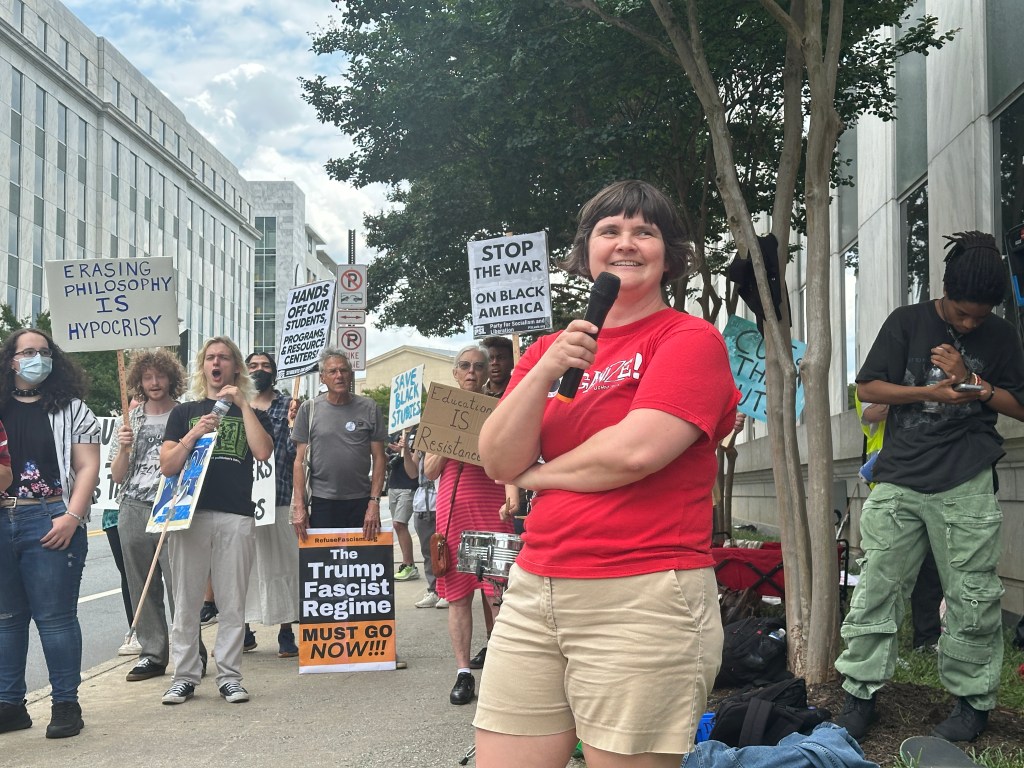
“The timing is suspect, given everything that’s happening,” said Isaiah Warnick, 18, a freshman computer-science major and co-chair of the KSU chapter of the Young Democratic Socialists of America. His group organized the protest with support from other DSA chapters, the Party for Socialism and Liberation, Indivisible, and the Cobb Democratic Party. A petition they’ve circulated since last week has garnered over 1,000 signatures, Warnick said.
“We came out here to send a message to the Board of Regents that we’re opposed to these changes, and we won’t be quiet about it,” he said. “For me to begin my college experience with everything being torn down around me — I am pissed.”
In a statement to Atlanta Civic Circle, KSU said it followed institutional protocols and cited low enrollments for the decision to cut the degree programs. The university will continue offering minors and electives in the affected subjects, and current majors can complete their degrees.
“The programs underwent a multi-year remediation process, which included annual improvement plans focused on increasing enrollment,” the statement said. “As the required benchmarks were not met, the University deactivated these programs.”
But tensions had already been mounting at KSU. In March, the university announced it would “reimagine” its student resource centers for women, LGBTQ+ students, international students, and students of color. That was followed by the Trump administration’s revocation of hundreds of international students’ visas — including an unspecified number at KSU.
The degree program eliminations announced in April only added fuel to what critics view as attacks on academic freedom, free speech, and inclusive education.
“When you cave to tyranny you don’t get peace of mind—you get more tyranny,” said State Rep. Karen Lupton (D-Chamblee), whose daughter is a KSU undergraduate.
Gerald Griggs, executive director of the NAACP’s Georgia and Atlanta chapters, said his group had requested a meeting with the Board of Regents, but received no reply. He said they plan to send a letter through the NAACP Legal Defense Fund and the Lawyers Committee for Civil Rights, again demanding a meeting, in the next week.
Otherwise, he said, “We’re ready to go to court.”


The scenes sound powerful—protesters chanting “Stand up, fight back!”, signs reading “Save Black Studies,” and a Georgia NAACP rep even hinting at potential legal action. One student told Fox 5 she “fumed” and even cried when she heard the program would be axed. It all feels raw and urgent.
The article’s tone? Very straight‑forward and detailed—almost like you’re monitoring a newswire. It lays out enrollment stats, quotes administrations, and then flips to the protesters’ voices. No flashy storytelling, but you do get the gravity: impacted students, sharp criticism of political pressure, and even lawmakers showing up at the Regents’ offices. It reads like civic‑reporting with a bit of local color, especially when they describe the chants and outdoor atmosphere.