



This story is part of Atlanta Civic Circle’s ongoing reporting from our Community Impact Survey, which is gathering firsthand accounts from people across metro Atlanta on how federal actions are affecting them.
When Jessica Johnson, executive director of The Scholarship Academy, received an email in late April from Georgia Serves, she didn’t expect to be told to immediately shut down her AmeriCorps program. But that’s exactly what happened.
Almost $300,000 in federal grant money that supported 13 AmeriCorps service members helping low-income Atlanta high school students figure out how to afford college was suddenly terminated. That amounts to about a fifth of the organization’s annual operating budget — and it was “just gone overnight,” Johnson said.
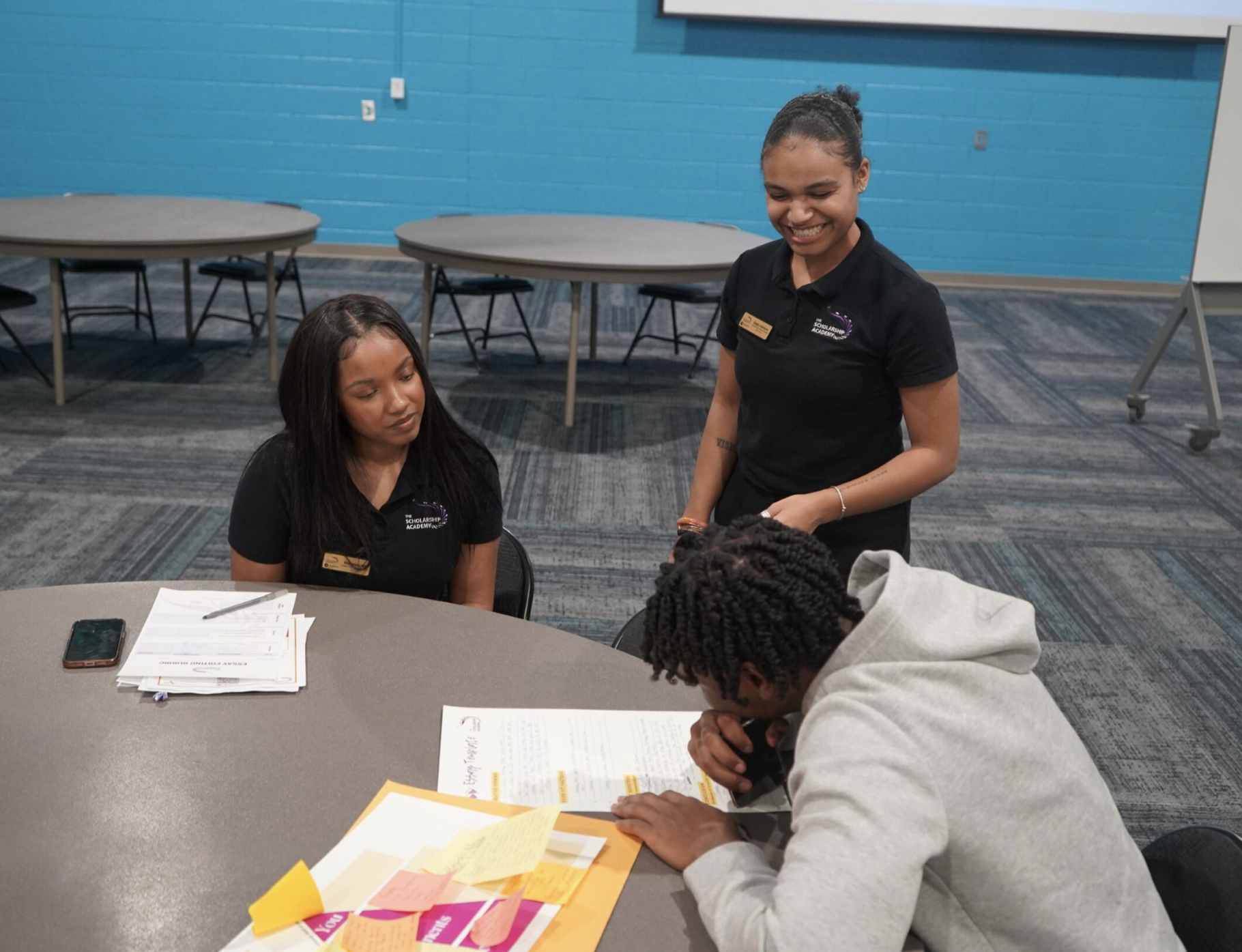
When the notice came, The Scholarship Academy’s AmeriCorps members were working in 14 metro-Atlanta public schools that receive Title 1 federal funding, because a high number of their students are poor. They coached students in the Clayton, DeKalb, Fulton, and Gwinnett county school districts, as well as the Atlanta and Marietta city school districts, on how to afford college and navigate financial aid, particularly the complex Free Application for Federal Student Aid (FAFSA).
Johnson was told her AmeriCorp members’ last day of service would be May 17. “They basically let those of us who had been impacted know that our federal AmeriCorps grants had been terminated effective immediately, and that we were only allowed to do what was considered as ‘close out’ activities with members,” Johnson said.
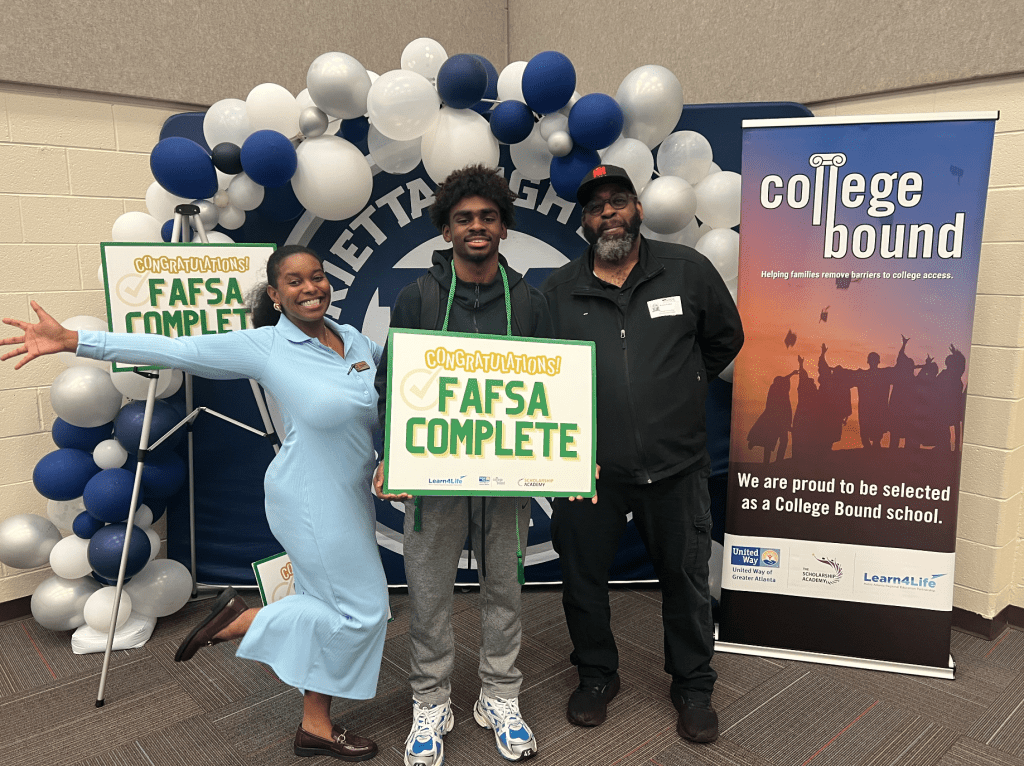
The Department of Government Efficiency, or DOGE, made the AmeriCorps cuts while high school seniors were still completing financial aid forms and finalizing college plans. Johnson said her team had been on track to help over 1,500 high school students this year. Despite the abrupt cutoff, they still achieved a nearly 80% FAFSA completion rate.
“I started this work in my dorm room at Howard [University] after securing $200,000 in scholarships for my own education,” Johnson said. “I’m not allowing this to defeat our work”
Now what?
AmeriCorps is a national service organization open to any American over age 17 with a high school degree. The participants, mostly young high school and college graduates, earn a basic stipend of up to $17,600 for 10.5 months of service, plus up to $7,395 in higher education funding.
Due to their sudden termination, The Scholarship Academy’s AmeriCorps members lost two months of service, along with a portion of the funding they’d been counting on to pay for their own college or graduate school educations.
Georgia Serves former chief, Linda Thompson — who still serves as an executive consultant pending her replacement after she stepped down — said the DOGE cuts will harm Georgians across the state.
“The cut is going to negatively impact more Georgians,” she said.
The Scholarship Academy is just one of 16 AmeriCorps programs whose grants are administered by Georgia Serves to lose funding. Overall, Georgia Serves on April 30 lost $5.7 million in federal AmeriCorps funds, leaving only $2.3 million for six surviving programs, Thompson said.
“All of these programs provide services to their communities in various forms, whether it be tutoring, or community cleanup, or helping the elderly, or serving veterans,” she said. For instance, AmeriCorps members were providing 24-7 support to Youth Villages, which houses children with special needs or histories of abuse.
AmeriCorps members serve in roles that many nonprofits and schools cannot afford to replace, Johnson said. “It’s really unfortunate that this is the pathway that’s being taken by the federal government for eliminating waste, when we’re talking about the futures of young people,” she added..
College-access programs — particularly in under-resourced schools — are far from redundant, and provide a massive return on investment for the taxpayer, Johnson said. “When we look at the economic impact, students who obtained a degree make a million dollars more over the course of their lifetime. That’s money that they pour back into their communities, into their families, and into businesses that they own — there’s just so many wins by making such a small investment.”
Thompson said that Georgia Serves has submitted a formal appeal letter to AmeriCorps, and the state agency’s board members have contacted Georgia’s congressional delegation. She encouraged Georgians to do the same.
Georgia has not joined other states in a federal lawsuit against the cuts, but The Scholarship Academy has signed on to a federal lawsuit filed in Maryland by a coalition including National College Attainment Network of which it is a member. Their lawsuit argues that the grant terminations are a breach of contract that disproportionately harms programs serving low-income youth.
“It’s just flat out illegal and is disheartening,” Johnson said. “First, for me, as a citizen, as an educator, as a person who really is committed to process and procedures, I think it says a lot about what we’re starting to value as a society, and what we’re allowing to be degraded in the name of ‘better government’ — and I would put that in quotes,” she said.
Johnson isn’t counting on a win in court. Instead, she is focused on holding her program together. “I want it to be known that we’re still committed to doing the work,” she said. ”We’re going to finish strong, just like we’re asking our students to do.”
We want to hear from you. Click here to take our Community Impact Survey and share your perspective on how federal actions are affecting you.
YOUR HOUSE TO THE WHITE HOUSE
Federal cuts threaten nonprofit that supports grandparents raising grandchildren
About half of ISDD’s budget is federal funding.

Latino Community Fund faces $500K in federal cuts: staff and programs at risk
Funding losses and political scrutiny threaten services and support for immigrant communities across Georgia.

ACC Community Impact Survey: “The communal anxiety and depression is worse than COVID.”
Responses to impact of Trump’s federal actions reveal job loss, anxiety, and uncertainty, both for the economy and democracy.