Early voting begins next week for two long-delayed Public Service Commission seats, but voters won’t have a clear picture of which candidates are attracting significant donations — a key indicator of their viability — until June 2.. Early voting is scheduled from May 27 to June 13, and the primary election is June 17.
It’s a high-stakes race that will determine two of Georgia’s five PSC commissioners — who regulate utilities, including your power bill rates. But because the PSC District 2 and District 3 races are both special elections, the deadline for candidates to file a campaign contribution disclosure report isn’t until June 2 — just 15 days before the June 17 primary.
By contrast, in a regular election year, candidates are required to file donor disclosure reports every two months, plus additional disclosures 15 days before a scheduled primary or general election. In non-election years, like this one, disclosures are only required on Jan. 31 and June 30 — plus the ones 15 days before each election. That means some early voters won’t know who the candidates’ biggest donors are, or how they’re funding their campaigns.
Typically, the terms of the five commission seats are staggered over a six-year period. However, there hasn’t been an election for any PSC seats since 2020, when two Republican incumbents, Jason Shaw in District 1 and Lauren “Bubba” McDonald Jr. in District 4, were reelected. Subsequent PSC elections in 2022 and 2024 were postponed, until the resolution of lawsuits challenging whether the PSC’s rather unique election procedure dilutes the Black vote, as candidates are required to live in their district but are elected statewide.
Who’s filed — and who hasn’t
Only four of the eight candidates, including both Republican incumbents — Tim Echols in District 2 and Fitz Johnson in District 3 — had reported any fundraising as of Jan. 31, the prior deadline to file donor disclosures with the Georgia Government Transparency and Campaign Finance Commission.
Unsurprisingly, Echols and Johnson had also raised the most money. As of Jan. 31, Echols had raised $111,422 for this cycle, compared with just $13,040 for Alicia Johnson, his Democratic challenger for the District 2 seat. For District 3, Fitz Johnson, the incumbent, had $316,321 in reserve according to his most recently available 2024 disclosure, compared with just $7,000 for Robert Jones, who is one of Johnson’s four Democratic challengers.
The other candidates for the two races entered after Jan. 31 and have not yet reported their fundraising. That includes Lee Muns, who is Echols’ Republican challenger in District 2, and the three other Democratic challengers to Johnson in District 3: Daniel Blackman, Keisha Waites, and Peter Hubbard.
Industry interests
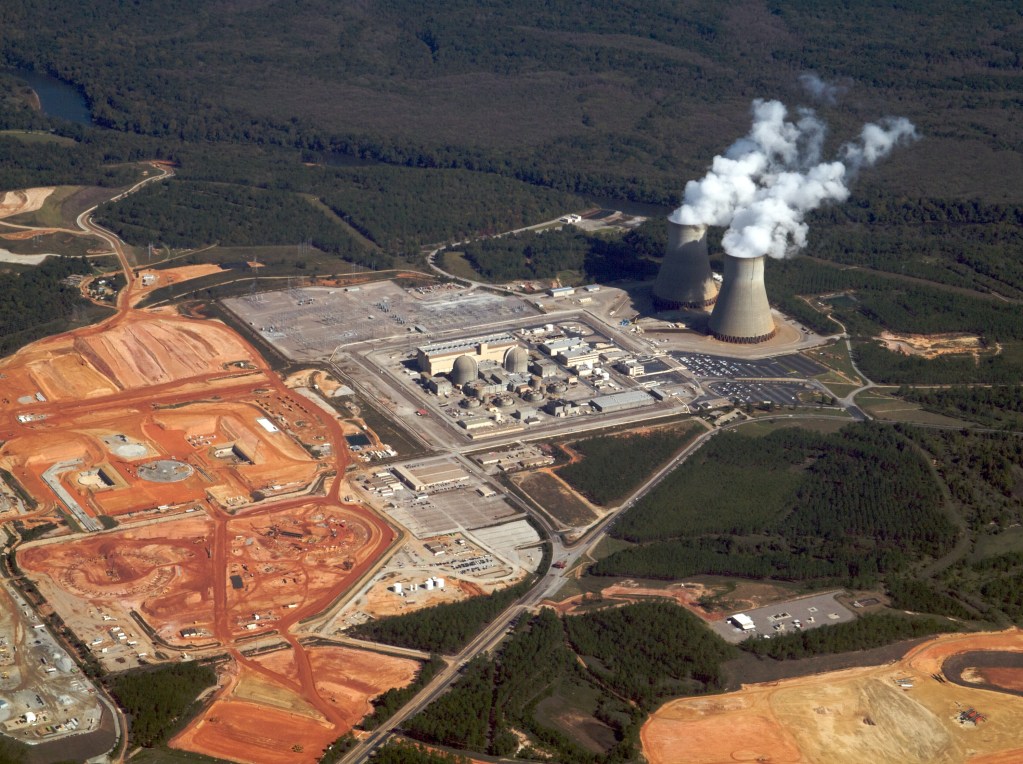
Since the five Public Service Commissioners set the rates for Georgia Power, which owns the state’s electric power grid, transparency matters for these races. The current PSC board has controversially raised the rates for Georgia Power six times since 2023, costing consumers an average of $43 more on their monthly bills, according to State Affairs.
Campaign finance data show that employees of Georgia Power’s parent company, Southern Company, and its main law firm, Troutman Pepper — which regularly lobbies the commission — have contributed over $240,000 to sitting PSC commissioners since 2022.
That raises concerns about the independence of utilities regulators tasked with regulating monopoly utilities like Georgia Power — particularly when candidates don’t have to disclose campaign contributions until just days before the election.
“The current financial disclosure filing schedule creates a ‘black hole’ for voters,” said Brionté McCorkle, the executive director of Georgia Conservation Voters, which is asking Georgians to tell the PSC commissioners not to allow more Georgia Power rate increases. “It’s important to know who is influencing [commissioners’] votes,” she added.
According to an analysis by Georgia Conservation Voters, Echols, the District 2 incumbent, received over $63,000 combined from Southern Company and Troutman Pepper employees. Of that, at least $41,500 came from Southern Company employees and at least $22,250 from Troutman Pepper ones, according to Echols’ Jan. 31 disclosure filing.
District 3 incumbent Johnson received almost $55,000 from the same sources as of Jan. 31 – at least $32,600 from Southern Company employees and $22,250 from Troutman Pepper ones.
While the donations from Southern Company employees and its lawyers are perfectly legal, Brionté thinks they should be “returned and immediately banned.”
Atlanta Civic Circle reached out to all eight candidates for this story for their comments on donor disclosure filings. Echols said in an email that there may be an additional requirement to file disclosures every two days after June 2 — but even he is not sure, since the special elections have different disclosure deadlines.
“I won’t know for sure until after June 2, but after that all of us candidates should be doing daily entries to avoid possible penalty,” Echols said.
Muns, Echols’ Republican primary opponent, said he is refusing to accept contributions from any entity or associated persons the PSC would regulate. He asks primary voters to wait until June 2 to review his campaign finance disclosure, if that’s a deciding factor for them.
“There should be succinct and strict rules that say you cannot take campaign contributions from any company or sister company or parent company, from any of those entities that are directly and financially related to the company that you regulate, period,” Muns said.
Jones, the only Democrat in the District 3 primary to file a Jan. 31 contributor disclosure, went ahead and posted the current figures for his donor contributions and campaign expenditures to his website after Atlanta Civic Circle contacted him.
Jones said he thinks voters should have that information available before early voting starts. He has raised almost $18,000 to date, and it’s almost entirely self-funded, according to the disclosures from his website and his Jan. 31 filing.
“I am certainly curious, and I would want to know that information in terms of my own case, because I’m 95% self funded,” Jones said. “I have nothing to hide. I don’t have any backers, sponsors or endorsers — so from that standpoint: Have a look. And for everybody else: Show it to us.”
Disclosure schedule will change — next year
Last week, Gov. Brian Kemp signed a new campaign finance law, Senate Bill 199, to simplify and clarify campaign contribution filing schedules for statewide candidates. The new law requires quarterly disclosure filings, whether it’s an election or non-election year — but not until January 2026. (That compares with the current six disclosures required in election years, and just two in non-election years.) The requirement for disclosure filings 15 days before a scheduled election still holds.
One of the bill’s co-sponsors, State Sen. Sam Watson (R–Moultrie), said the PSC elections weren’t specifically on legislators’ minds when they crafted the legislation. Rather, the goal was to make disclosure deadlines uniform for election and non-election years. “That whole bill was just about making everything simpler … and keeping it the same time every year, where people don’t get caught or forget [deadlines],” Watson said.
However, this year’s two PSC special elections will proceed under the old rules, which only require the Jan. 31 and June 30 disclosures, plus the additional ones 15 days before elections.
That means after the PSC candidates file their June 30 disclosures, voters will be in the dark about donor contributions until Oct. 21, which is 15 days before the Nov. 4 General Election.
Note: This story was updated to reflect the most current financial figures available for incumbent commissioners Tim Echols and Fitz Johnson.