


Back in 2020, Jamious Moss’s front stoop at the Westside’s Woodland Heights apartment complex looked like it had been fortified for a hurricane, encased with sandbags to prevent swells of water from penetrating the cracks around her basement-level front door.
The muddy water gushed in anyway, drenching her two children’s clothes and toys, and seeped into her faux-wood floors and drywall. It created the perfect environment for a mold bloom. She wondered at the time how her landlord — and the US Department of Housing and Urban Development (HUD), which subsidized her rent — had allowed this to happen.
“It’s horrible. It’s really unacceptable,” she told Atlanta Civic Circle last August. “And when you try to talk to the property manager: excuses, excuses, excuses.”
Five years of floods, mold explosions, pest infestations, and violent crimes later, little has changed at Woodland Heights. Moss, though, is gone, evicted a few months ago for missing rent payments. But why, she always wondered, was she ever expected to pay to live in such nightmarish conditions?


While Moss and her children couch-surf and search for another cheap place to live, hundreds of families remain trapped in the 354-unit Section 8 complex, braving structural hazards, rats, roaches, and shootings, because they can’t find decent affordable apartments where landlords will accept housing vouchers, or where rent is cheap enough not to need them.
When the city of Atlanta launched the Safe and Secure Housing initiative in 2023 to crack down on serial housing code violators, it targeted Woodland Heights’ owner, a California-based LLC called Rolling Bends | Preservation Limited Partners, for improvement. At the Atlanta Solicitor’s Office’s behest, the company agreed to make much-needed repairs at some of the more egregious units. But it mostly just painted over problems, residents and city officials said, and it kept paying code enforcement fines, which max out at $1,000 per offense.
For many Section 8 landlords, “that’s just the cost of doing business,” said Atlanta Deputy Solicitor Erika Smith in an interview. “That place is a wreck.” Woodland Heights’ landlord, Preservation Partners, could not be reached for comment, and the company’s website is offline.
The Atlanta’s Solicitor’s Office has logged at least 87 code enforcement complaints from Woodland Heights tenants since 2020, citing carbon monoxide leaks, overflowing dumpsters, water leaks, rodent infestations, exposed wiring, broken windows, collapsing ceilings, and missing smoke detectors. Three have been filed so far this year by renters.
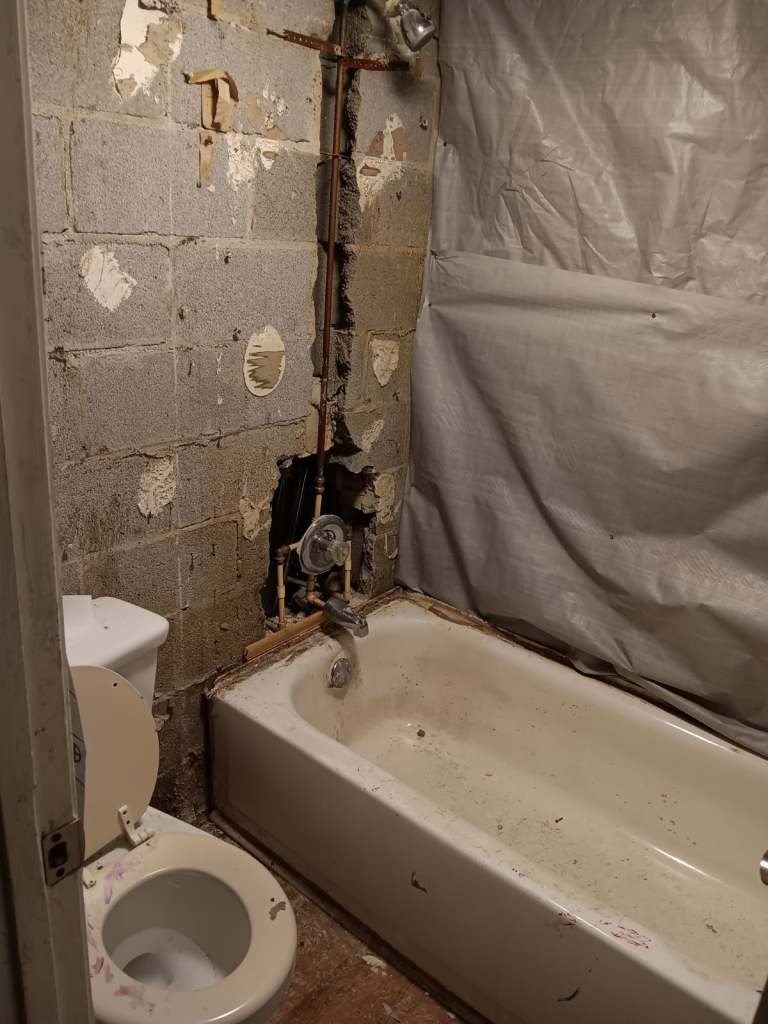
Smith said the city plans to return to Woodland Heights soon for another inspection. But, she added, it would be far easier to hold problem landlords like Preservation Partners accountable for code violations if HUD provided better oversight of the properties it subsidizes through Section 8 rent vouchers. With widespread federal workforce downsizing under the Trump administration — not to mention the threat of major HUD budget cuts from a Republican-controlled Congress — that seems unlikely.
HUD most recently inspected the Woodland Heights complex — which is located at two addresses, 2500 Center Street and 2591 Etheridge Drive — in April and December 2024. It awarded the properties a score of 96 and 81, respectively, out of 100.
Those high inspection scores seem at odds with the bullet holes in tenants’ doors, toilets that are coming unscrewed from the floors, or the cat-sized rats that scurry throughout the complex, munching on residents’ groceries and nipping at their toes.
Residents said in interviews that the federal agency obviously didn’t inspect all 354 apartments; four said HUD hadn’t checked theirs out.
No remedy in sight
Nikki Rainwater has lived at Woodland Heights for 12 years with four of her children. Although HUD pays her rent in full, she’s sick of her family battling respiratory illnesses that she believes are caused from unremediated mold. She’s tired of her maintenance requests being ignored. She’s fed up with the constant gunfire.
“Me and my kids sit away from the windows,” Rainwater said. “And I don’t let them play outside anymore.”
Rainwater said she’d love to get out of Woodland Heights and into somewhere safer. But right now, the alternative is homelessness. She’s a full-time mom, trying to get her GED — a process slowed by parenthood and her campaign to pressure the landlord to make her apartment livable. In fact, it took HUD assistance to get them out of a shelter years ago.
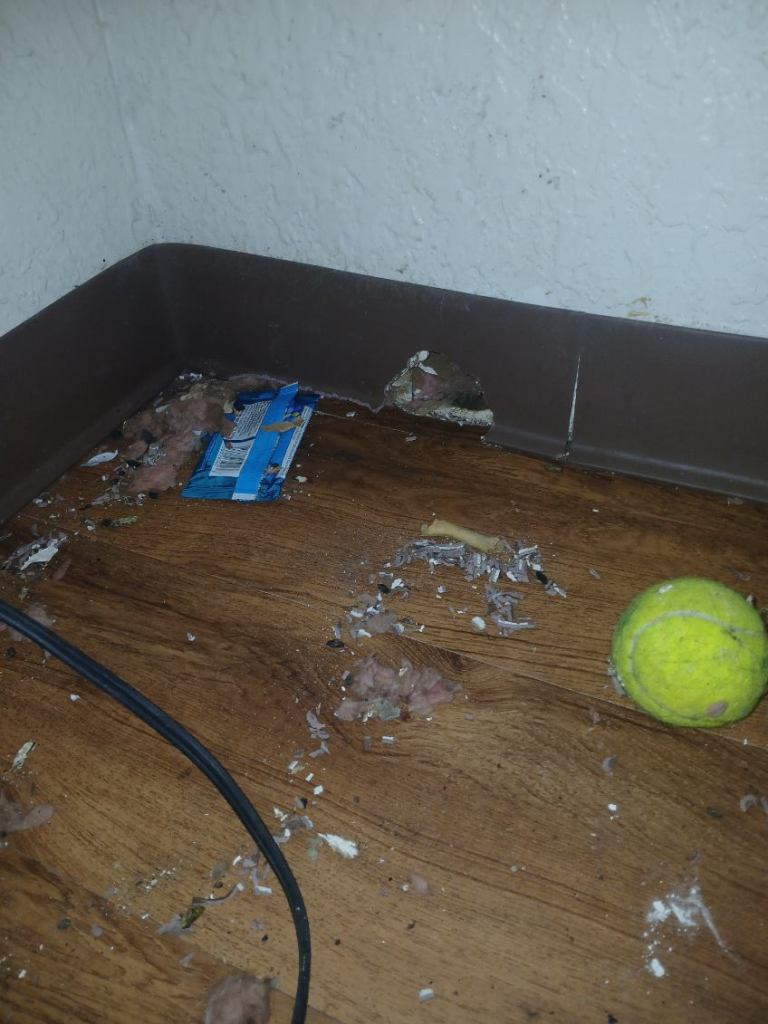

Shakenia Harbin finds herself in a similar predicament. The painstaking efforts she makes to keep her apartment clean isn’t enough to ward off the mold. She bought a carpet cleaner to suck the moisture out, but it always returns, somehow.
Harbin also has asked the property manager to fix up her unit. “But it feels like, every six months, there’s new management,” she said. “We have to go and renew or recertify our leases” — even though the property owner, Preservation Partners, hasn’t changed.
Although they’re hopeful, none of the Woodland Heights residents Atlanta Civic Circle interviewed for this story expect improvements any time soon. If the landlord and the government have been content to let them live like this for so long, why would they start fixing things now?
Broken promises
Atlanta City Councilmember Dustin Hillis, who represents the Westside district where Woodland Heights is located, met with Preservation Partners in 2018. “They promised the world,” he said. “They knew all the problems there, and they were going to fix everything they knew about.”
That never happened. The property maintained its status as one of District 9’s worst crime hotspots, the councilman said, and many of the units remained in disrepair.
“They may have fixed an entranceway once or twice, but [the property] has never really been maintained,” Hillis said. “They may have patched a piece of drywall here and there, but it was nowhere near the level of renovation that they had promised.”
Hillis said he’s solicited HUD’s help in the past, but he recognizes that the agency’s workforce is diminishing — and that unprecedented budget cuts could be on the horizon. “That’s one of the many things I’m concerned about at the federal government,” he said.

One problem, Hillis said, is that HUD appears to be conducting cursory inspections — an issue long before the Trump administration started slashing federal budgets. “The outside looks nothing like Forest Cove,” he said, referring to the infamous southside Section 8 apartment complex, which was condemned and ultimately demolished. “But once you get to the inside, it looks a lot closer to Forest Cove.”
HUD encourages tenants who need repairs to contact the property manager, Ambling Property Investments, or, if they have severe concerns about their living conditions, the nonprofit National Housing Compliance at ResidentConcerns@nhcinc.org or 1-888-530-8266. Ambling did not respond to an emailed request for comment by publication.
“We want people to report things,” Hillis said, explaining that it takes tenant complaints to trigger Atlanta housing code enforcement inspections. Mounting code violation fines can prompt a landlord to make repairs and remediation, he added. “Atlanta code enforcement officers will do more inspections, but so many people are afraid that they’re going to be retaliated against or evicted if they file a complaint with the city about their unit.”
You will never make improvements in housing where the tenants are the reason that the housing is in the condition it is.
You can’t say that because not everyone this apartment complex is like that. Its a lot of tenants keep their apartment clean in and outside and they still have the same problem just like the next tenants. It’s just ashamed that everyone in this apartment has to suffer in these poor conditions.The landlord just say “forget it they don’t stay out here,they don’t have to deal with this and go home and Yes I heard this out one of the people mouth in the manger office.
Unless they want the place torn down Id wouldnt say a word if I lived there. Unfortunately it has come to this where there are barely any truly affordable housing units left in Atlanta and putting up with these conditions is the alternative to homelessness. Oh but Andre Dickens has no problem taking credit for creating or preserving thousands of “affordable housing” units…but lets be honest, the 80% ami metric theyre using to refer to housing as “affordable ” is misleading and dishonest. Not to mention most of those units revert back to market rate after a set number of years.
As someone currently suing Woodland Heights’ ownership, HUD, and its former and current property management companies, I want to personally thank Atlanta Civic Circle for shining a light on what we’ve been going through for years.
My family and I have experienced mold, rats, roaches, retaliation, false eviction notices, and unsafe living conditions—despite repeatedly begging for help. My children have been hospitalized from infections directly linked to these conditions. I have video, audio, photos, and official Code Enforcement reports that prove the neglect.
My lawsuit, filed in Fulton County Superior Court, is titled “Complaint for Damages and Injunctive Relief” and includes claims against HUD, FPI Management, Ambling Management, and Rolling Bend I Preservation LP.
What Councilmember Hillis said—“They knew all the problems”—is 100% true. They knew, and they did nothing. That’s why I had to file a lawsuit—not just for me, but for every tenant still stuck in this nightmare.
If anyone else is living in these conditions and needs support or legal direction, speak up. You’re not alone. We deserve better. Atlanta deserves better.