



This story is part of Atlanta Civic Circle’s ongoing reporting from our Community Impact Survey, which is gathering firsthand accounts from people across metro Atlanta on how federal actions are affecting them.
For over four decades, Atlanta refugee resettlement agencies have helped incoming refugees find a place to live and reach self-sufficiency, thanks to federal grants through the U.S. Refugee Admissions Program.
But after President Donald Trump suspended U.S. refugee admissions via a Jan. 20 executive order, the five federally funded resettlement agencies in metro Atlanta— Bethany Christian Services, Catholic Charities, Inspiritus, the International Rescue Committee, and New American Pathways — are scrambling to provide for the refugees who are already here and fearing for those now stuck in limbo.
Last year Georgia received almost $12 million in federal funding for the state’s Coalition of Refugee Services Agencies to resettle refugees from countries ranging from the Democratic Republic of the Congo to Venezuela.
All told, Georgia welcomed about 3,327 refugees in federal fiscal year 2024, out of 100,034 nationally. Before Trump’s ban, the country was on track to welcome a similar number for fiscal year 2025. Another 1,079 refugees already arrived in Georgia from Oct. 1 to Dec. 31 last year, out of 27,308 refugees nationally.
The financial situation for the agencies has been thrown into jeopardy, and that of refugees, who are fleeing persecution in their countries of origin, even more so. Wait times already took anywhere from two years to 22 years, depending on a person’s country of origin.
That can have devastating impacts on families, said Whitney Kweskin of New American Pathways. Kweskin said she has seen marriages dissolve because of the pressure of years of long-term separation. “The stress is insurmountable for people who are in this situation,” she said.
“The people who make it here are the most resilient people you will ever meet in your life. They have struggled and risen beyond so many unimaginable things, and we are leaving them. We are abandoning them,” Kweskin added.
Navigating uncertainty
The Atlanta-area refugee support network is a complicated web of resettlement agencies and nonprofits. The resettlement agencies rely on federal funds and some private donations to provide housing and case management for the initial 90-day period after refugees arrive. For the longer duration, the nonprofits continue to support families, helping them learn English, find jobs, and navigate their new home country.
Even before Trump’s refugee ban, the federal contract money “was never enough funding to support someone very well,” Kweskin said.
The termination of federal resettlement contracts threw a wrench in this complex system. For instance, New American Pathways’ parent organization, Church World Service, has furloughed and is laying off almost 1,500 employees in response to Trump’s executive order, according to its latest financial report.
Kweskin said no employees at New American Pathways have been laid off yet, and that Church World Service has managed to cover its initial 90-day resettlement expenses for refugees who arrived before the Trump refugee ban. But she doesn’t know what the future will look like. “We’re worried about next year,” she said.
Privately funded Atlanta nonprofits now find themselves stepping up to meet refugees’ needs that resettlement agencies like New American Pathways previously handled. Friends of Refugees ordinarily works with refugees on important but less immediate concerns after they are initially housed: learning English, job skills, accessing healthy food, and maternal healthcare. The nonprofit immediately stepped in to support 27 families at risk of losing funding from their resettlement agency, while maintaining their original programs.
More families will be affected, and Friends of Refugees needs more funds to help them. “We were able to raise additional money, but to continue doing that, it’s going to be a struggle,” said Rusty Pritchard, the group’s senior director of program integration.
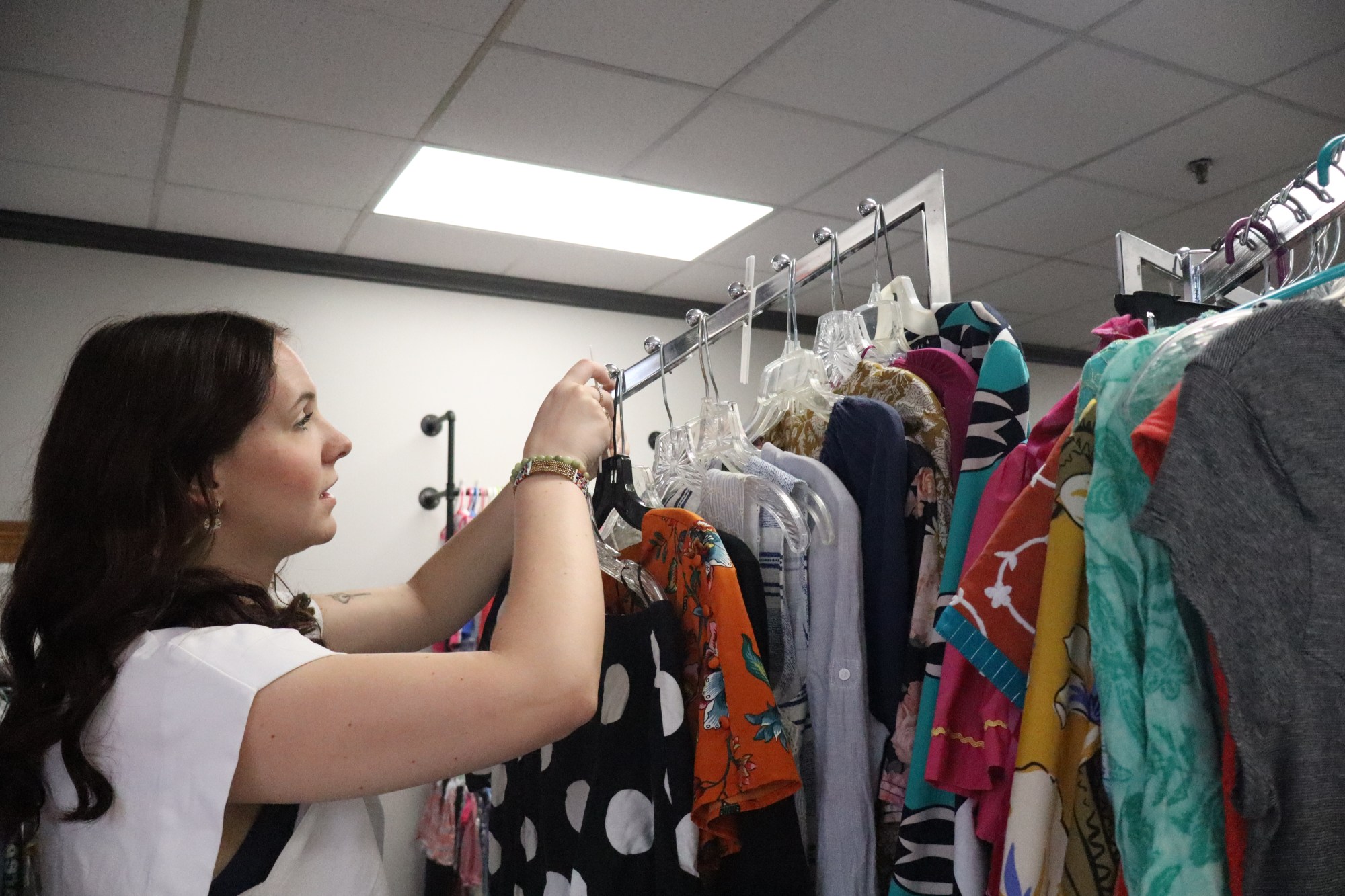
The Welcome Co-op previously received payments from resettlement agencies to find and set up housing for new arrivals. Without any incoming refugees to resettle, it has refocused its energy on fulfilling material needs for those who are already here. The Welcome Co-op continues to run a store where refugees can “shop” for clothes, furniture, hygiene items, and more, without spending money. To maintain its operations, it too must try to pivot to private philanthropy.
But the duration of private funding is not guaranteed, like the federal contracts were, Kweskin pointed out.
Legal battle over refugee ban
The International Refugee Assistance Project is representing a group of refugees and resettlement agencies that have sued the Trump administration to restore the refugee admissions and relief program.
Right now, only about 160 refugees, who had already been approved by U.S. Citizenship and Immigration Services and had bought plane tickets within two weeks of the Jan. 20 executive order, were still allowed to come to the United States, the Ninth Circuit Court of Appeals has ruled. Otherwise, the federal appeals court allowed Trump’s refugee ban to continue while the case is being litigated.
The thousands more who had been approved but had made plans to travel more than two weeks after Jan. 20 will be reviewed on a case-by-case basis, but all of that remains uncertain as the legal battle continues.
While their federal funding remains in limbo, the Atlanta resettlement nonprofits say they remain committed to supporting refugees.
“We’re hoping in the coming months that the philanthropic community, the faith communities in Atlanta will want to partner, will want to support this work, because we’re really focusing on ensuring newcomers still feel welcome,” The Welcome Co-op’s executive director, Emily Laney, said. “We know that Atlanta is a welcoming place and that our communities care.”
“I’m going to show up for my organization and my community regardless,” said The Welcome Co-op intern Ansley Cole. “We have to persevere.”