

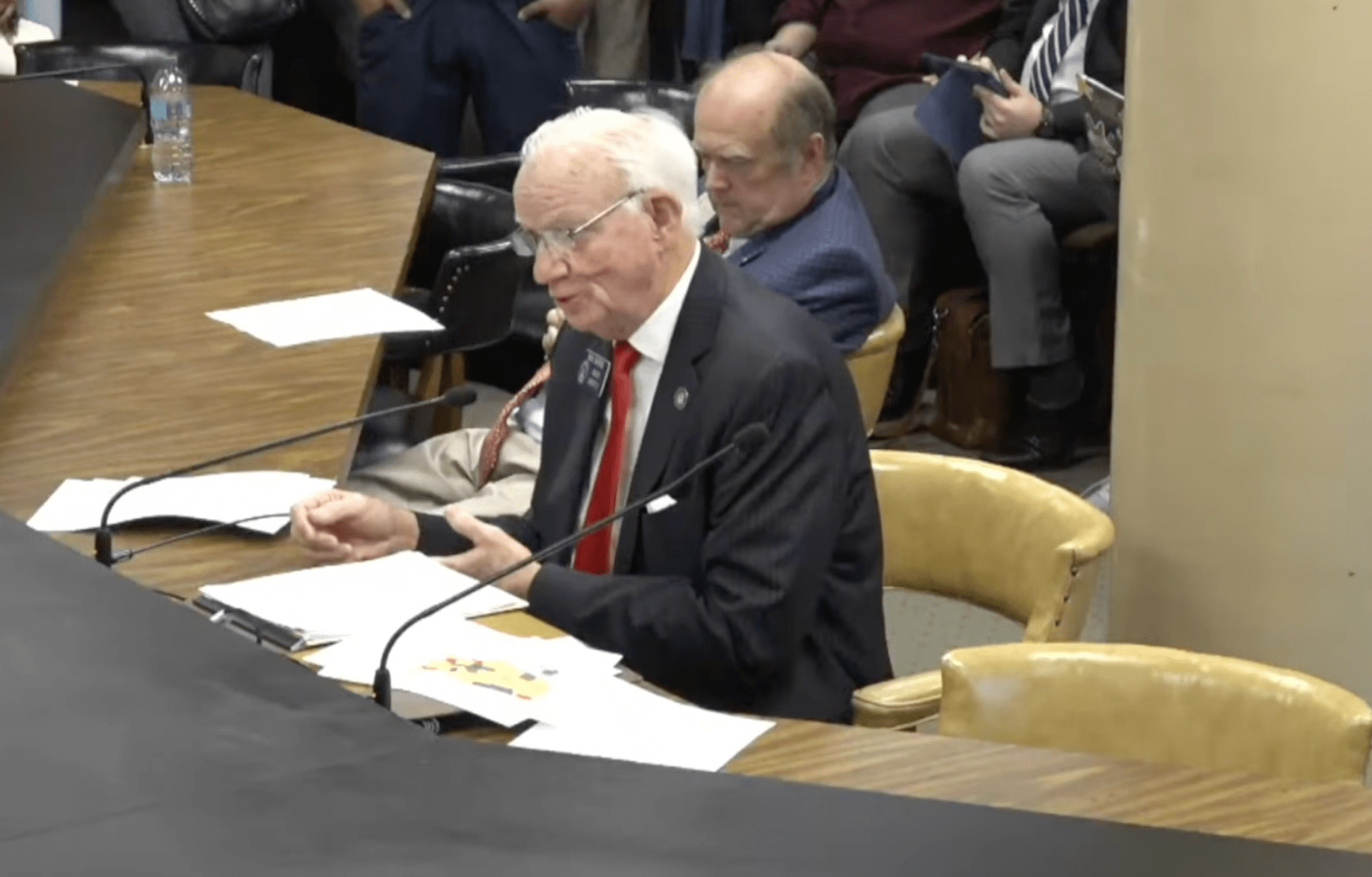
A controversial bill that would create criminal penalties, including jail time, for librarians who knowingly allow minors to check out materials deemed harmful to them under Georgia’s obscenity law advanced out of a House committee on Friday for a full House vote. The Republican-backed Senate Bill 74 already passed the Senate last year.
SB 74 has drawn strong opposition from librarians and civil rights organizations, who argue the bill is a censorship measure that disproportionately targets LGBTQ-related content.
“Faced with the threat of criminal prosecution, librarians are likely to self-censor,” said Sarah Hunt-Blackwell, the ACLU Georgia’s senior policy counsel, in an email to supporters after the House Judiciary Non-Civil Committee passed the bill Feb. 6 along party lines.
Bentley Hudgins of LGBTQ advocacy group Human Rights Campaign warned lawmakers at the Feb. 6 hearing that Georgia’s obscenity law includes homosexuality under depictions of sexual conduct harmful to minors “My question to you is: Is being homosexual itself obscene? Is it wrong?” Hudgins asked. And, they added, would a depiction of two gay characters simply holding hands be deemed obscene?
Rep. Shea Roberts (D-Atlanta) proposed removing homosexuality from the law’s definition of obscene content for minors, but the committee’s Republican majority rejected the change.
The bill’s sponsor, Sen. Max Burns (R-Sylvania) argued in committee that similar laws exist in other states and that the proposal includes protections for librarians who act in good faith.
Librarians are currently exempt from criminal penalties for distributing materials deemed harmful to minors, under a carveout in the state’s obscenity law. SB 74 would remove that exemption, making a knowing violation by a librarian a “high and aggravated misdemeanor,” punishable by a $5,000 fine and up to one year in jail.
After the bill stalled in the House last year, Burns modified it this session to include an exemption for librarians who attempt in good faith to remove such materials or who are unaware they were accessible. Burns said the intent is compliance, not punishment.
“They’re not going to be arrested. They’re not going to be put in jail. They’re not going to be fined. They’re going to be allowed to comply with Georgia law,” Burns said in the Feb. 5 committee hearing. “If they choose not to comply, that’s a different set of circumstances.”
West Georgia Library System Director Kristy Greene asked lawmakers at the Feb. 5 hearing to amend the bill so it does not override local control over what materials are available in libraries. She said the bill should instead apply to librarians who ignore local library board directives. “I like the fact that we can leave the decision to our local governing boards,” she said.
That amendment, introduced by Rep. Soo Hong (R-Lawrenceville), passed along party lines. However, Rep. Esther Panitch (D-Sandy Springs) said the bill would still chill access to books. “Now every library board in Georgia becomes a censorship board,” she said. “They will be calculating legal risk: When the choice is between keeping a challenged book on the shelf or exposing your libraries to prosecution, the book will lose every time.”


Leave a comment