It’s been a pretty dismal year for democracy, but people-driven change is both possible and on the upsurge.
This year in Atlanta, we saw a city watchdog office gutted, a longtime local journalist deported, and, nationally, a White House eager to test the limits of executive power.
But as the year draws to a close, we’re also seeing thousands of Atlantans willing to take to the streets to protest executive overreach, regular citizens running for office to challenge the status quo, and labor unions asserting their muscle.
Atlanta’s accountability struggle
Skirting accountability seems to be a theme for politicians these days. In the first week of his term, President Donald Trump fired 17 inspectors general tasked with preventing waste, fraud, and abuse at federal agencies to provide an independent check on executive power. Meanwhile in Atlanta, the year began with the dramatic resignation of Atlanta Inspector General Shannon Manigault on the steps of City Hall.
Manigault resigned in response to Atlanta Mayor Andre Dickens’ move to overhaul the powers of the city’s independent watchdog agency. After his administration accused the city’s Office of Inspector General (OIG) of overreach, the Atlanta City Council in February voted 14-1 to pass legislation that sharply curtails the office’s powers and independence.
Dickens and his allies on the city council claimed to be protecting the rights of city employees from an inspector general who had gone rogue and exceeded her investigative purview. But OIG whistleblowers claimed in March that the reforms were politically motivated, pointing to several investigations that Manigault’s office had opened into potential waste, fraud or abuse at the highest levels of City Hall.
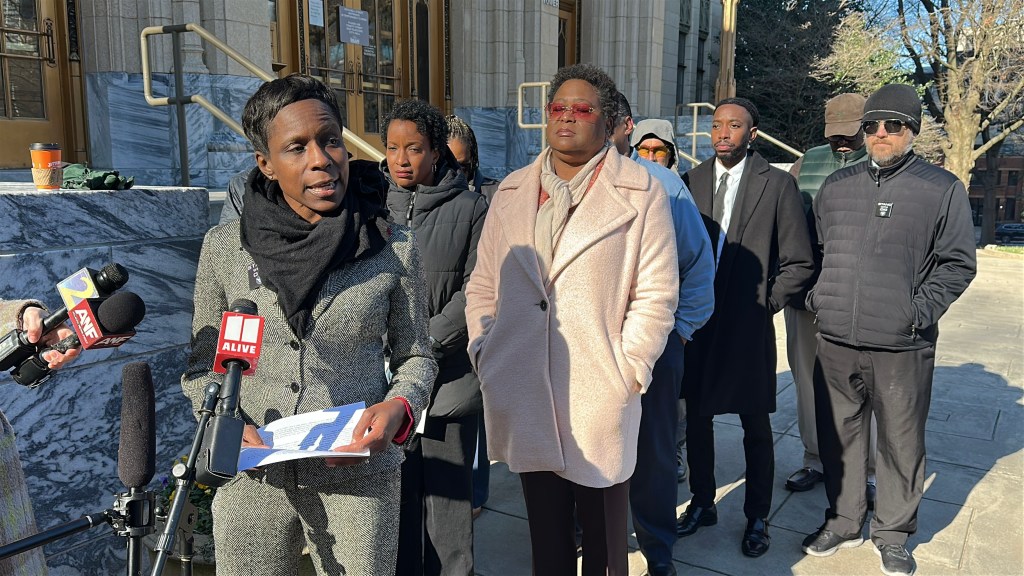
The fate of those investigations is in the hands of a reconstituted OIG governing board, which has been appointed under new Interim Inspector General LaDawn Blackett.
The OIG board is supposed to appoint the city’s inspector general, but in what local municipal law experts called a legally shaky move, Dickens quickly appointed Blackett on March 3 for an interim 90-day term. The rationale was to keep the city’s watchdog office operating until the seven new OIG board members were in place. Over nine months later, Blackett is now seeking the job full-time.
TAD pushback from city council’s newly elected Democratic Socialist
As the year came to a close, the Dickens administration attempted to rush legislation through the Atlanta City Council to extend the city’s eight Tax Allocations Districts (TADs) for up to 25 years. Dickens unveiled the proposal in late September, saying it will generate an estimated $5.1 billion in diverted property tax revenue to invest in underserved areas.
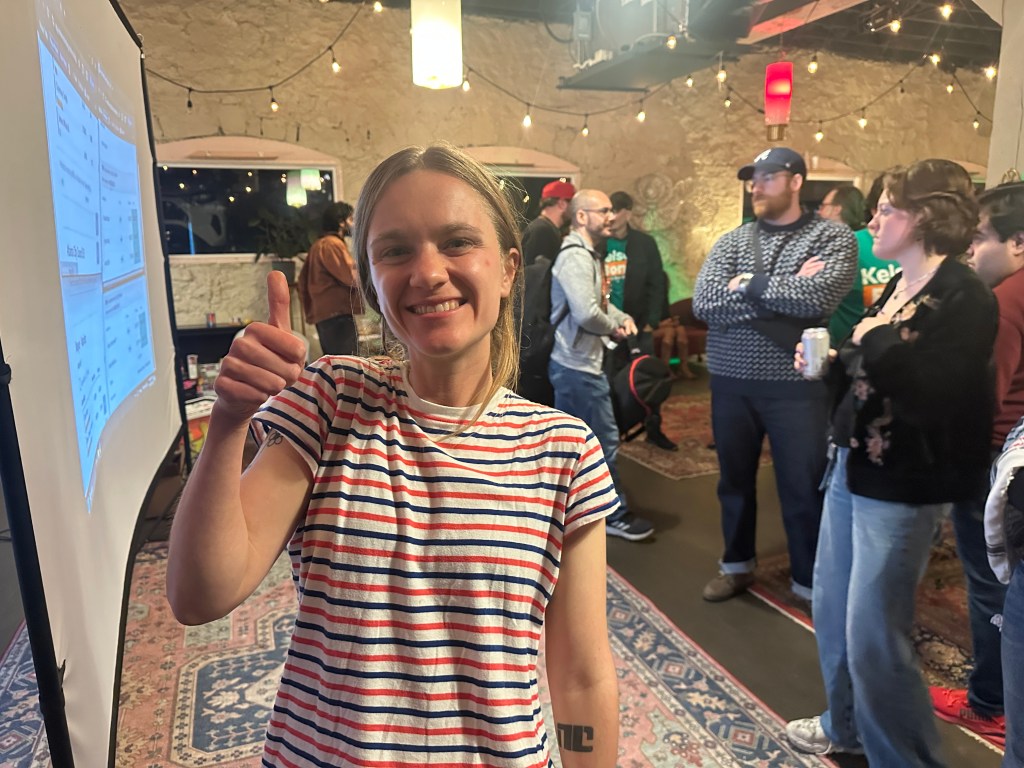
But seasoned and newly minted Atlanta activists, mobilized by Councilmember-Elect Kelsea Bond, successfully pressured the city council to defer the vote to early next year, when Bond and two other newly elected council members will be seated. Bond, a seasoned union organizer and the city council’s first-ever Democratic Socialist, pushed hard for the council to allow more time for public debate over the high-stakes issue.
Over their lifetime, the TADs divert increases in property tax revenue from the city, Atlanta Public Schools, and Fulton County to finance economic development projects within the TADs.
Critics warn that TADs can be vehicles of gentrification that displace longtime residents as property values shoot up and benefit corporate interests at the expense of local residents.
The debate over the TAD extensions will likely dominate the start of 2026, and Atlanta Civic Circle will be watching.
We’ll also be watching Bond, who won Midtown’s District 2 seat in a historic landslide, to see how they navigate being Atlanta’s first Democratic Socialist of America (DSA) elected official.
Latino journalist covering ICE protests gets deported
Thousands took to the streets in Atlanta on June 14 for the first national “No Kings” protests against Trump’s executive overreach. For some it was a first experience in getting tear-gassed and coming face-to-face with the state’s monopoly on violence.
Local journalist Mario Guevara was livestreaming the action at one DeKalb County protest. Before he knew it, DeKalb police arrested him and zip-tied his wrists behind his back, even though he was wearing a vest clearly marked PRESS.
This Atlanta Civic Circle reporter was just a few yards away. At the time, I thought: “Well that’s a mistake. Surely they’ll let him go.” Instead, DeKalb handed him over to Immigration and Customs Enforcement (ICE).
Little did either I or Guevara know that the incident was the start of an almost four-month legal saga that would end with his deportation back to El Salvador – even after DeKalb quickly dropped the misdemeanor obstruction charges for his arrest.

This, even though Guevara was legally permitted to live and work in the United States after seeking political asylum from El Salvador and becoming an Atlanta resident over 20 years ago.
As he fought deportation from an ICE prison in Folkston, Georgia, Guevara and his legal team raised credible claims in a habeas corpus petition that ICE had violated his First Amendment rights, but ICE summarily deported him before a federal judge could hear them. That, even though the judge expedited the habeas case.
And it all stemmed from Guevara doing journalism.
Union power on the rise?
Unionized garbage collectors in Cumming scored a big contract win on Oct. 15 after a 99-day strike against Republic Services. When contract negotiations stalled last spring, their union, the International Brotherhood of Teamsters, launched a nationwide strike where over 2,000 Republic Services trash collectors walked off the job. The 33 Cumming workers were the last to secure a contract, which included a 17% pay raise over its new four-year term, bringing the strike to an end.
Then on Nov. 13, about 1,000 Starbucks baristas unionized with Starbucks Workers United (SBWU) kicked off an open-ended strike against the Seattle-based coffee giant – SBWU’s largest-ever labor action in its four-year fight for a contract. The union is demanding a contract with increased staffing and higher pay – and for Starbucks to resolve over 700 unfair labor practice complaints, mostly for union-busting.
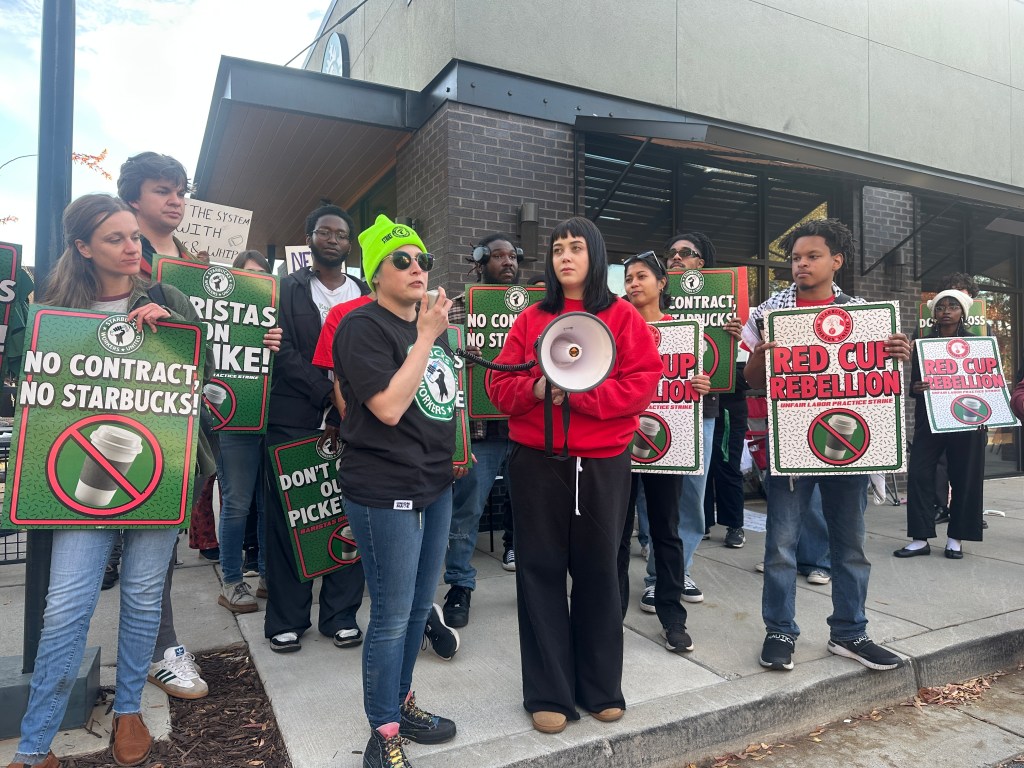
Locally, about 60 baristas have joined the walk-off so far, shuttering two unionized shops – a Roswell store at 1570 Holcomb Bridge Road and an Alpharetta store at 10830 Haynes Bridge Road. Starbucks reopened the Alpharetta store with non-union workers, but the SBWU baristas have shut down another unionized Alpharetta store at 8500 Holcomb Bridge Road.
Since the strike began on Red Cup Day – the start of Starbucks’ peak holiday season – it has expanded to over 3,800 unionized Starbucks baristas at 180 stores in 130 cities, according to SBWU.
Locally, the striking baristas are still paying their bills, thanks to the SBWU national strike fund, additional local fundraising by the Atlanta DSA chapter, and some help from the community. Atlanta Civic Circle will continue covering it into the new year.