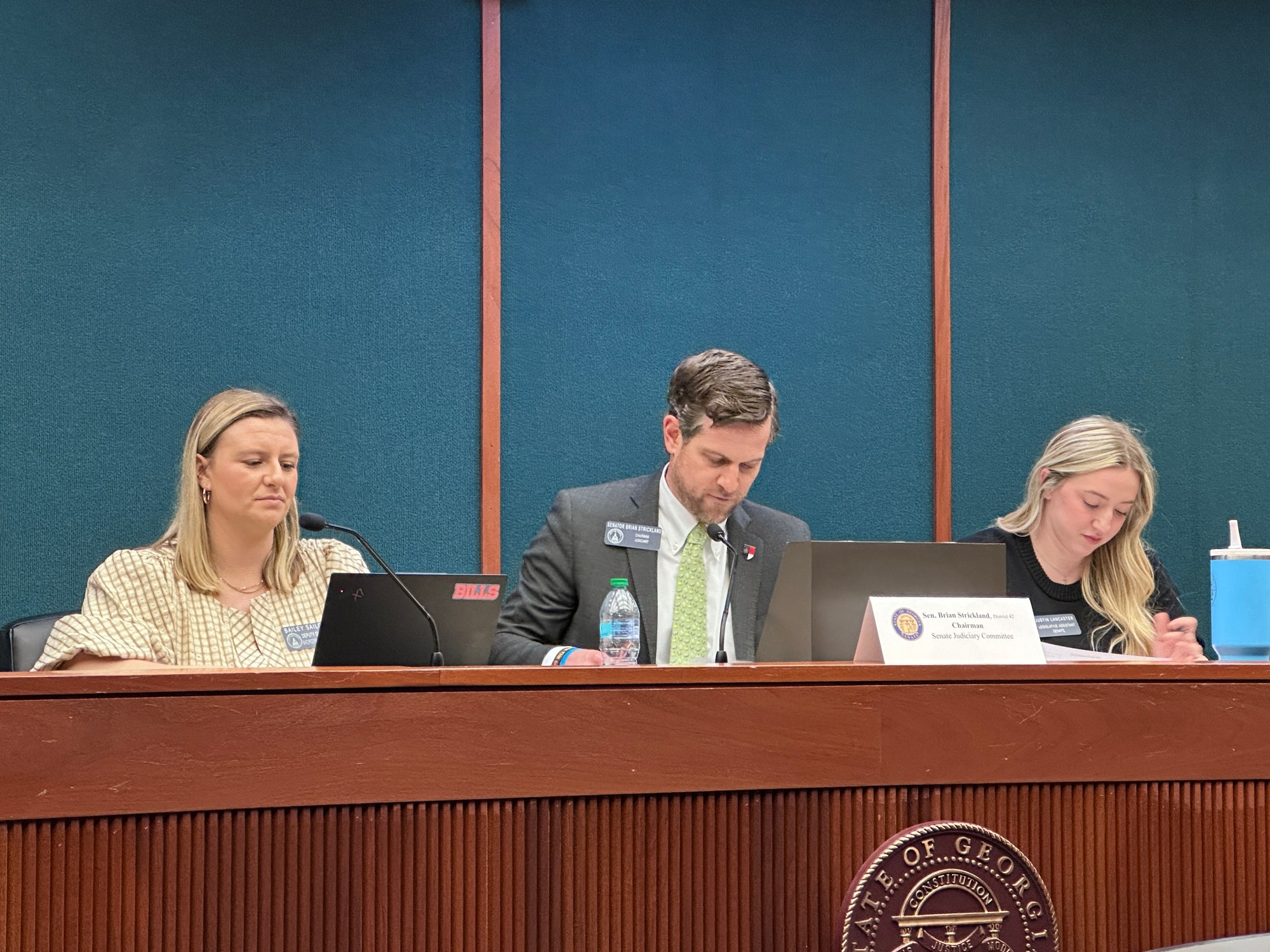

The Georgia Senate Judiciary Committee on Feb. 19 unanimously advanced a pared down version of Senate Bill 443, which would increase the criminal charges and penalties for obstructing a roadway.
Because such charges are commonly made against political protestors, SB 443 has alarmed civil liberties advocates, who say it infringes on protected First Amendment activities.
The bill, sponsored by Sen. Carden Summers (R-Cordele) and 16 other Republican legislators, raises simple roadway obstruction from a misdemeanor, which carries a fine of up to $1,000 or 12 months in jail, to a high and aggravated misdemeanor, which raises the maximum fine to $5,000.
The initial version of the bill made obstruction of a sidewalk or roadway, when combined with property destruction or bodily injury, a felony, with a $5,000 minimum fine and five years in prison. The Senate Judiciary Committee deleted sidewalk obstruction and removed the felony component.
Now, the Senate Rules Committee will consider the bill. If it signs off, SB 443 will go to a full Senate vote. There are only four legislative days left before Crossover Day on March 6 for the bill to advance to the House.
The bill also would make anyone convicted of roadway obstruction civilly liable for property damage. But Judiciary Committee member Sen. Elena Parent (D-Atlanta) told Atlanta Civic Circle after the vote that it would be difficult to win any actual damages in a lawsuit against a group of roadway obstructors.
“What could cause such high damages that would make it worth it to sue every person involved in the protest that had gotten ticketed?” asked Parent, a lawyer. “I don’t like that part at all. I think that it would be extremely difficult to actually utilize it.”
In such a case, she said, a plaintiff would have to individually sue potentially dozens of protestors who’d all been ticketed and convicted of roadway obstruction – then prove each person’s individual responsibility for damages. So the damages would have to be high enough to make the expense of the cases worthwhile.
Parent said she still voted to advance the bill, because the parts that egregiously infringed on people’s protest rights had been neutered. That said, she added, she’ll likely vote against the current version of the bill if it reaches the Senate floor.
Do you want to express your point of view to your state representative and senator on a piece of legislation? Use the General Assembly’s Find My Legislator tool to get their contact information.