

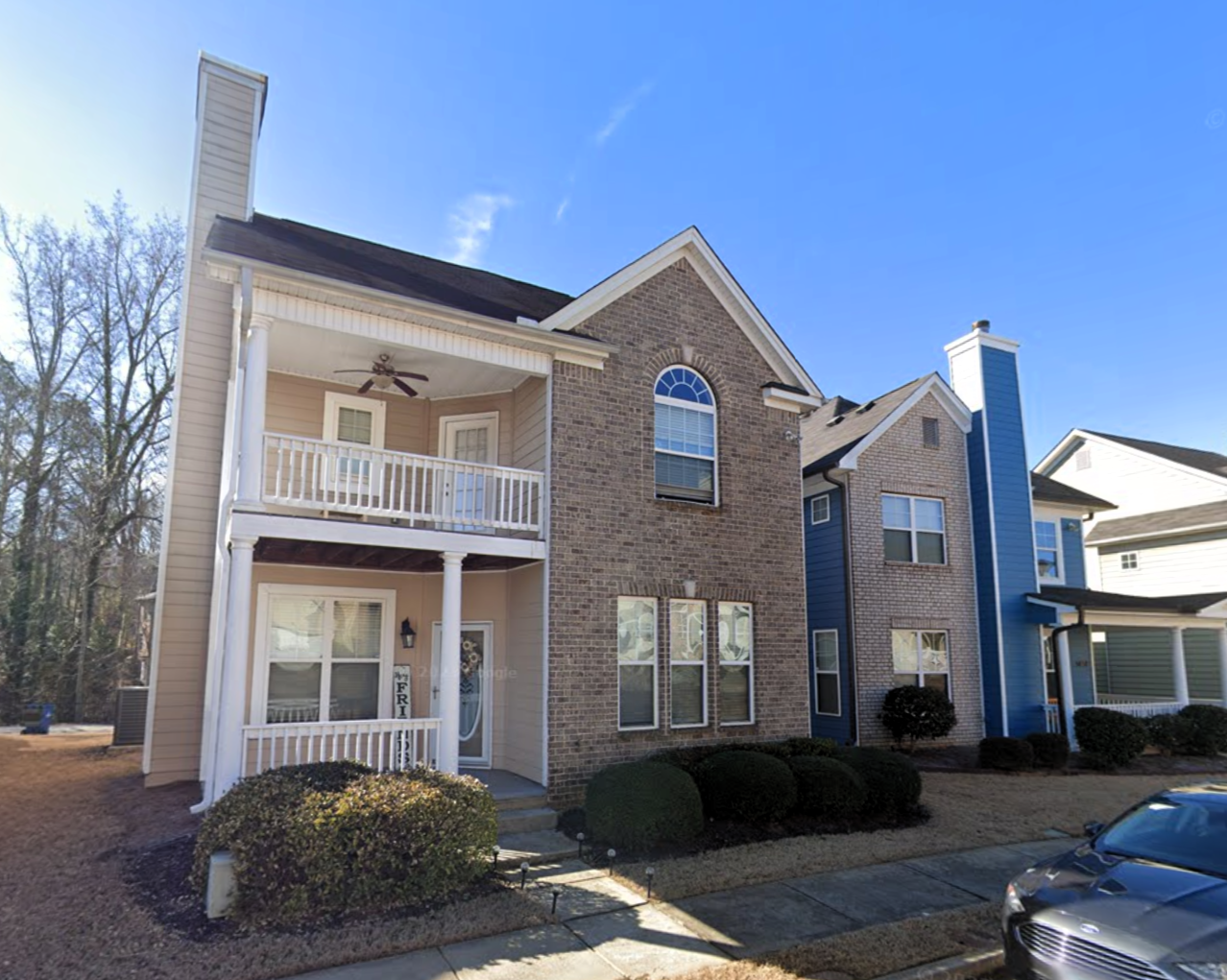
America’s largest single-family landlord, Invitation Homes, has agreed to pay $48 million to reimburse tenants for unlawful charges in a settlement with the Federal Trade Commission (FTC).
The federal government’s lawsuit claims Invitation Homes defrauded home-renters “by charging mandatory undisclosed junk fees, misrepresenting when it withholds security deposits and unfairly withholding security deposit refunds owed to former residents, misrepresenting its home inspection and maintenance practices, and steering residents away from eviction protections during the COVID-19 pandemic.”
Invitation Homes does not admit any wrongdoing in the proposed settlement agreement, filed by the FTC on Sept. 24 in federal court. It must still be approved by a judge. The company, which declined through a spokesperson to answer Atlanta Civic Circle’s questions for this story, emphasized in a press release that the settlement deal includes no civil penalties, such as fines.
But the settlement requires the mega-landlord to clearly disclose rent prices, create new procedures for handling security deposit refunds, and refrain from engaging in “other unlawful behavior against renters.”
Texas-based Invitation Homes owns 80,000 single-family rental homes, including nearly 8,000 homes across metro Atlanta. The FTC’s legal action against the rental home giant has spurred questions of whether the feds are mounting a major crackdown on predatory landlords — or whether this is a one-off.
Taylor Shelton, a Georgia State University geographer who’s extensively studied corporate landlords, told Atlanta Civic Circle he hopes this is a sign that government officials are finally scrutinizing the deceptive practices of many institutional investors who’ve bought up rental homes nationally since the 2008 financial crisis.
“This action against Invitation Homes is a really significant shot across the bow for corporate landlords across the country,” he said. “Most of the unfair and deceptive practices the FTC cites are things we know to be not only commonplace across the industry, but actually part of these companies’ fundamental business model and standard operating procedures.”
Coupled with the U.S. Department of Justice’s new antitrust lawsuit against property management software company RealPage — another Texas-based company, which is accused of colluding with landlords to inflate rent prices — the FTC’s civil legal action against Invitation Homes “shows that some parts of the federal government are taking on the roots of the housing crisis in corporate greed and power,” Shelton said.
Invitation Homes is one of three corporate landlords that together own over 19,000 rental homes across metro Atlanta, according to a study by Shelton and other GSU and Rutgers University researchers.
Those companies, the research found, camouflage their involvement in housing markets nationwide by creating layers upon layers of shell companies. That makes it harder to hold them accountable for deceptive practices or homes in disrepair. In metro Atlanta alone, they are “using an extensive network of more than 190 corporate aliases registered to 74 different addresses across ten states and one territory,” according to the GSU/Rutgers study.
With the presidential election fast approaching, Shelton said it’s an open question whether, under a new administration, the federal government will continue making efforts to rein in corporate landlords — or if they’ll be allowed to run rampant, cheating unsuspecting renters out of their money.
“Whether these kinds of [legal] actions are going to continue is obviously dependent not only on the results of the presidential election, but also whether a potential Harris administration will even choose to keep on FTC Chair Lina Khan, who has been at the forefront of these battles in recent years,” he said. A Trump administration would be unlikely to keep any Biden administration agency heads.
Khan said in a post on X that “no American should pay more for rent or be kicked out of their home because of illegal tactics by corporate landlords.”
She added: “[The FTC] will continue to use all our tools to protect renters from unlawful business practices.”

Those companies, the research found, camouflage their involvement in housing markets nationwide by creating layers upon layers of shell companies. That makes it harder to hold them accountable for deceptive practices or homes in disrepair.
Maybe disallowing, in housing, more than 2 layers of “corporate owners” would go a long way to stop the wrong.