How we reported this story: Atlanta Civic Circle consulted six municipal law experts, including current and former city attorneys. However, due to political sensitivities with the city of Atlanta or client conflicts, several of the lawyers declined to be quoted directly for this story.
Atlanta Mayor Andre Dickens has appointed LaDawn “LBJ” Blackett as interim Atlanta Inspector General to replace Shannon Manigault, who publicly resigned on City Hall’s steps on Feb. 17 — right before the Atlanta City Council passed legislation that curtailed her office’s independent investigative powers.
But the mayor’s inspector general appointment, announced Feb. 28, could be on shaky legal ground, according to six municipal law experts. That’s because Atlanta’s city charter empowers a citizen board to appoint or remove the head of the Office of Inspector General (OIG), subject to the city council’s approval — just like it does for the city’s two other independent watchdog agencies, the Atlanta Ethics Office and City Auditor.
The charter also states that an interim inspector general should be appointed by the OIG board: “Vacancies occurring in an appointive office shall be filled in the same manner as prescribed by this charter for original appointments.”
No OIG board — so now what?
But right now, there is no OIG board. When the city council passed the Feb. 17 legislation to overhaul the inspector general’s office, they dissolved the joint governing board for the OIG and Ethics Office and created two separate boards. Those boards have yet to be constituted, and that process could take weeks, if not months.
Prior to Manigault’s resignation, Atlanta City Attorney Patrise Perkins-Hooker told Atlanta Civic Circle that it’s the OIG governing board that hires the city’s inspector general. “It’s a board process. The mayor doesn’t have anything to do with it. Neither does the city council,” she said after a specially called Feb. 13 meeting of the joint OIG-Ethics Office governing board.
But the Dickens administration cited a municipal code section that empowers the mayor to appoint interim — and permanent — replacement leaders for city departments when there’s a vacancy. “The position needs to be filled to ensure office operations continue during this transition,” the mayor’s office said in a March 3 press release announcing Blackett’s hire.
Atlanta Civic Circle asked the mayor’s office and the city attorney whether the mayor would be similarly empowered to name a replacement city auditor or ethics officer, but neither office responded to multiple requests for comment.
What’s more, there is a provision in the code section cited by the mayor’s office that says: “The mayor shall, within 90 days thereafter, make a permanent appointment to fill the position.” (That 90-day period can be extended in the absence of a suitable candidate.)
So could the mayor unilaterally make a permanent appointment to lead the inspector general’s office? The Dickens administration declined to respond to that question.
Blackett, who assumed the inspector general role on March 3, said she won’t take the job permanently, according to the mayor’s office. Blackett currently serves as a judge for South Fulton Municipal Court and Dekalb County State Court, according to her bio on the OIG website. She is also a former state representative and has served as the city solicitor for South Fulton.
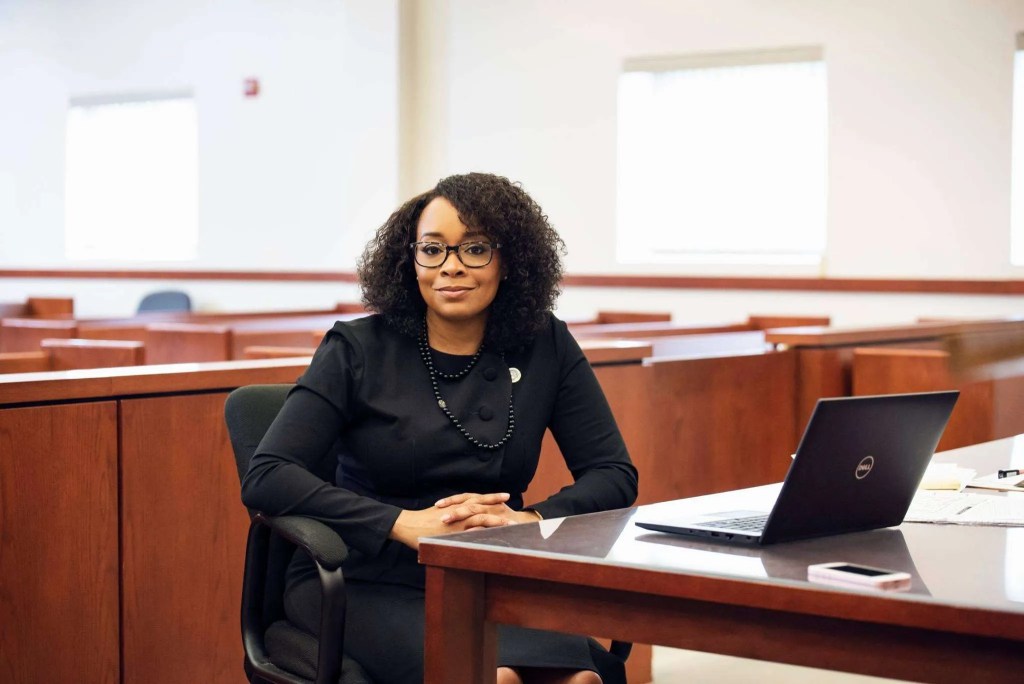
OIG spokesperson Felecia Henderson said Blackett is declining interview requests while she acquaints herself with the OIG’s staff and work.
But the city code language cited by the mayor for his new interim inspector general hire raised concerns for several attorneys with expertise in municipal law who spoke to Atlanta Civic Circle.
An apparent conflict
There is an apparent conflict, the lawyers said, between Atlanta’s municipal code, which is the body of laws that govern the city’s activities, and the charter, which establishes its government structure.
They also questioned whether the OIG – an independent watchdog office with the mandate of investigating fraud, waste, abuse, and corruption in city government – could be considered a “city department,” per the code language, like those that are directly under the mayor’s control.
Typically, the lawyers said, the city charter carries more legal weight than the municipal code, the same way that the U.S. Constitution overrides ordinary law at the federal level.
“Charter does trump code. In cities across the state, charter always is the higher law,” said Rusi Patel, the general counsel for the Georgia Municipal Association. However, Patel declined to comment specifically on this situation.
“It appears there’s a question that needs to be answered,” said Laurel Henderson, a longtime local government lawyer, of the mayor’s appointment power.
Given the unprecedented circumstances, two other local government lawyers said, it could be a reasonable interpretation that the city code section “fills in the gaps” of the charter and allows the mayor to appoint an interim inspector general.
Since there is currently no OIG board to appoint an inspector general, per the city charter, the lawyers added, there could be a practical need to hire an interim leader for the OIG, which has 12 staff, until a new OIG governing board is assembled and can begin its own hiring process. Citizen groups designated by the city council’s Feb. 17 legislation will appoint the new board’s seven members.
The OIG board hired Manigault after the city launched the watchdog office in 2020, so this is the first time a new inspector general has been needed. That hiring process took several months.
Council presidents push back
Both the current and prior city council presidents also are raising questions about the mayor’s power to appoint an inspector general.
“I have a number of questions that I am asking of the city attorney to try to get clarity on a number of issues regarding what has transpired since the IG resigned,” City Council President Doug Shipman told Atlanta Civic Circle on Monday.
“My understanding is that the city attorney believes that the IG falls under the purview of a department head, and the mayor has the ability to appoint department heads — and so that is the authority,” Shipman said.
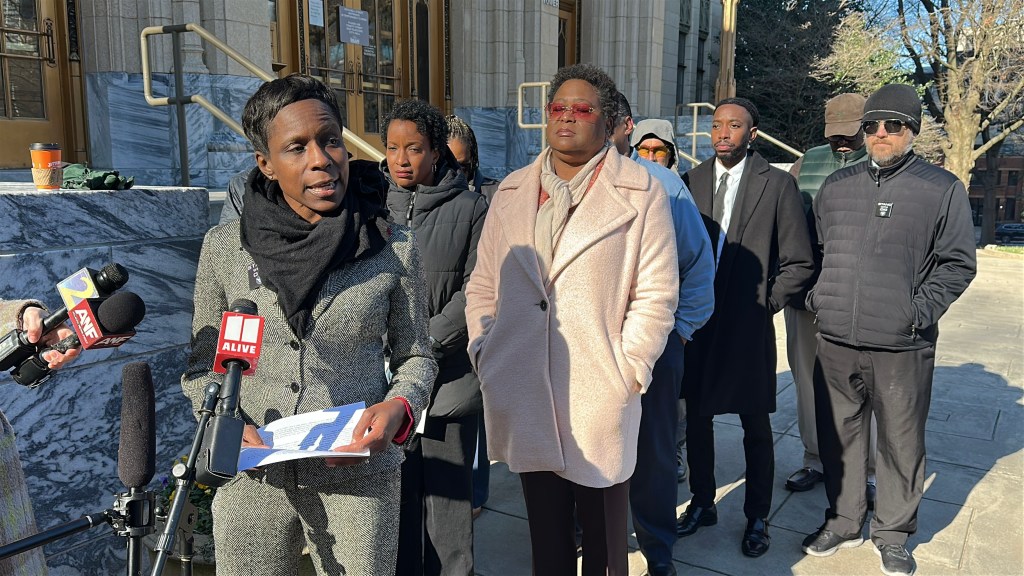
Felicia Moore, who preceded Shipman as council president, said the mayor has no legal authority to appoint an interim inspector general — and called upon the city council to stop Blackett’s appointment.
“A board must be constituted to fill any OIG position. That is what makes it independent from the people they investigate,” Moore said during public comment at the council’s March 3 meeting. “The mayor has no authority to appoint an interim IG,” she emphasized.
Moore, like several of the local government lawyers consulted by Atlanta Civic Circle, said the code section that Dickens cited as his legal authority pertains only to commissioners or department heads that the mayor “has direct appointment of.”
“The mayor has no authority to appoint anyone to take over an independent investigative office, and especially one that has active and ongoing investigations related to the highest rungs of city government,” Moore said.
Mayor wanted fast replacement
Perkins-Hooker, the city attorney, said in a Feb. 28 press call that Dickens needed to quickly fill the inspector general position due to tensions in the OIG office surrounding Manigault’s resignation. It was “because of the situation that is going on and has been going on for the last three weeks, with the staff there being supporters of the former IG and trying their best to basically do anything they can to kind of sabotage what’s going on,” Perkins-Hooker said.
Perkins-Hooker, accompanied by interim Human Resources Commissioner Calvin Blackburn and an Atlanta Police Department officer, changed the locks on the inspector general’s office right after Manigault’s Feb. 17 resignation and seized surveillance equipment the city council had just forbidden the OIG from possessing.
The city attorney also asked the deputy inspector general, Shelby Williams, for copies of all subpoenas pertaining to OIG investigations, as first reported by Atlanta Community Press Collective. Williams has resigned.