

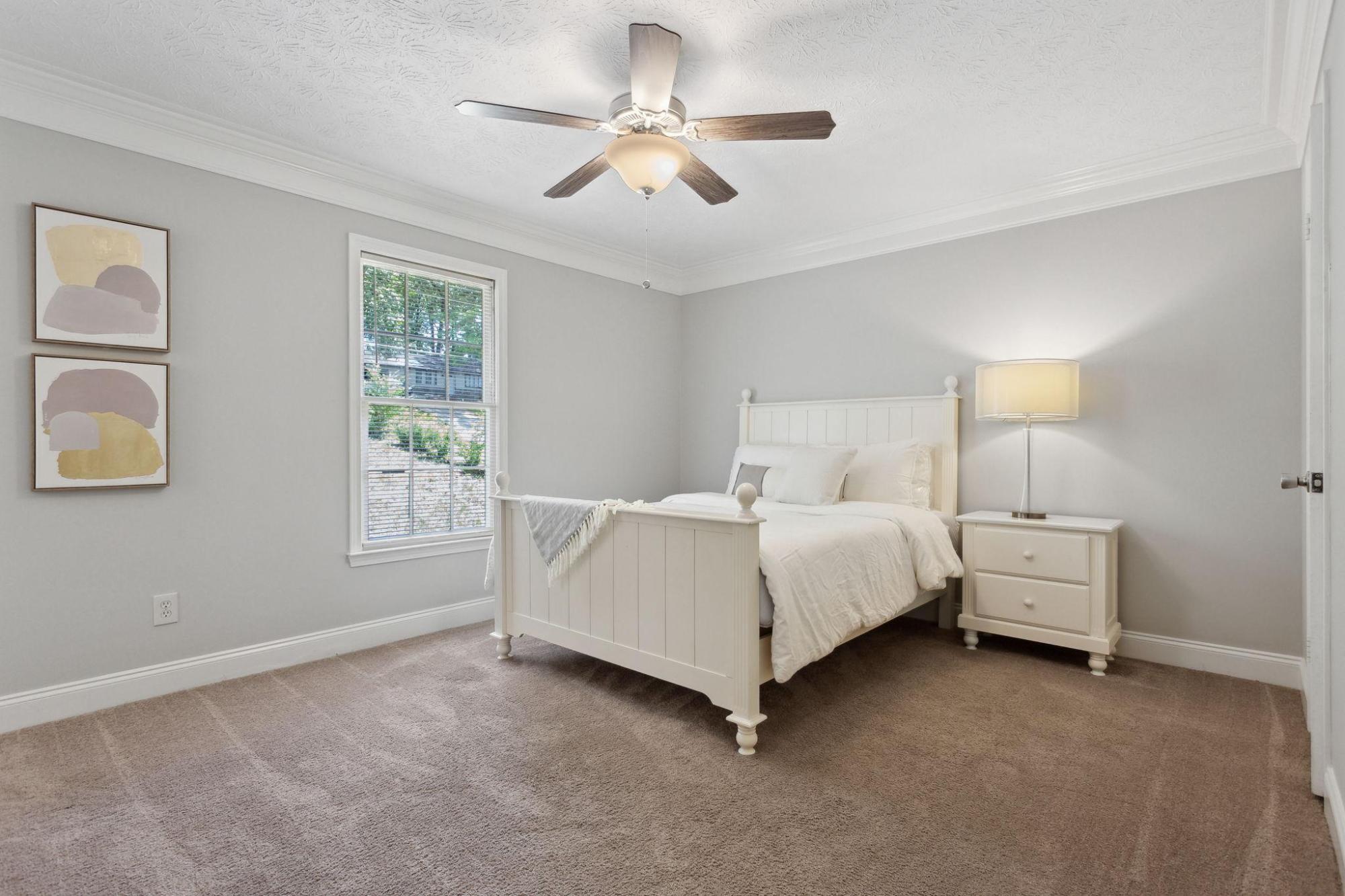
As federal housing subsidies face major cuts from Congress, Atlanta-based startup PadSplit claims it can help fill a critical gap for affordably priced rental housing. But experts caution that the company’s room-rental model — designed for single adults, not families — can’t replace safety nets like the Section 8 voucher program, no matter how fast it grows.
“Having access to more diverse housing options is a step in the right direction for renters, but only if those options are held to the same standards as conventional rental housing,” said Taylor Shelton, a Georgia State University geographer who studies housing. “Expecting alternative, tech-enabled housing models that operate in a legal grey area to solve the issues created by a loss of federal funds is foolhardy at best.”
Founded in 2017, PadSplit celebrated producing its 20,000th room in May. Founder and CEO Atticus LeBlanc says the company is now adding more than 1,000 rentable rooms per month, thanks to homeowners converting their single-family residences into sharable spaces. Since its inception, the company has housed over 51,000 people in rented rooms in 27 states, according to its website.
But with Congress considering slashing federal housing voucher programs entirely in favor of much-reduced block grants to the states, LeBlanc sees PadSplit playing an even larger role. President Donald Trump’s proposed FY 2026 spending bill that’s currently before Congress would cut $68.7 billion in rental assistance subsidies from the US Department of Housing and Urban Development (HUD) budget and instead allocate $36.2 billion in a block grant for states to administer. That’s a 47.3% net loss in federal rental assistance subsidies.
If Congress eliminates hundreds of thousands of federal rent vouchers, PadSplit’s novel housing strategy could become “more palatable,” LeBlanc said.
Instead of offering standard landlord-tenant contracts, PadSplit extends short-term, membership-based rental agreements to its renter clients, most of whom make around $32,000 annually or are on fixed incomes. Renters typically pay under $200 a week to stay in single-family homes that have been retrofitted with additional bedrooms. That can be an appealing option, if the alternative is living in extended-stay motels, cars, or homeless shelters.
As for the benefits of shared housing options, “I wouldn’t say HUD cuts are going to enlighten anyone,” LeBlanc said. “But it adds pressure. Limiting someone’s budget to solve a problem in a traditional way will force jurisdictions to think about other solutions.”
But that optimism isn’t universally shared. Critics say PadSplit’s model doesn’t suit families — the main rent-voucher beneficiaries — and that it lacks adequate tenant protections. In fact, most PadSplit renters use it for transitional housing and stay less than nine months. HUD subsidies, by contrast, are designed to provide long-term housing stability.
“The notion that this model can provide a substitute for federal rental-housing assistance for low-income households is ridiculous,” said Dan Immergluck, a housing expert and Georgia State University professor emeritus.
What’s more, PadSplit has faced pushback from local governments that see the company as little more than a boarding-house facilitator. “Localities should generally allow for shared housing, as long as it’s safe and tenant protections are complied with,” Immergluck said. But PadSplit housing shares aren’t a silver bullet, he warned.
Roadblocks remain — for now
While LeBlanc sees PadSplit’s ability to provide low-cost housing without using public dollars as a strength, it also means the company’s housing isn’t subject to HUD oversight, the way that apartment complexes receiving Section 8 subsidies are.
Once called “Airbnb, but for Flophouses” by The New Republic, PadSplit has faced its share of tenant complaints. Renters told the publication they faced deferred maintenance, housemate disputes, and the fear that they could be locked out immediately if they missed a weekly payment.
But LeBlanc thinks a 2022 Georgia Court of Appeals ruling that granted tenant protections to residents of extended-stay motels should assuage those concerns — in Georgia, at least. As a result of the ruling, he said, PadSplit homeowners must follow standard local eviction laws when renters fall behind on payments. And because of the precedent set by that state court decision, LeBlanc added, these quasi-landlords must also abide by Georgia’s Safe at Home Act, which requires rental housing to be “fit for human habitation.”
“We advise all hosts to assume operations under landlord-tenant [statute] in every state,” LeBlanc said.
Still, critics say enforcement of housing habitability is inconsistent, especially in landlord-friendly Georgia. “These standards are already too low,” said Shelton, the GSU professor.
Another obstacle for PadSplit is the pushback it can face from local governments with restrictive housing laws regarding single-family homes. PadSplit has found itself in court around the country, arguing that it’s not responsible for the renovations participating property owners do to divide houses to create more bedrooms.
PadSplit also opposes the local zoning and occupancy laws that restrict the number of unrelated occupants who can live in a single-family dwelling. The company in 2023 battled with the city of Morrow, for example, over whether three houses it managed were legally habitable after the homeowners renovated them to yield a total of 22 bedroom units. The property owners ended up deactivating their PadSplit memberships, but some of the renters moved into other PadSplit units.
Similar problems persist in places like Doraville, where city law says a single-family dwelling is only suited for a “single housekeeping unit,” in which all but two people must be related by birth, adoption, or marriage. Cobb County, among other local governments, has similar regulations.
“Zoning codes and occupancy laws should be based on health and safety, not blood,” LeBlanc said. As traditional rental housing becomes less affordable, he added, more localities may start to rethink those laws.
Indeed, some local governments nationally have changed their policies to open the door to atypical living arrangements: New Hampshire just passed a law banning local governments from regulating occupancy based on familial relationships or marital status or from restricting the number of occupants in a home to two per bedroom. Seattle and Boulder have done away with land-use laws that prohibit shared housing in single-family homes. Even Texas’s so-called “frat house” bill would stop cities from limiting the number of unrelated residents in a house.
A small solution to a big problem
Budget pressures could force more cities to consider unconventional housing options, said Sarah Kirsch, the managing director of housing funds at the Community Foundation for Greater Atlanta and a board member for Atlanta Housing, the city of Atlanta’s public housing authority.
“In the face of potential [federal] funding cuts, all communities will have to take a hard look at what tradeoffs they are and are not willing to make to ensure safe and stable housing,” Kirsch said.
A recent PadSplit press release declared it is “solving the affordable housing crisis, one room at a time.” But even cautiously optimistic observers say that’s an overstatement — and that the PadSplit model could work best as transitional housing.
“This may be a perfect fit for someone like my oldest son,” said Bambie Hayes-Brown, the National Low Income Housing Coalition chair. “He’s unmarried, has no kids, and just needs an affordable place to stay.”
But Hayes-Brown emphasized that PadSplit’s success hinges on housing quality.
The startup’s growth will likely continue if federal rental assistance subsidies disappear. But whether PadSplit can offer more than a stopgap fix remains an open question.
Editor’s note: This story was updated on June 26, 2025 to reflect that PadSplit has helped house over 51,000 people, not 81,000, as the article previously stated. PadSplit’s website erroneously notes the larger figure. A spokesperson also reached out after publication to clarify that some PadSplit rentals are available to families, not just singles.
