

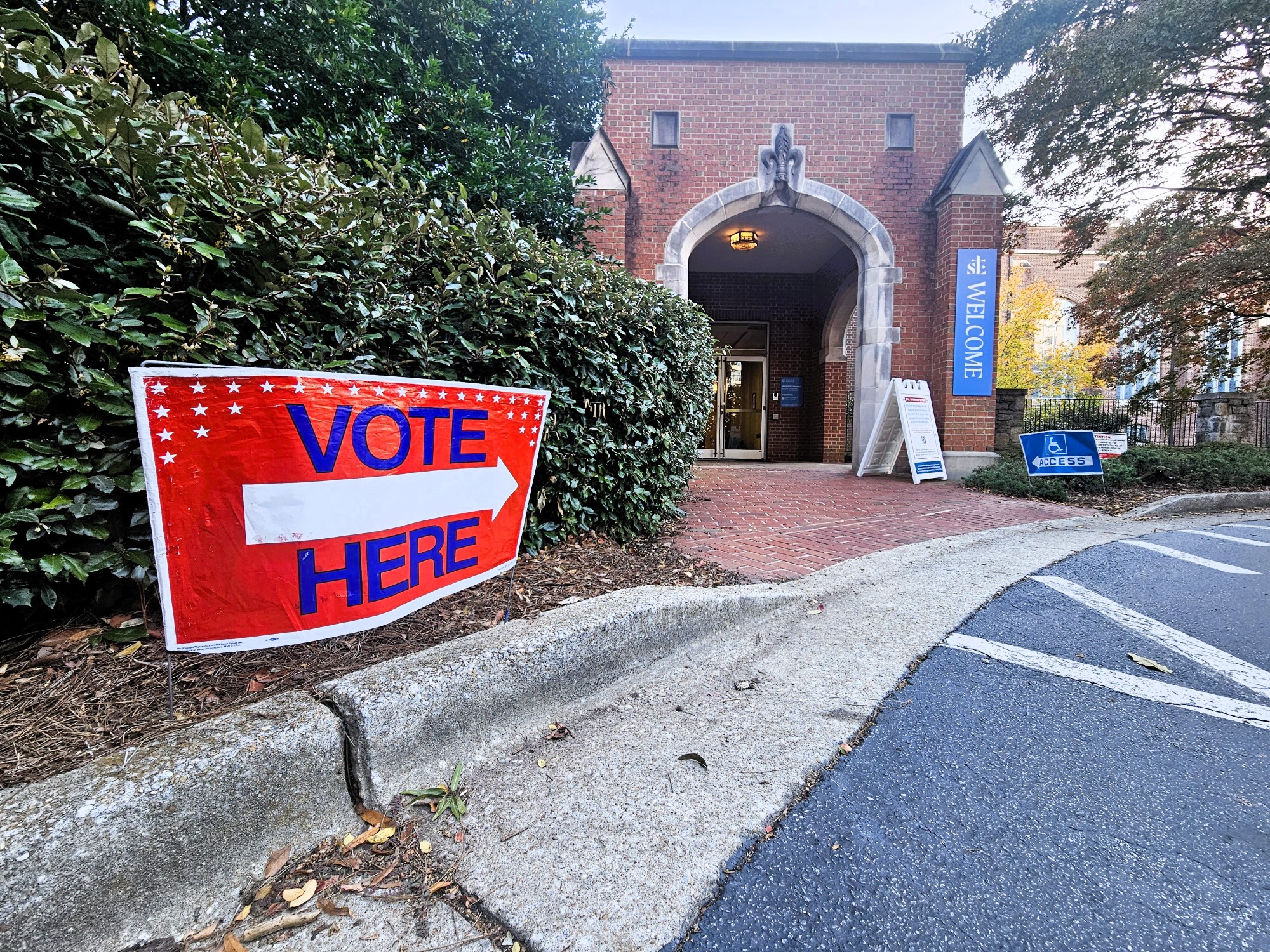
City of Atlanta and Fulton County voters overwhelmingly backed new homestead tax exemptions for seniors, according to unofficial Nov. 4 election results.
The three ballot questions — one for Atlanta residents and two for Fulton residents living outside the capital — asked voters whether they’d support new property tax breaks for homeowners over age 65 by reducing the assessed value of their primary “homestead” residence for the public school portion of their tax bill.
The aim is to offset rapid rises in home values, and thus property taxes, for people over 65, who are often living on a fixed income. While easing seniors’ property tax burden, the measures will divert property tax revenue away from local public school systems.
Almost 73% of 91,169 Atlanta voters supported the measure. That means, starting next year, Atlanta homeowners aged 65 and over can deduct $50,000 from the assessed value of their primary “homestead” residence for the property taxes that they pay to Atlanta Public Schools (APS).
The Center for Civic Innovation estimated that will save the average senior Atlanta homeowner $1,025 in property taxes annually, based on the current APS millage rate.
Fulton voters outside of Atlanta approved two similar tax-break measures for the Fulton County Schools portion of seniors’ homestead property taxes. Starting next year, Fulton homeowners over age 65 can cut 25% from the assessed value of their homestead residence to calculate their school property tax. For those over age 70, that increases to a 50% deduction from the assessed homestead value.
Nearly 76% of Fulton voters approved both questions, according to unofficial results from the Georgia Secretary of State’s Office. Before Election Day, property tax whiz Colton Pace told Atlanta Civic Circle these three measures would make the city of Atlanta and Fulton County national leaders in providing property tax relief to seniors.
“These are very big exemptions, bigger than the majority of the country has for seniors — an aggressive way to keep seniors in their homes,” said Pace, the CEO of Texas-based tax-preparation company Ownwell.
But, he added, “There will be a hole that needs to be filled” for Atlanta and Fulton’s public school budgets.

Not enough! Homeowners over 65 should have ZERO property taxes.
Yes, why should you be asked to contribute to the society that cared for and provided for you all the way up to 65.
Classic entitled boomer behavior. Pull that ladder up as soon as you get yours!
They should pay 100% like everyone else. less money for schools means lower property values… short sided people vote this way
Short-sided? Does that mean the side of their house should be shortened? That would be short-sighted wouldn’t it?
This is rediculous. Most people that voted did not understand that it will cut school funding. There should be no exemeption at all! Less money to schools, equals less great schools, property values go down. If anything more money to schools and teachers. If you dont care about school districts, then you should sell your home!
Hi Rachel,
I understand your reasoning. Your thoughts are logical. We are 70+ seniors and retired. We love Fulton County. Housing costs have rocketed over the past 10 years. So has our school tax. We are on a mostly fixed income. Downsizing is not less expensive. The new legislation does not eliminate our school tax. It just protects seniors ability to stay in our homes a bit longer. Perhaps we can protect our elderlies as well as our youth.
I am 70 years old. Have never had children in Puublic School System.
Why should I have to pay a schooltax for other people’s children.
I have been paying this tax. For 40 years!
Right. Why would you want the people who enter the workforce who pay to fund social security and medicare to be well educated. I’m sure you won’t suffer at all if they’re all just digging ditches or working at McDonald’s.
I spoke to some people while voting and they had no clue that it would take money away from schools and teachers… terrible way to put it on the ballet, – simply had to add – these moneys go to school funding and teachers. and 90% would vote no.
I voted “no”. I guess I will see a net gain from this change anyway. Hmmmmm, I think I will channel my senior homestead exemption monies towards my favorite independent news sources 🙂
I was torn on this – my heart goes out to seniors on a fixed income. But I ultimately voted no because I didn’t want $$ Taken away from schools. Teachers’ salaries are pathetic compared to what they are required to do. I grew up in a single parent (teacher) home and money was very tight and we did without at times. So, I voted no. I hope it does not impact schools negatively and the money can be made up somewhere. I am glad for the seniors who need it. I wish it would have had a threshold – i.e. only impacted seniors who bring in a certain amount per year or less. The wealthy seniors do not need this tax break!
The shortfall created by these measures will fall hard on young people – students and young families raising them, as well as young people just starting to own a home.
Unfortunately, retirees were the most likely voters in such elections.
Young people are being screwed every day in this country, and our county just decided to follow the trend and screw them up royally.
The larger issue that seems to escape a lot of folks is the out-of-control spending of the ATL public schools. Regardless of what you think of their performance. Here are some numbers:
In the most recent national rankings (FY 2023): the City of Atlanta ranked 4th out of the 100 largest U.S. school districts, with $22,700 spent per pupil. The national average was $15,633.
FYI: top districts were New York City ($35,914), Washington D.C. ($27,425), San Francisco ($23,654), Atlanta ($22,882), Los Angeles ($21,940).
The ATL spending is up from $17,112 per student in 2019 just before C-19. 33% total growth over those years (little over 10% per year).
APS spends roughly double the state average: Georgia’s per-pupil spending was about $11,200 in 2023.
Note: ATL enrollment in 2019 was 52,416. In 2023, enrollment was 49,660. That is a 5.3% drop.
My property taxes in 2019 were $12,139 with $9,056 of that to ATL/APS. In 2023, my property taxes were $23,973 with $19,818 of that to ATL/APS. That’s an almost 120% total increase and a 21.6% per year increase.
Why, if APS spending per student has increased ~10% per year since 2019, have my property taxes dedicated to APS increased almost 22% per year, every year?
I’ve been paying ATL/Fulton taxes for almost 35 years. I’ve never sent any of my 3 children to APS. I think I’ve paid my fair share.
What would be nice is if commercial properties actually paid their fair share instead of dumping the load on homeowners. That’s scandal #2.
Property taxes should be abolished altogether. It’s absurd to owe the government money on a property you already own. And no one should receive special breaks, because the rest of us end up paying more.