
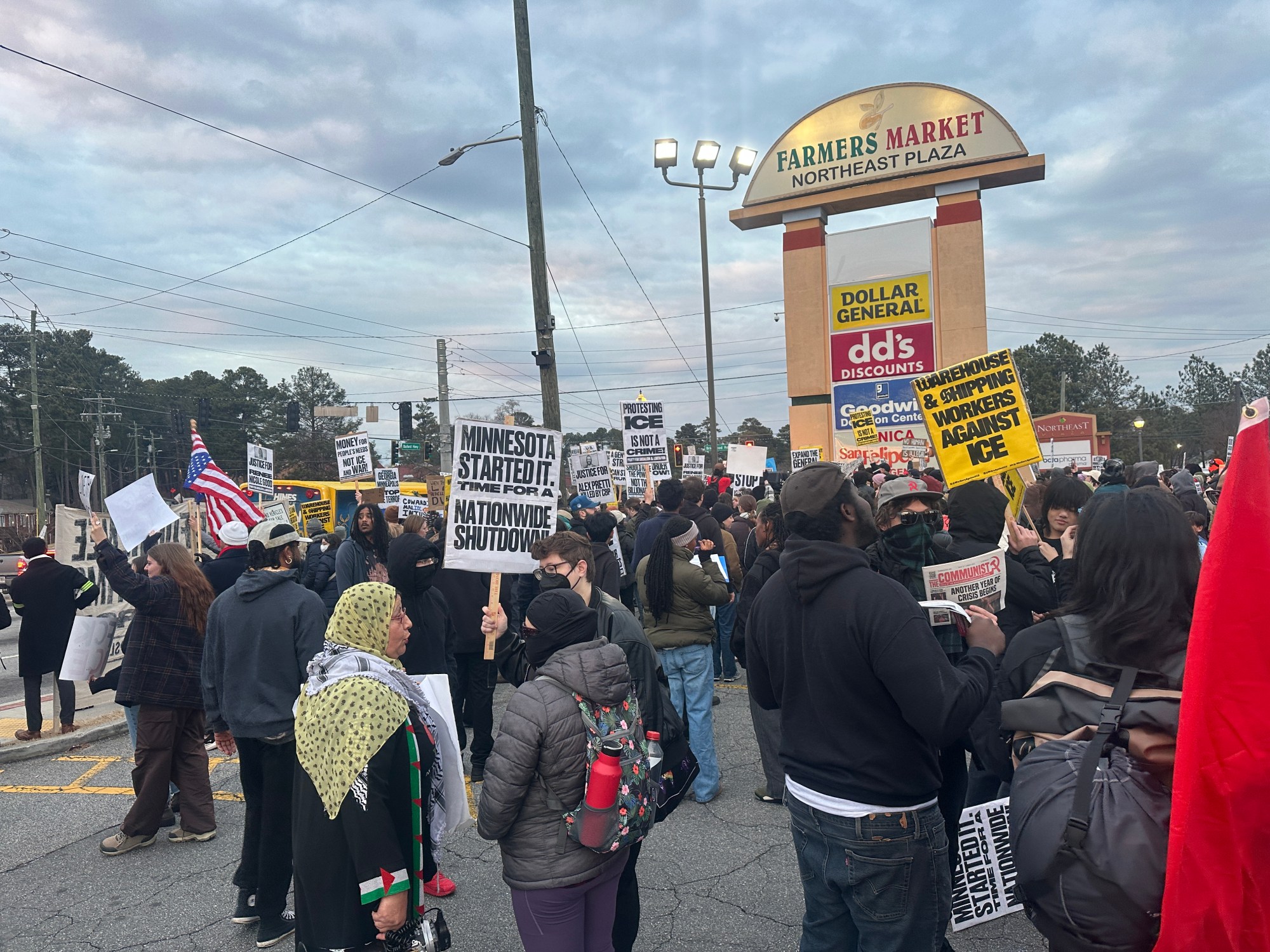


Hours after Trump administration border czar Tom Homan announced Feb. 12 that he was suspending the Minnesota immigration crackdown, local organizers and Rep. Ilhan Omar (D-Minn.) shared lessons on protecting communities from Immigration and Customs Enforcement (ICE) from over two months of successful popular resistance.
During the national webinar, Omar also offered specific advice to elected leaders bracing for a surge of federal immigration enforcement in their own communities.
During “Operation Metro Surge,” federal agents arrested 3,000 people in Minnesota and killed two US citizens, Renee Good and Alex Pretti. Victor Manuel Diaz, a Nicauraguan man arrested in Minneapolis, also died in ICE custody. But local communities organized to monitor the actions of federal agents, protest their incursions, and keep housebound undocumented people fed.
The activists said organizing around existing church, faith and school groups is important. But the building block for communities to resist ICE successfully is simply getting to know your neighbors, said Jennifer Arnold of Inquilinxs Unidxs por Justicia. “This is done in a block by block way,” she said.
“It’s way easier to get to know your neighbors when folks are still able to leave their homes,” she added. “So get to know your neighbors. That is the building block of this kind of resistance.”
Arnold joined labor and faith leaders, such as Minnesota AFL-CIO president Bernie Burnham and Rev. Janaé Imari Bates from ISAIAH, a multi-racial coalition of faith groups, for the webinar, called “Resist and Reimagine: Lessons from Minnesota on Fighting Authoritarianism.”
Burnham addressed the growing call in activist circles for general strikes like the one in Minneapolis to protest the ICE crackdown and federal overreach from the Trump administration. On Jan. 23, hundreds of Twin Cities businesses and cultural institutions closed their doors, and about 75,000 people flooded the streets to demand that ICE leave Minnesota.
“Collective action doesn’t happen overnight,” Burnham said. “It takes months of organizing and lots of planning.” That kind of all-out economic shutdown requires widespread buy-in from local businesses and labor, he cautioned, so it should only be undertaken if there is enough buy-in to succeed. “If we don’t have enough people there, the strike isn’t going to be effective.”
Omar shared practical advice for elected officials that also applies to community organizers:
- Hold Know Your Rights training sessions for the community. Omar said her office has done several training sessions and attended immigration resource fairs in the community. That way, she said, “people are able to actually meet us in the community, and they don’t have to come to our official office.”
- Connect with local immigrant rights groups and immigration lawyers to understand the lay of the land and issues at play. “We wanted people to be in one room, at least connecting in some way, and we wanted our staff to also be familiar with everyone else,” Omar said.
- Familiarize yourself with ICE and other Department of Homeland Security (DHS) facilities. Visit them if you can.
- Know who among your staff is at risk of ICE detention and have ICE release forms prepared for them. These include forms to ask for a stay, or pause, of a deportation order and to apply for bond.
- “Be part of the community and be part of that response,” Omar said. That means officials and their staff should attend organizing efforts and protests to bear witness to community actions.
- Participate in mutual aid: “A lot of our staff, both on the campaign side and official side, has been driving food and essentials packages to community members who are sheltering in place,” Omar said, referring to Minnesotans who did not leave their homes during the surge for fear of being targeted by ICE.