

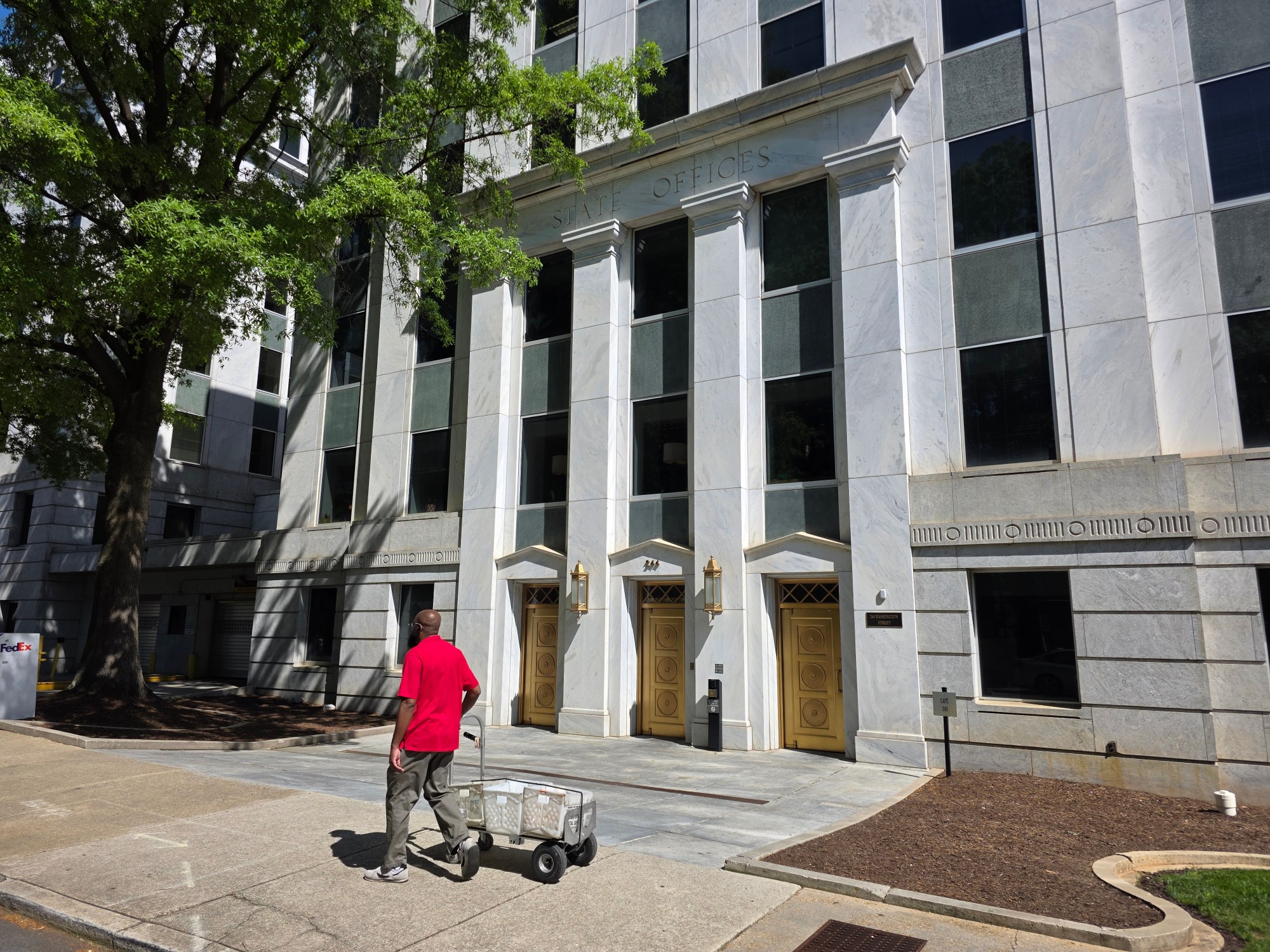

Voters focused on housing affordability may have already decided their picks for governor, lieutenant governor, and attorney general. These offices all can have a direct impact on how housing is built, regulated, and funded, as our prior explainer details.
But a slate of lesser-known statewide elected offices — from public service commissioner to agriculture commissioner — can quietly shape Georgians’ cost of living.
Those races rarely center on housing, and many voters might not even know the names of the candidates running, said Tim Franzen, program director of the Atlanta Economic Justice Program and the American Friends Service Committee. But the officials elected to those posts influence the cost of essentials — from utilities to wages — that determine whether households can afford to stay afloat.
“We’re clearly in an affordability crisis right now,” Franzen said. “These roles are more directly tied to our daily lives than we know — and maybe more so than a state senator or state representative.”
Public Service Commission
The Public Service Commission is one statewide elected office that most clearly determines housing affordability, because the five-member body sets electric rates and approves capacity planning for utilities like Georgia Power that affect monthly household costs.
Electricity bills often make up the lion’s share of people’s monthly utilities, so, as HouseATL director Natallie Keiser put it, “the cost of utilities is a critical component of housing affordability.”
Labor Commissioner
The state labor commissioner’s housing impact is indirect, but important.
The office enforces state labor law and oversees services like unemployment insurance and labor market data. Since Georgia’s federally funded employment and job-training system, known as Worksource Georgia, is now run by the Technical College System of Georgia, the labor commissioner’s role in workforce development is more bully pulpit than direct control.
While the labor commissioner doesn’t set wages, which determine whether and where someone can afford housing, they can promote workforce development to counteract labor shortages that drive up construction costs and, in turn, housing prices.
“A labor commissioner couldn’t solve all problems related to labor in Georgia,” said Atlanta City Councilmember Kelsea Bond, a former labor organizer. “Many things, like bargaining rights and ending right-to-work [laws], would have to be passed through the legislature.”
“But the labor commissioner oversees things like unemployment insurance, which absolutely impacts people’s livelihoods,” they added. “In theory, a progressive labor commissioner could remove administrative paperwork that makes it difficult for workers to receive their benefits, enforce worker protections, prevent [job] misclassification, and work to promote more union jobs.”
Insurance Commissioner
Since insurance costs make up a growing part of homeownership and rental costs, the state insurance commissioner has more impact on housing that meets the eye. That’s because the office regulates property and casualty insurance rates, which determines the cost of policies to cover property damage and liability, respectively.
Modular home developer Cecil Philips of Place Properties said the insurance commissioner is a sleeper office that can have a big impact on whether or how housing is built.
“Modular homes are treated the same as stick-built homes, so we have the same insurance challenges — increasingly higher premiums all around,” he said of his company’s factory-assembled homes. “[Rates are] certainly higher near the coast, but Hurricane Helene was so destructive that it changed the ‘footprint’ that insurance underwriters consider threatened” as far as big rate increases.
Agriculture Commissioner
Georgia’s rural housing programs are administered by the state Department of Community Affairs, not the agricultural commissioner — but the office can shape rural housing policy indirectly through its broad mandate to promote agriculture, investigate matters affecting farmers and consumers, and coordinate with other agencies.
Consequently, its strongest influence on housing is largely political, especially where workforce housing shortages affect farm labor and agricultural development.