
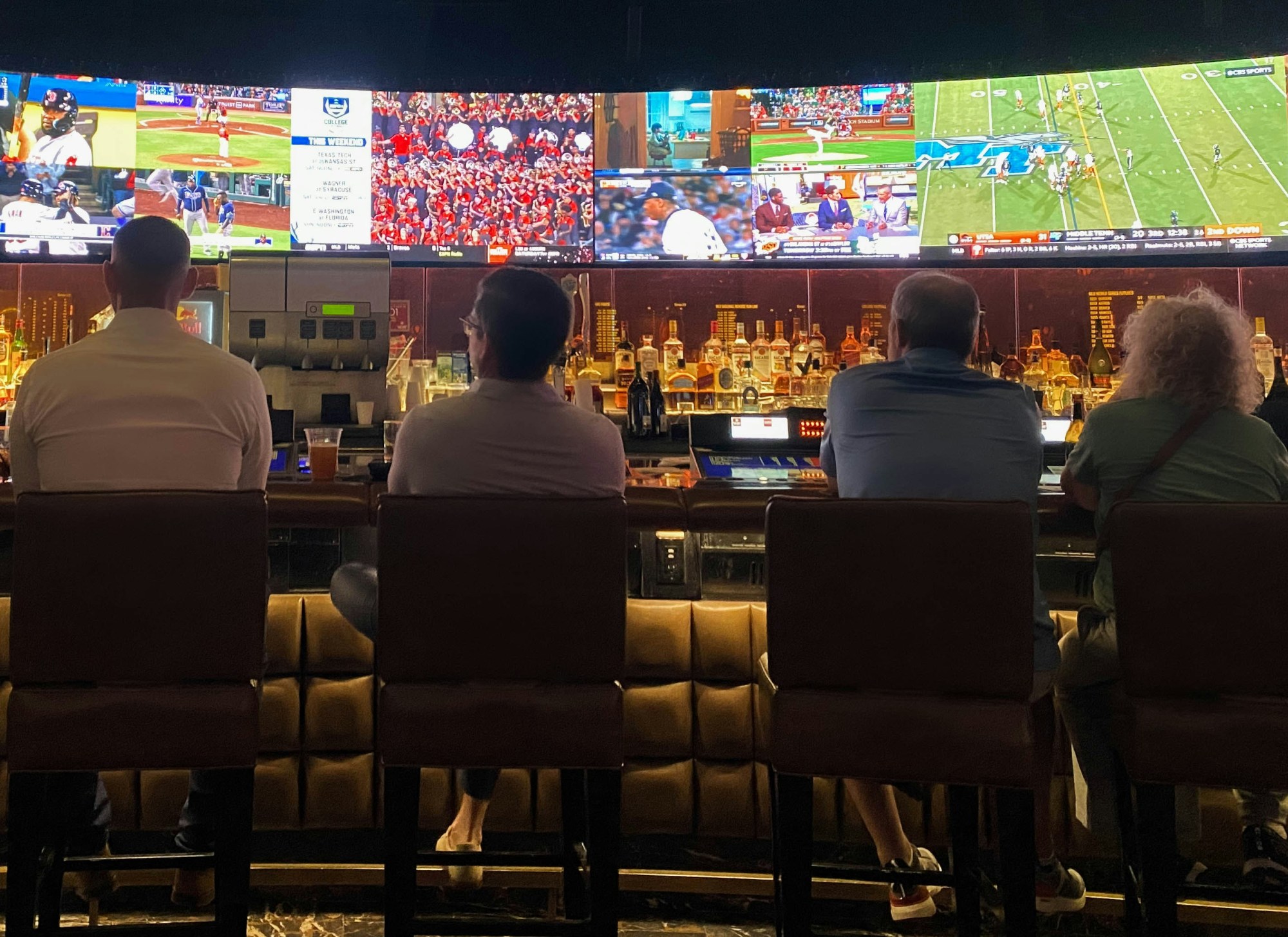

The sports betting industry — which has spent years trying to legalize sports gambling in Georgia — has emerged as the top independent spender in the state’s 2026 election cycle, outside of political party and legislative leadership committees.
Their latest legalization effort failed in the state legislature’s last session: House lawmakers overwhelmingly rejected House Resolution 450, which called for a voter referendum on sports betting, with some proceeds funding pre-K and other public education programs.
Undeterred, big sports betting companies are pouring millions into legislative primaries on both sides of the aisle. DraftKings, FanDuel, Fanatics, and Bet365 formed a super PAC called Win for America, which has funneled more than $10.3 million into Georgia legislative races via American Future PAC, which backs Democrats, and American Conservative Fund Action Georgia, which backs Republicans, according to the latest campaign finance disclosures.
American Future has spent nearly $2.3 million to promote at least 10 Democratic legislative candidates, while American Conservative Fund Action Georgia has spent nearly $8 million backing at least 29 Republican candidates. The PACs can spend unlimited amounts of money, as long as they operate independently of the campaigns, thanks to the US Supreme Court’s 2010 Citizens United ruling.
Surprised candidates
The sports betting industry’s big spending has stunned Gold Dome candidates from both parties who’re being promoted by the PACs — including some who oppose legalizing gambling.
American Future PAC has spent roughly $319,000, for instance, to promote Bentley Hudgins, a Democratic candidate for Atlanta’s House District 90 — despite their longstanding opposition to legalizing gambling. Hudgins, whose campaign has raised about $51,000, has emerged as the frontrunner in the Democratic primary against Leisa Stafford for the open, deep blue seat.
“I was very surprised,” Hudgins said. “I made a commitment to not accept any corporate PAC money and we stand by that promise.” However, they added, candidates can’t control outside spending on their campaign under federal campaign finance law.
“I cannot formally accept, coordinate with, or stop outside groups from spending in this race, per the law,” Hudgins said, emphasizing that they would represent constituents, not outside interests.
Another longtime sports betting opponent, Sen. Kim Jackson (D-Stone Mountain), also said she was “absolutely surprised” to learn American Future had spent nearly $173,000 in support of her campaign. Jackson, who has independently raised nearly $130,000, is facing a primary challenge from relative unknown Shenika Maddox, who has raised just $5,500.
Jackson said she agrees with some of the PAC’s stated priorities, including universal child care and affordable health care, but opposes funding those programs through gambling revenue.
“For the sports betting people, the method to get there is to pay for it through sports betting,” she said. But to Jackson, that means “encouraging people to be addicted and exploiting addicted people.”
Jackson thinks the sports betting PAC’s heavy spending — even for opponents, like herself — reflects a broader strategy to demonstrate political strength. “I think about this as a sports metaphor: They have picked their candidates and have chosen to crush their opponents,” she said. “They need to show that whoever it is that they’re reporting to, when they pick candidates, they pick winning ones.”
As far as Jackson is concerned, no amount of outside money will sway her position on sports betting. “If it’s some sinister plot to get me to change my mind on that, this isn’t the pathway, and I think they’re smarter than that,” she said.
American Future defended its spending on Democratic legislative candidates in Georgia. “In states across the country, legal online sports wagering provides an important source of tax revenue that supports priorities like education — not to mention contributing to job growth and other community investment,” the PAC said in a statement to Atlanta Civic Circle.
“We seek candidates who will thoughtfully approach this opportunity and the revenue and jobs legal sports betting could provide [Georgia],” the PAC added.
Big Republican names and open seats
On the Republican side, American Conservative Fund Action Georgia has spread a lot more money across a much larger number of Republican races.
The beneficiaries of the PAC’s nearly $8 million spend include House Speaker Jon Burns (R-Newington), Senate Majority Leader Jason Anavitarte (R-Dallas) and Governor’s Senate Floor Leader Bo Hatchett (R-Cornelia), along with candidates in open-seat primaries like Josh Clark, who’s running for House District 100 in Buford.
Burns, who is facing a primary challenge from Nathan Hooks, abstained on the HR 450 vote in the last legislative session, but has signaled cautious openness to legalizing sports betting.
Last session’s sports betting measure never made it to the Senate for a vote, but both Anavitarte and Hatchett voted against SR 140, a failed Senate measure to legalize sports betting in 2023. Anavitarte is being challenged by Daniel Davenport, while Hatchett is running uncontested.
Like their Democratic counterparts, Republican candidates contacted by Atlanta Civic Circle said they were surprised to learn outside sports betting PACs were spending heavily on their behalf.
“We’ve been knocking on doors since October, engaging with the voters, having conversations with them — and then, all of a sudden, a PAC jumps in and starts dropping lots of stuff that you have no say over,” said Clark, who’s running against Edwin Duncan in the GOP primary for Buford’s HD 100 seat.
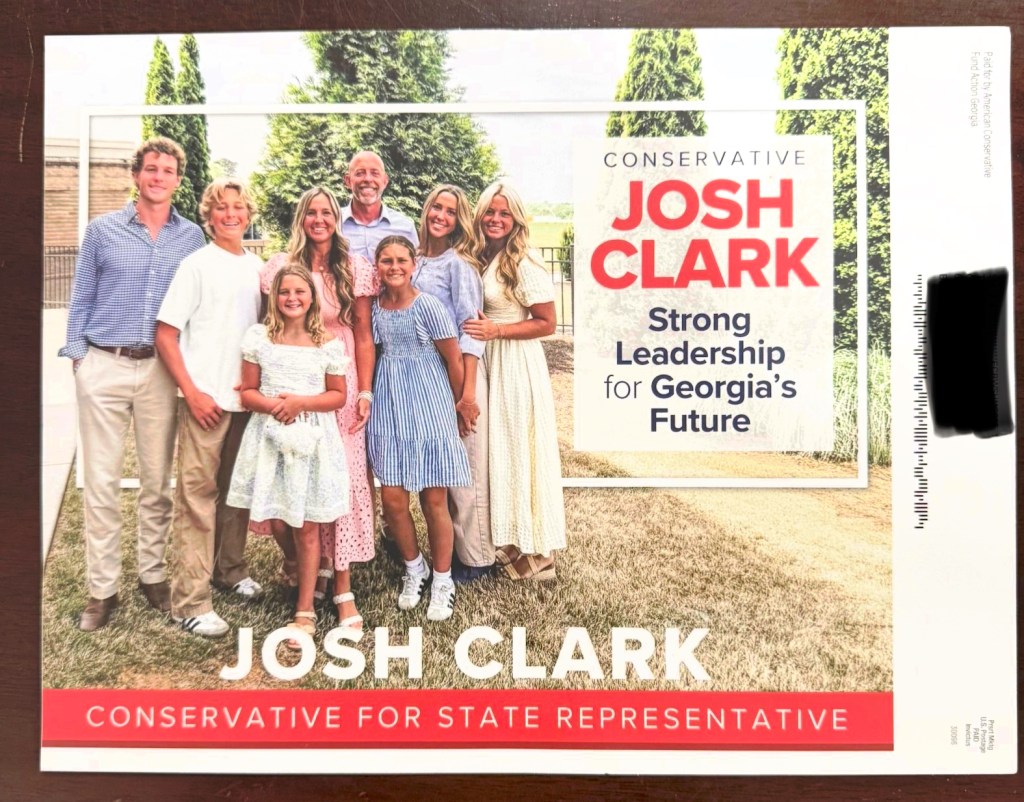
“I take a lot of pride in being very involved in my campaign, putting together my mail pieces and writing copy for them personally,” Clark said. He became aware of American Conservative Fund Action Georgia’s involvement in the race from their mailers promoting his campaign. “All I could do is ask them: Hey, would you stay out of this?”
Clark added that sports gambling has not emerged as a major issue among voters in the heavily conservative district north of Atlanta.
American Conservative Fund Action Georgia did not return a request for comment. The PAC’s campaign finance disclosures do not fully disaggregate spending for the at least 29 Republican candidates it’s supported.
Gold Dome challengers criticize PAC influence
The sports betting industry is also promoting Democratic incumbents, like Rep. Esther Panitch (D-Sandy Springs) and Rep. Stacey Evans (D-Atlanta). Their challengers say the flood of outside money to better funded incumbents threatens to overwhelm their own grassroots campaigns, given the contribution limits on individual donors.
“Our democracy in Georgia is under attack from corporate gambling interests trying to influence our elections and block regulation and taxation of harmful products,” said Aaron Baker, who is challenging Panitch in the Democratic primary for House District 51.
American Future has spent nearly $241,000 promoting Panitch, whose own campaign has raised roughly $157,000. By contrast, Baker has only raised about $65,000.
In the last legislative session, Panitch voted in favor of having a voter referendum on sports betting. She did not return a request for comment.
Jeremiah Olney, who is challenging Evans in House District 57, also criticized the outside spending. “How much longer are we going to continue selling our democracy to the highest bidder?” he asked.
American Future has spent roughly $175,000 supporting Evans, who also voted for a sports betting referendum. Her own campaign has raised about $293,000, compared with only $77,000 for Olney’s campaign. Evans declined to comment for this story.
Both Baker and Olney called on their opponents to denounce what they described as “dark money” spending. “It’s bad enough that corporations spend millions of dollars every year directly buying up politicians, but this is a dramatic new assault on Georgia’s elections,” Olney said.
Big money
In other Democratic primaries, American Future has spent heavily against incumbents. It has poured $310,000 into a five-way race for House District 117 in Henry County — spending nearly $116,000 to oppose Rep. Mary Ann Santos (D-McDonough) and more than $194,000 to support one of her challengers, Kim Thomas Smith.
The PAC has spent a similarly hefty amount — almost $354,000 — in an open House District 62 seat in Atlanta on mailers for Kenn Collier. That compares with only $8,000 to $11,000 raised by the other three Democrats running for the safe blue seat, KaVon Arnold, Matt Rinker, and Willie Horace Roseberry, according to Atlanta Community Press Collective, which has more on that race.

The over $10.3 million that the sports betting industry’s Win for America PAC has spent in Georgia makes up a big chunk of the $41 million it’s spent on state legislative races across the country this election cycle so far. Over 35 states have legalized some form of sports betting, making Georgia one of the remaining holdouts.
“How do you really have free and fair elections if they’re being grossly influenced by outside spending?” asked Jackson, the Stone Mountain senator. “It’s difficult, but those are the rules that we’ve set up — they’re playing within the rules of the game.”
“If people have a problem with it, then we need to change the rules of the game. And I would support that — but until such time, if someone chooses to invest in my campaign, to support me, I’m not turning that down,” she said.


Interesting someone chose that particular mailer to highlight for Clark. Why not ask Josh Clark about the mailer from the PAC that has him as a “former prosecutor” (which he is not)? Doesn’t that deserve acknowledgment and a full retraction of that misleading, blatantly false information to the public?
Dear Jeff, your most employees were the army which killed Garud