

As the Atlanta City Planning Department approaches the finish line on ATL Zoning 2.0 — the long-awaited rewrite of the city’s antiquated zoning code — some local housing advocates fear it will retain much of the same low-density residential framework dictated by the current 44-year-old code.
Currently, over 60% of the city’s residential land is zoned exclusively for single-family residential use, instead of denser “missing middle” infill, like duplexes, triplexes, townhomes, and small apartment buildings. Housing advocates say Atlanta urgently needs these denser housing types, since building more housing on less land is a key way to make it more affordable.
When the city started reviewing its outmoded land-use rulebook, back in 2015, city leaders from the planning department and the mayor’s office emphasized the urgent need for the zoning code overhaul to foster greater housing density and, thus, affordability, by boosting housing supply with smaller, more tightly packed units.
Right now, the Atlanta Planning Department is working on its third draft of the new zoning code, Version 3, which could be the final draft it presents to Atlanta City Council for adoption. But some urban planning wonks worry Version 3 will look just like the first and second drafts, which they say didn’t appreciably reduce the amount of land zoned single-family residential in favor of denser housing.
Kronberg Urbanists + Architects founder Eric Kronberg said public calls for a major overhaul may be falling on deaf ears. “It feels very Atlanta to me, in that there’s some nice words being said, but nothing meaningful being done about a core problem,” Kronberg told Atlanta Civic Circle.
Like the current code, the first two drafts of Zoning 2.0 still have prioritized single-family residential land use — just with updated language, said Abundant Housing Atlanta co-founder Alison Grady. “It’s definitely not an overhaul, and that’s pretty much by design,” Grady said. “They’re not trying to upzone. What they’re trying to do, as a city, is just kind of translate the current zoning into this new language.”
The city planning department solicited extensive public comment on Version 1 of the new zoning code at dozens of community meetings last year, then released Version 2 – a massive 981-page draft – in December. Public comment closed April 8 for Version 2, but the planning department hasn’t said when it will release Version 3 for public input.
Atlanta’s chief housing officer, Amanda Rhein, said the mayor’s office is in talks with the planning department about Version 3. Mayor Andre Dickens’ administration hopes the finished product will align with the administration’s push to build more affordable housing, Rhein said.
Dickens co-chairs the National Housing Crisis Task Force, which has called for cities to expand residential density by allowing new housing types where only single-family homes have historically been allowed.
The Atlanta City Council passed a resolution on May 4 urging the planning department to submit a new zoning code for it to consider by June 30. That “will allow the Office of Zoning ample time to review and process public comments to date,” the resolution said. It will also allow “the Atlanta community to then participate in the review of Zoning 2.0 by their respective Neighborhood Planning Unit, the Zoning Review Board, a public hearing, the Zoning Committee, and the Atlanta City Council as a whole.”
Small steps toward housing density
Kronberg and Grady said Version 2 of the zoning code overhaul did make several slight improvements to densify residential land use. It reduced minimum parking requirements for some multi-family developments and introduced smaller lot size requirements for single-family homes, so they can be built on smaller parcels of land.
“Allowing for smaller lots to have smaller houses is a critical way to both increase housing supply, but also increase [the number of] smaller houses, which are more attainable,” Kronberg said.
Those changes are outlined in a new “neighborhood-scale” zoning designation, Kronberg and Grady said, which allows more development flexibility than current, more rigid “house-scale” districts that allow almost nothing but single-family homes.
The problem? Version 2 didn’t say where neighborhood-scale zoning would exist. “It’s not mapped onto any neighborhoods,” Grady said. That makes the new designation a purely theoretical concept, she explained. City planners could possibly implement “neighborhood scale” zoning later,, but it wouldn’t take effect under the code’s current iteration.
A foundation laid
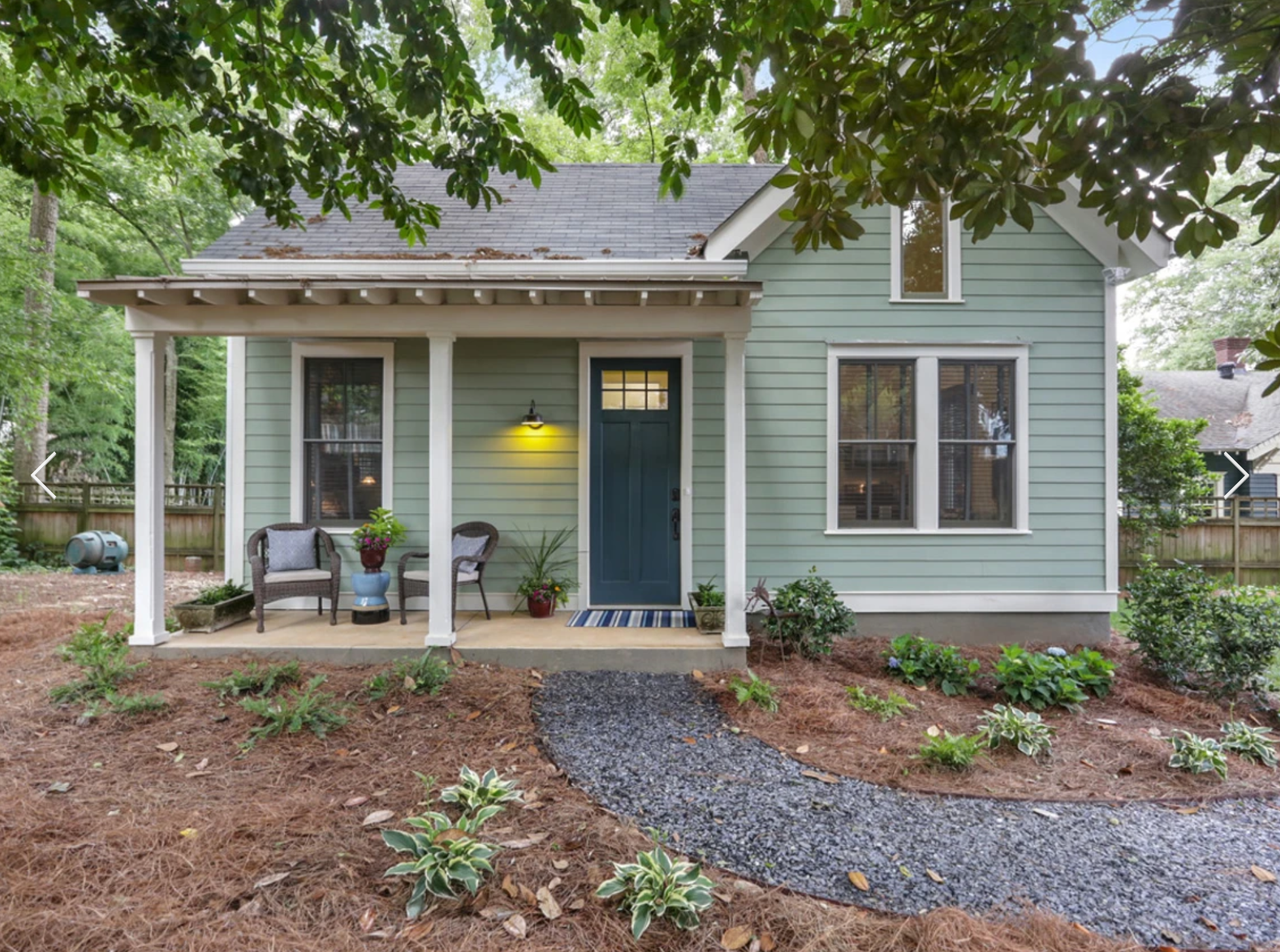
Former Planning Commissioner Tim Keane’s office in 2017 produced the Atlanta City Design Plan, which envisioned a future where sprawling backyards in single-family residential neighborhoods could include pint-sized homes — accessory dwelling units — and where duplexes, triplexes, townhomes, and small apartment buildings would intermingle with single-family development.
The Atlanta City Planning Department reinforced those urbanist goals in its 2025 update of the city’s Comprehensive Development Plan, which builds off the City Design Plan. The Comprehensive Development Plan maps out “a future Atlanta with greater density and diversity, while conserving our ecosystem and beautiful landscapes and [the] unique character and scale of our neighborhoods.”
Planning Commissioner Jahnee Prince told Atlanta Civic Circle in late 2022, when she succeeded Keane in the role, that those two big-picture plans for the city’s design and development would inform the zoning code rewrite.
But Versions 1 and 2 of Zoning 2.0 haven’t reflected that focus on greater housing density to increase affordability, the advocates say.
Will Version 3 be different? The Atlanta City Planning Department declined to comment for this story, saying in an email that it “has no update regarding Zoning 2.0.”
