


Keeping homeless Atlantans away from kids
The Atlanta City Council last week passed legislation to discourage the city from operating emergency warming centers within 1,000 feet of schools.
The resolution — introduced and passed on the same day, without public input — will likely restrict where the city can provide unhoused people with lifesaving refuge from the cold.
It could cease warming center operations at the Old Adamsville Recreation Center — one of the city’s two primary warming centers — because the facility neighbors the Frederick Douglass 9th Grade STEAM Academy. The city’s other main warming center, located at the Central Park Recreation Center in the Old Fourth Ward, likewise neighbors the Kindezi School, but they’re just over 1,000 feet apart.
The Old Adamsville Recreation Center is located in the Westside district of the resolution’s author, City Councilmember Andrea Boone. In an interview, Boone said the measure aims to keep people experiencing homelessness — especially those who may live with addictions or mental health challenges — away from children.
“I’m doing the best thing I can to protect both homeless men and women and our children that go to school,” Boone told Atlanta Civic Circle. She said she’s not yet sure where the Westside warming center could be relocated.
Critics have pointed out that children are also susceptible to becoming homeless. Nearly 12,000 metro Atlanta public school students are unhoused — and the city’s warming centers are open to minors.
“I find it reprehensible to paint unhoused people as a threat to schoolchildren and ban warming shelters from close proximity to schools,” Housing Justice League organizing director Monica Johnson said in an email. “The whole need for warming centers stems from our ever-intensifying housing crisis that makes it so that ever-increasing numbers of people face homelessness and [housing] instability.”
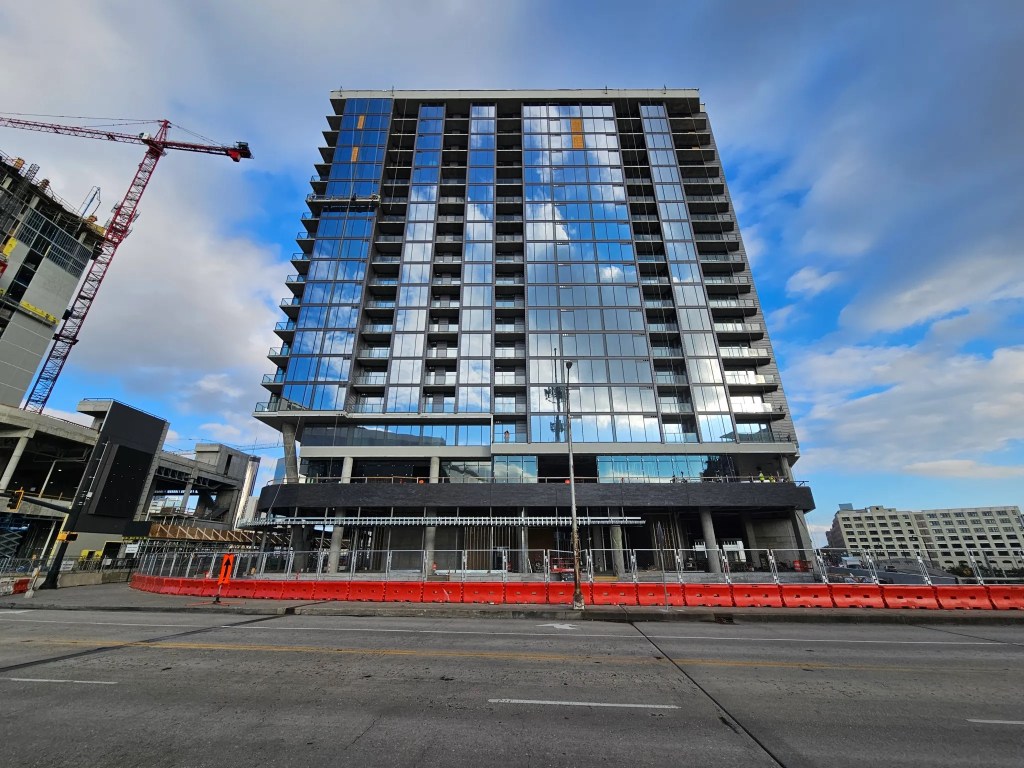
Could Atlanta make affordable housing mandatory in hot submarkets?
When the city of Atlanta adopted inclusionary zoning policies in 2018 to increase Atlanta’s affordable housing stock for fast-gentrifying Beltline and Westside areas, it gave multifamily developers two options: Either price a percentage of multifamily units below market rates, so lower income residents could afford them — or price all the units at the market rate (or higher) and write the city a check for the cost of building those affordable units somewhere else.
But Atlanta could better battle its housing affordability crisis if it amended its inclusionary zoning policies to actually require — not just encourage — developers to earmark some residential units for low- and moderate-income renters, housing policy experts have told Atlanta Civic Circle.
To promote affordable housing development, why not do away with the opt-out option altogether — or raise in-lieu fees per unit so high that no savvy developer would ever choose to pay them? Would that be a better way to advance Atlanta’s stated goal of creating affordable housing along the Beltline and on the Westside?
A big question looms: Is that legal? In Atlanta, it’s certainly easier said than done, thanks to Georgia’s decades-old blanket ban on rent regulation measures. State law bars local governments from adopting “any ordinance or resolution which would regulate in any way the amount of rent to be charged for privately owned, single-family or multiple-family residential rental property.”
Offering developers the opt-out clause on its face gives Atlanta a workaround to the statewide rent-regulation ban, as an alternative to the requirement that developers provide some inclusionary-zone housing at below market rates. That raises another question: Why not raise the in-lieu fees for opting out?
📷: Sean Keenan
SEEN ON HOUSING
WATCH: Housing Forum tackles women’s access to development capital
Nationwide, women-owned businesses are cropping up nearly twice as fast as men-owned businesses, yet women still face “unprecedented challenges” in accessing business capital, according to the Atlanta Regional Housing Forum, the quarterly meeting of metro Atlanta’s housing industry leaders.
“This issue is most troubling in the real estate sector,” organizers said in a press release in advance of the Dec. 4 event.
→ Watch here as moderator Bill Bolling leads a discussion on women’s access to capital for affordable housing development with some of the region’s top housing advocates, experts, and industry professionals. Bolling is the founder of the Food Well Alliance and an Atlanta Civic Circle board member.

More affordable apartments budding on Westside Beltline
Construction crews broke ground last week on a 137-unit apartment complex that promises 41 residences for Atlanta Housing rent-voucher recipients, according to Urbanize Atlanta.
Located at 698 Oliver St., just south of the Westside Beltline Connector that links the main trail to downtown, The Proctor is coming together via a joint venture between Atlanta Housing and local developer Windsor Stevens Holdings.
The 41 income-limited apartments will be priced for households earning no more than 80% of the area median income — and they’ll stay affordable for at least 30 years.
The $55.6 million project will also feature 10,000 square feet of ground-level retail space and a three-story parking garage.
📷: Windsor Stevens Holdings; designs, Niles Bolton Associates architects
Today’s newsletter was written by Sean Keenan and edited by Meredith Hobbs.
Stay informed and make a difference with Housing Happenings — your go-to newsletter for understanding housing issues in Atlanta and beyond.



Copyright (C) 2024 Atlanta Civic Circle. All rights reserved.
You are receiving this email because you opted in via our website.
Our mailing address is:
Atlanta Civic Circle
191 Peachtree Street, NE
#450, C/O Saba Long
Atlanta, GA30303