

New year, new president, new session

Maybe it’s a little late in January to say Happy New Year, but it’s the first Democracy Digest of 2025. In addition to a new year, we rang in a new session of the state legislature last week, and yesterday we swore in a new president.
A Donald Trump presidency is not exactly new, but it’s a reboot — and he’s the first U.S. president to serve a second non-consecutive term since Grover Cleveland. If anything else, that’s probably an answer to a question at your pub’s trivia night this week.
Pleasantries aside, what’s happening locally? It’s going to be a whirlwind 73 days until Sine Die — the last day of the legislative session on April 4. To better understand the committee process that bills go through, read Claire Becknell’s explainer.
📷: Claire Becknell
Gov. Kemp and state GOP leaders lay out legislative agenda
Georgia Gov. Brian Kemp laid out his legislative priorities last week, first at the Georgia Chamber of Commerce’s “Eggs and Issues” policy breakfast on Jan. 14, and then at his State of the State address on Jan. 16.
At the top of his agenda is tort reform — with the aim of reducing the dollar amounts of personal injury lawsuit judgements. Specifically? That’s still to come. “I will soon be unveiling a robust legislative package that will bring balance to our proceedings and parity with our neighbors,” Kemp said at the Eggs and Issues breakfast. “This is a non-partisan issue,” he declared.
Some Democrats disagree. State Rep. Tanya Miller (D-Atlanta), herself a personal injury attorney, sees the push for tort reform as a way to protect profit-seeking insurance companies, rather than Kemp’s stated goal of reducing financial burdens on businesses to keep the state economically competitive.
“The truth is, insurance companies and their lawyers gamble in court, hoping juries will side with them, instead of paying valid claims. When they take their case before a jury comprised of everyday Georgia citizens and lose, they blame citizens and run to lawmakers for protection,” Miller said in her State of the State response on Jan. 16.
“Now, they want to strip Georgians of their constitutional right to have a fair shot at justice in court,” Miller added.
Also on the governor’s agenda: developing an “educated and skilled workforce” to keep Georgia the “top state in the nation for business.” Kemp teased the Top State for Talent Act at the Georgia Chamber’s Eggs and Issues breakfast on Jan. 14. The proposal would expand the state’s direct-college admissions program, Georgia MATCH, which tells high schoolers in October of their senior year the state colleges and universities where they’re eligible for admission. Kemp wants to incorporate the program into students’ graduation plans, starting in 9th grade, with a focus on tech and academic areas in “high demand” fields determined by the state.
House Speaker Jon Burns, meanwhile, promised at the Georgia Chamber event to take action on school safety from mass shootings. He proposed improving communication between school districts and law enforcement agencies and providing every Georgia public school student “access to mental health.”
Burns said he will consider “every measure that respects the rights of Georgia citizens.”
But don’t expect the kind of gun reform that both Georgia Democrats and students affected by the Sept. 4 Apalachee High School shooting have called for, such as gun storage requirements in households with children.
Atlanta’s mayor and city council push a bill to curtail government oversight
The Atlanta City Council introduced a bill on Jan. 6 that critics say would hamstring the investigative powers and independence of the city’s Office of Inspector General, as well as its Ethics Office. Mayor Andre Dickens’ office insists the bill merely “clarifies” the roles of each office and protects city employees’ rights — and that it is committed to independent and effective city watchdogs.
“Our collaborative effort in bringing a higher level of clarity and governance to these two offices while working to better articulate the constitutional rights of our employees never compromises our common goal in promoting ethical and transparent government,” Dicken’s chief of staff, Odie Donald, said in a Jan. 15 statement.
But Atlanta’s Ethics Officer, Jabu Sengova, spoke out for the first time last week to express her own concerns about proposed changes in the bill — chiefly, that it would remove four citizen-group appointees from her office’s nine-member governing board and replace two of those seats with appointees from city council and the mayor, respectively.
Inspector General Shannon Manigault has vocally opposed proposed changes for months that would, in her words, reduce her office to “a shell” that is incapable of fulfilling its mandate to root out waste, fraud, abuse and corruption in City Hall.
The bill advanced from the city council’s Finance and Executive Committee by a 5-2 vote on Jan. 15. The Committee on Council was scheduled to hear it this morning. Due to the extreme cold weather, that has been postponed to Wednesday. If the bill advances to the full council for a vote tomorrow, it still requires a second vote from the city council after once again going through both committees, because it would amend the city charter. That means the soonest it could become law is Feb. 3.
Expect more stories on this issue from Atlanta Civic Circle.
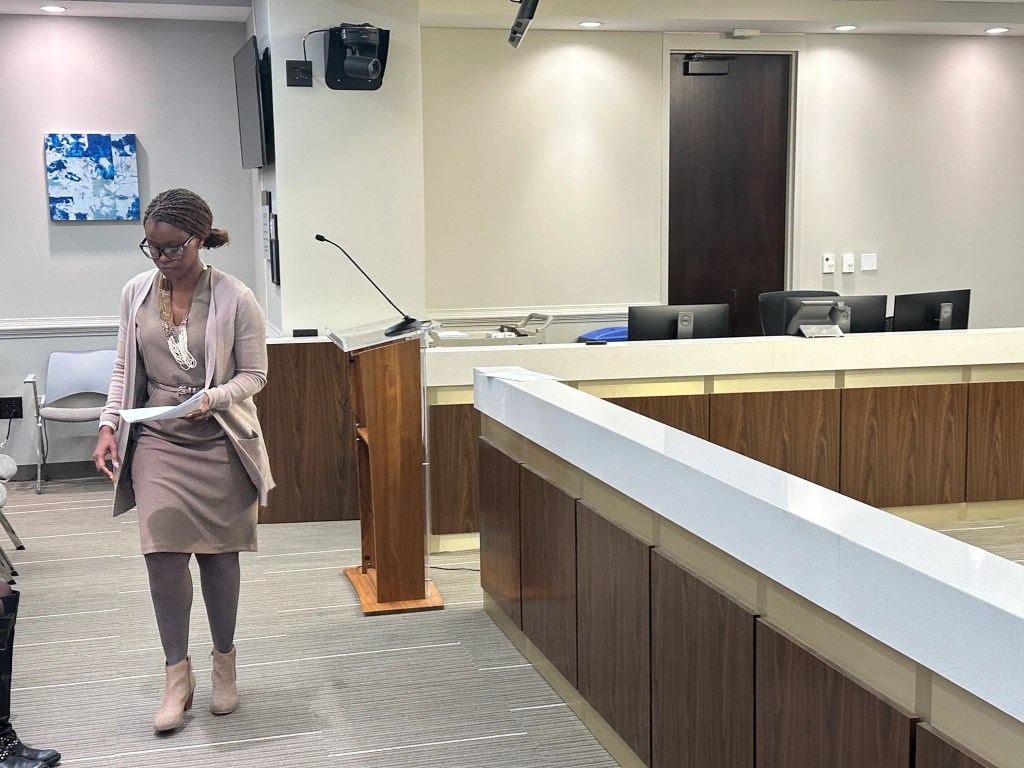
📷: Alessandro Marazzi Sassoon
Thanks for being part of Community on Tap!

A huge thank you to everyone who came out to Community on Tap yesterday! We loved connecting with you, sharing conversations, and building community together. Stay tuned for more gatherings—we can’t wait to see you again soon.



Copyright (C) 2024 Atlanta Civic Circle. All rights reserved.
You are receiving this email because you opted in via our website.
Our mailing address is:
Atlanta Civic Circle
191 Peachtree Street, NE
#450, C/O Saba Long
Atlanta, GA30303
