

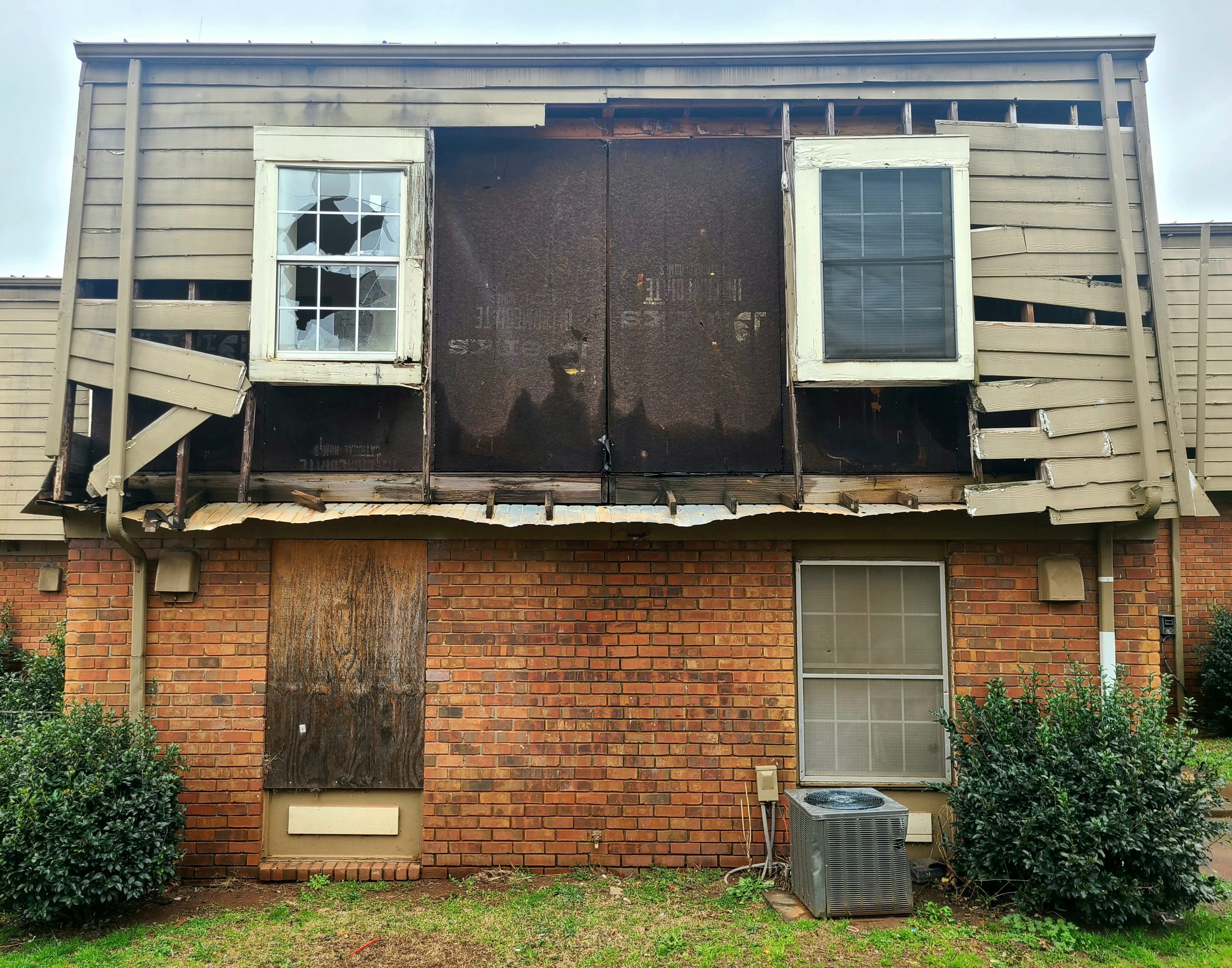
The city of Atlanta has discovered asbestos in “every single unit” at Forest Cove, a revelation that will delay the demolition of the condemned and now vacant southside apartment complex, Mayor Andre Dickens’ chief policy advisor, Courtney English, told Atlanta Civic Circle last week.
English had previously said the 396-unit, Section 8 complex, which is owned by Ohio-based mega-landlord Millennia Housing Management, would face the bulldozer before April. But the asbestos — a carcinogen known to cause some forms of cancer — has thrown a wrench in that plan.
“Legally, we are required to remediate that asbestos before we can begin tearing it down,” he said. “So I don’t have a timeline yet.”
The city had been preparing to request demolition permits, but a required environmental assessment uncovered the asbestos.
Initially estimated to cost around $2 million, the price of demolition could now balloon, English said, due to the asbestos cleanup costs. Disturbing structures containing asbestos with heavy machinery risks scattering hazardous particles around properties and their environs.
But Millennia, which owns Forest Cove under the name Phoenix Ridge, claimed in a statement Monday that the city of Atlanta has known about the asbestos “since long before Phoenix Ridge assumed ownership in 2021.”
“Asbestos was a common building material used until the 1980s, and as the city is aware, the Forest Cove Apartments were built in the 1960s,” the statement says. “Plans to abate the asbestos were always part of Phoenix Ridge’s $58 million revitalization plans and the proposals approved by the city, which would have seen all rightful residents returned to transformed and safe housing today, versus dispersed across the metro Atlanta area in temporary homes.”
Millennia is suing the city in federal court, alleging the municipality unlawfully seized Forest Cove and compromised the property owner’s rehabilitation plans by securing the condemnation order in December 2021.
The city, which has been mounting its own legal case against the landlord, quickly notified nationally known civil rights plaintiffs attorney Ben Crump about the asbestos findings, English said. Crump’s firm represents former Forest Cove tenants in a class-action lawsuit it’s been building against Millennia since late last year, accusing the company of depriving low-income tenants at rental complexes around the country of safe housing.
Among the plaintiffs the Crump team has enlisted for the case is Felicia Morris, a longtime Forest Cove resident and tenant leader best known as “Ms. Peaches.” Morris, who recently beat lung cancer, said she wasn’t surprised to learn of the asbestos issue, although she hadn’t known about it until Atlanta Civic Circle contacted her on Friday.
She declined to comment on whether her illness might be related to the asbestos, citing the upcoming litigation, but she said in an interview, “I want to see it torn down.”
The city has already identified funding for Forest Cove’s destruction, drawing from a municipal pot dedicated to blight remediation, English said.
The city used more than $10 million in federal COVID-19 pandemic relief funds in 2022 to evacuate the nearly 200 households remaining at Forest Cove, because around half of the units were already not habitable due to mold, sewage leaks, pests, and other problems.
Millennia will have to repay the city once the property is razed, sold, or, in the more unlikely case, renovated, according to a city court order.
Shannon Watkins, a spokesperson for the U.S. Department of Housing and Urban Development (HUD) — which was responsible for inspecting the property because it subsidized Forest Cove tenants’ rents through the Section 8 program — echoed Millennia’s comments in an emailed statement, saying that, when Forest Cove was built, “asbestos was commonly used in vinyl tile, ceiling texture, drywall materials, piping, insulation, and other building materials.”
HUD last inspected Forest Cove in 2018, Watkins added, but the agency’s inspection process “does not test for asbestos, as asbestos is not considered a hazard until disturbed from renovation, rehabilitation, and/or demolition.”
Editor’s note: This article was updated on March 4, 2024 at 4:50 p.m. to include a statement from a HUD spokesperson.

Leave a comment