


May 28, 2024 Housing Happenings newsletter
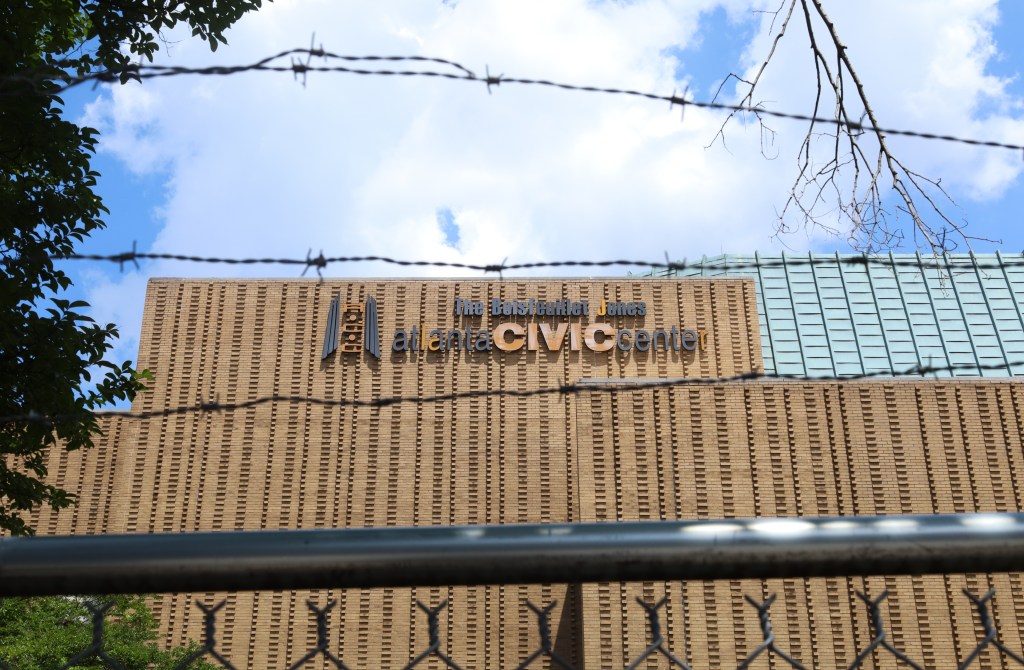
The Boisfeuillet Jones Atlanta Civic Center’s long-awaited redevelopment could finally break ground this fall, according to housing authority officials.
That will kick off a potentially 13-year effort to redevelop Atlanta Housing’s iconic Old Fourth Ward property. Famous for its performing arts center, the city-owned site has been sitting idle since 2014.
Led by the joint venture of Republic Family of Companies, Michaels Development Co., and Sophy Companies, the overhaul promises new restaurants, retail, office space, a hotel, and around 1,500 residences — roughly a third of them affordable housing.
But in a rapidly gentrifying neighborhood, is that enough housing? Atlanta City Councilmember Amir Farokhi doesn’t think so.
“There should be thousands of units there,” he told Atlanta Civic Circle in an interview. “The current vision for the site, while an improvement over a parking lot, falls short of what the city needs and deserves, which is more housing on a site that can support significant housing density.”
But Atlanta Housing officials said the redevelopment plan is unlikely to include more than 1,500 housing units, because it was carefully crafted to reflect community input — and community members didn’t want a complex of skyscrapers.
There are also historic preservation concerns. David Mitchell, the head of the Atlanta Preservation Center, cautioned against overly dense development at the Civic Center site. “With a starting number of 1,500 housing units — and the possibility to build more — we risk using the very thing we seek to protect becoming a shield to allow us to conduct business as usual,” he said.
Investors just bought $1 billion of metro Atlanta homes
In just the first three months of 2024, institutional investors purchased upwards of $1 billion worth of homes in metro Atlanta, a new report by national real estate company Redfin says.
Investors account for more than 21% of all homes purchased in the region during the first quarter of 2024. At a median purchase price of $264,000, that works out to about 3,800 homes.
Housing experts have told Atlanta Civic Circle for years that corporate investors have had a devastating impact on low- and middle-income Atlantans’ ability to buy starter homes, because many investors will pay top-dollar, in cash.
While the detrimental effects of Wall Street investors on metro Atlanta’s housing market is well documented, housing advocates say there’s not enough political will at the state or federal level to loosen big money’s grip on the market.
U.S. Sen. Jeff Merkley (D-Oregon) and Rep. Adam Smith (D-Washington) in December proposed legislation to limit the number of single-family homes a single entity, such as a hedge fund, can own. The bill would levy a $20,000 federal excise tax for every home owned over 100. The penalty funds would go to a Housing Downpayment Trust Fund to aid single-family homebuyers.
But so far, the End Hedge Fund Control of American Homes Act hasn’t gained any traction, Atlanta Civic Circle reported in April.
WHAT WE’RE READING
Reuters — U.S. home sales post second straight monthly drop; house prices accelerate
U.S. existing home sales fell unexpectedly in April due to higher mortgage rates and house prices, impacting demand and further challenging the housing market.
→ Read more
Nonprofit coalition helps motel residents find permanent housing
Eight nonprofits have teamed up to help 1,000 families move out of extended-stay motels and find permanent, affordable housing within the next year, according to Georgia Public Broadcasting.
United Way of Greater Atlanta convened the Motel to Home Alliance — which includes nonprofits like Frontline Housing and St. Vincent de Paul Georgia — because many low-income renters priced out of the metro area’s prohibitively expensive housing market resort to living in motels, then find themselves stuck. Often, they’ve been evicted, which can make renting another apartment close to impossible.
The Southern Poverty Law Center estimates 25,000 metro Atlanta families live in extended-stay motels.
The Motel to Home Alliance is conducting community outreach now. It aims to provide case management services and financial assistance to place people in safe, stable, and affordable housing.
Atlanta Housing breaks ground on first phase of big senior apartment complex in Chosewood Park
The city’s public housing authority and its partner The Benoit Group last week broke ground on 160 apartments for lower-income seniors, located at 413 Englewood Ave. The 30-acre site in Chosewood Park used to be a public housing complex.
Dubbed Englewood Senior, the apartment complex is earmarked for people ages 62 or older who earn 60% or less of the area median income. It’s the first phase of a public-private development plan that will eventually include 900 apartments. Residents will have access to a communal courtyard, a media center, gym, and laundry facilities.
Neighboring the Beltline’s Southside Trail, the 30-acre development could also include a grocery store, retail space, and small businesses.
The Englewood Senior complex is expected to cost $72 million and is financed in part through federal and state tax credits. Building the infrastructure for the entire 30-acre site will cost $30 million; Atlanta Housing is covering $15 million and the city of Atlanta is providing the other $15 million from Housing Opportunity Bond funds.
