
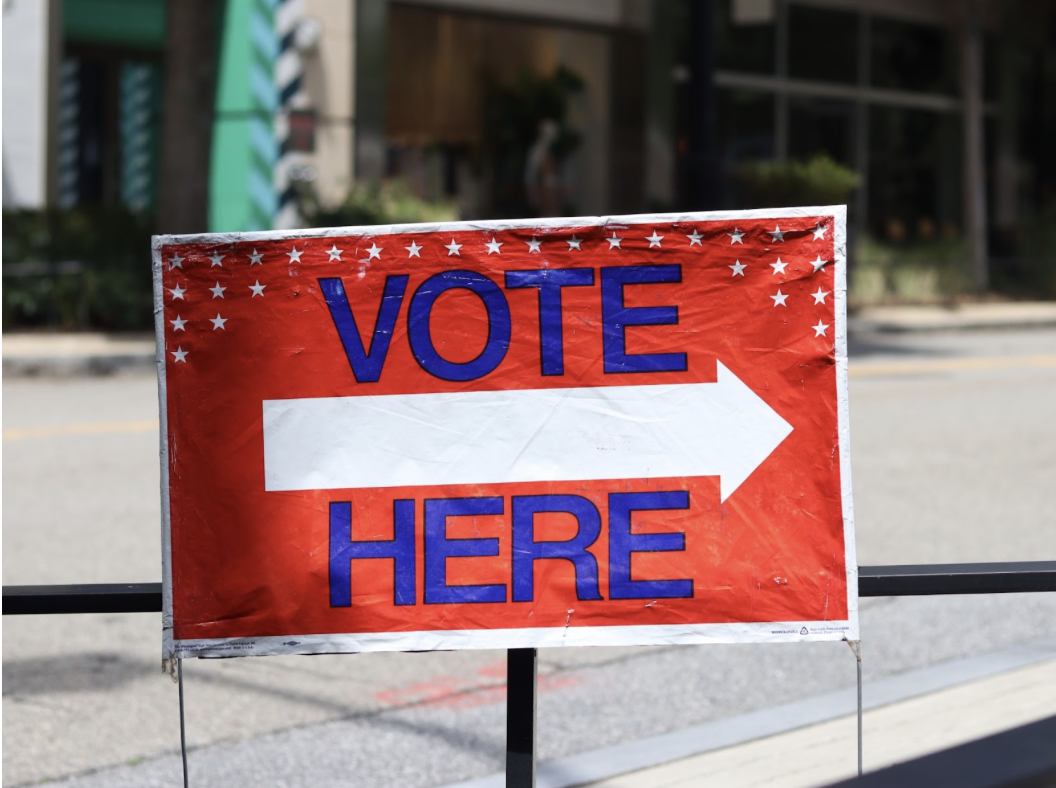

Atlanta voters will be hitting the polls again on June 18 for runoff elections in races where no candidate won a majority of the vote in the May 21 Democratic and Republican primaries. But only a small number of voters turn out for runoffs and it costs money to run them.
Despite the low turnout, runoff races are still important, because the winners will face their opponents from the other party in the Nov. 5 general election – or win the election outright if the other party hasn’t fielded a candidate.
Ranked-choice voting in the higher-turnout initial election would eliminate the need for runoffs, but many Atlantans don’t know about it. Ranked-choice voting is particularly useful where there are more than two candidates in a race, which makes it more difficult for any individual candidate to win over 50% of the vote.
Instead of just checking the box for their preferred candidate, voters rank the candidates in a race from most to least preferred. If no candidate wins an outright majority in the race, then the lowest ranked candidate is eliminated. For voters who ranked that candidate as their first choice, their vote is transferred to their second-choice candidate instead. The cycle repeats until a winner emerges with a majority of the votes.
Critics of ranked-choice voting say it can be confusing, delay results and discount votes by people who only ranked one candidate. What’s more, a candidate who initially racked up the most votes – but short of a majority – could still lose after second-choice votes are accounted for.
That said, ranked choice voting is gaining traction. Last year, 24 U.S. cities and counties used ranked-choice voting for 70 elections – and six states passed legislation for it, according to FairVote. Others have banned it altogether.
But in Georgia, nascent support for ranked-choice voting stalled out in the last two legislative sessions. Georgians serving in the military or living overseas are able to use ranked-choice voting, because of legislation passed in 2021 as part of the Election Integrity Act.
But in 2023, a bipartisan House bill to broaden ranked-choice voting never made it to a vote. It would have allowed cities and counties to decide if they wanted to use ranked-choice voting, also known as instant runoffs, for general elections when no candidate won a simple majority.
Then, in the 2024 legislative session, Georgia Lt. Gov. Burt Jones and Sen. Randy Robertson (R-Cataula) introduced Senate Bill 355 to prohibit ranked-choice voting altogether, except for those voting absentee from abroad. The bill passed the Senate but never came to a vote in the House.
While ranked-choice voting is slowly catching on nationally, many Atlantans aren’t familiar with it. Three Atlanta voters at Ponce City Market shared their thoughts with Atlanta Civic Circle.

Jamail McGlone (Photo/Libby Hobbs)
Georgia State University student Jamail McGlone, 20, thinks ranked-choice voting would require voters to put more work into researching all of the candidates, but the Fulton County resident likes the idea of a more streamlined process.
“I think I would support it over what we have right now, because it’s like one big process at the very start, front-loaded – versus [if] it doesn’t get to the fifty percent and you gotta come back again,” McGlone said.
“Honestly, I’m pretty forgetful … But if it’s like all right there at the front, and then you just keep going on with it until one person gets 50% of the vote, that’s a very good idea.”
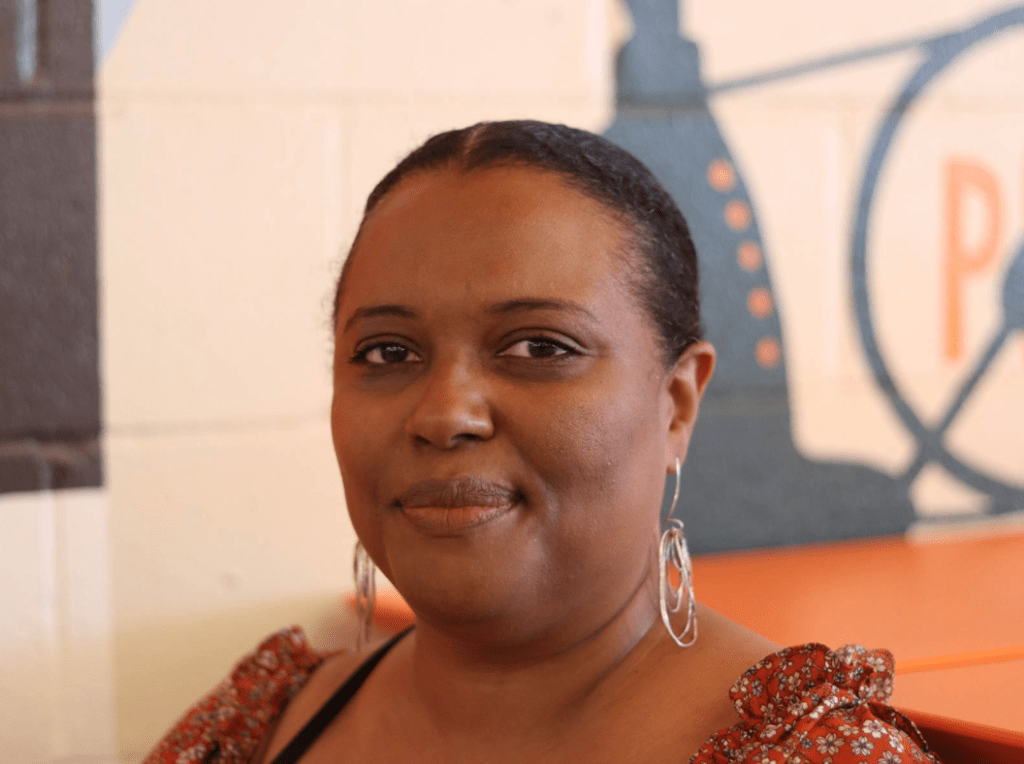
Lea Thomas (Photo/Libby Hobbs)
Lea Thomas, 47, thinks that low voter turnout in runoff elections is a huge issue, particularly because many people don’t have transportation. Thomas also hadn’t heard of ranked-choice voting. While receptive, the Gwinnett County resident said people are already concerned their vote doesn’t count in the current election system, so she was worried about voters who rank less popular candidates highly.
“I think there’s more room for error [using ranked-choice voting] than there is for runoff elections [and] getting people back to the polls. So I would be in support of runoff elections as opposed to ranked-choice,” Thomas said.
“Hearing about it just now, not having any research or time to think about it, my first thought would be to keep the runoff election because I do want my vote to count,” she added. “If I’m voting for the [last] person and – because no one else did and the way that ranked choice is being tallied – my vote doesn’t even count? I don’t think I’d be okay with that.”

Carla Plouin (Photo/Libby Hobbs)
Carla Plouin, 48, acknowledged that ranked-choice voting might be hard for people to trust and understand, but she ultimately wants to remove the feeling that voters only have two choices.
“I don’t know enough about it, but my first instinct is actually to be for [ranked-choice voting],” said Plouin, a former Fulton County resident who now lives in California. “To me, it means less of a binary choice and more equal representation of what the population as a whole wants to do – instead of just one or the other.”
Use the ACC x AJC Georgia Decides voter guide to see who’s on your ballot and learn more about the candidates.


We should encourage our state legislators to move to a slightly lower threshold to avoid run offs. If we went to elections where winner needed 45%, we would eliminate most run offs.