

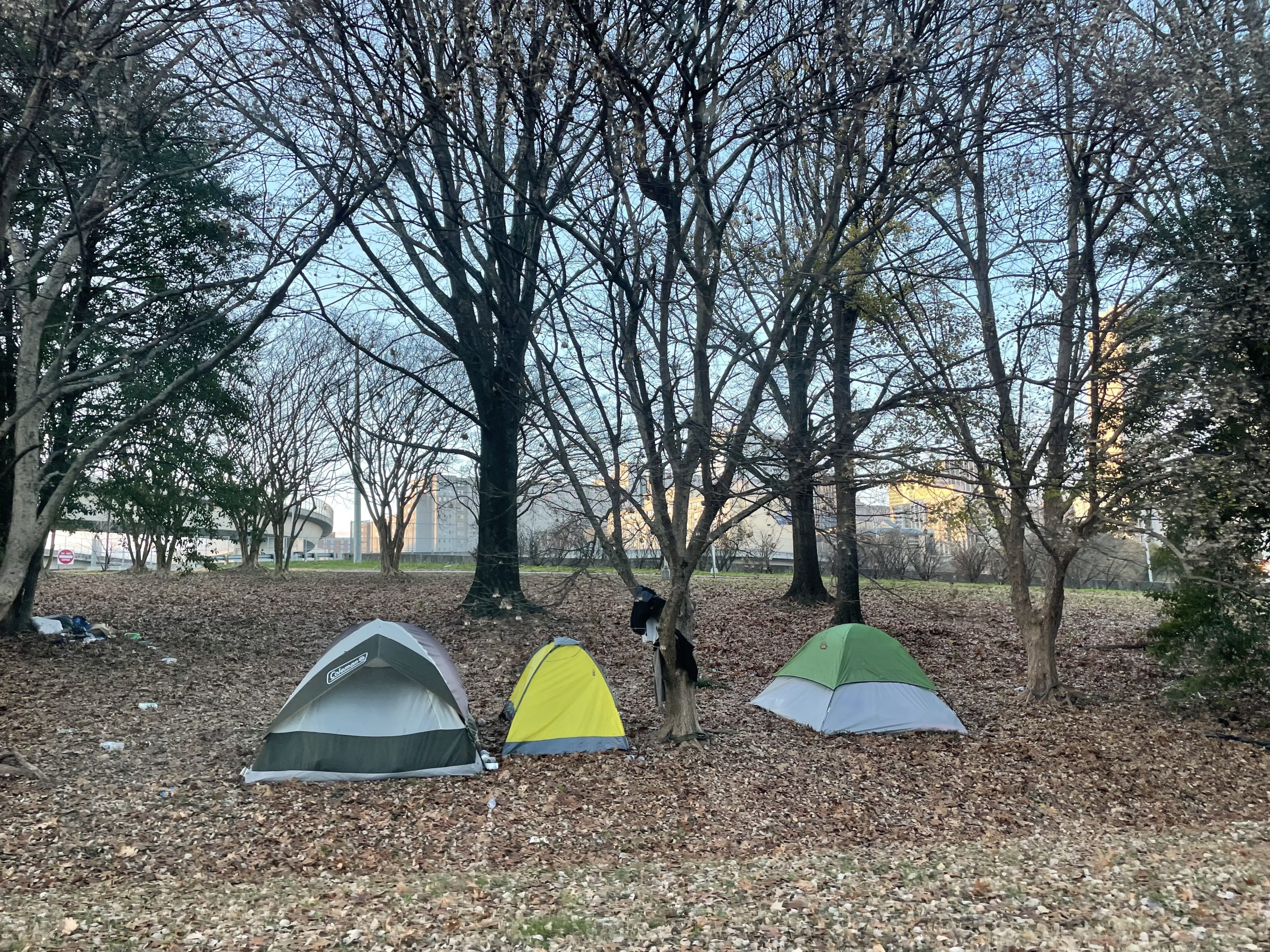
Atlanta City Councilmember Liliana Bakhtiari believes Atlanta has been undercounting its unhoused population, and so they want to double the annual effort to tally everyone living on the streets or in homeless shelters.
More data, they reason, will provide a better understanding of the homelessness crisis — and better equip the city to address it.
Bakhtiari last month proposed legislation urging Atlanta’s chief homeless services nonprofit, Partners For Home, to conduct a summer headcount — and to publish the results faster than for the federally mandated Point-in-Time count administered here each winter.
Every other city councilmember signed on as a co-sponsor, and the council approved the proposal during its Aug. 5 meeting.
Every year, during a single night in January, Partners For Home deploys a small army of volunteers across the city to hand-count as many people experiencing homelessness as it can find. But the organization didn’t share the results with the public until June — almost six months later.
That’s not fast enough, Bakhtiari told Atlanta Civic Circle in an interview. They want a public report within three months of the headcount. What’s more, they added, winter is hardly the best time to seek out people sleeping outdoors, since in January, many are scrambling for warmth wherever they can find it.
“We’re getting those numbers pretty late in the game,” Bakhtiari said, which affects the city’s ability to properly allocate case managers and resources for supportive housing. “The only way to really understand how to target things is to take counts during our peak summer months, when we know people are out from hiding under bridges, maybe short-term rentals, or in a car.”
But Caprice Brown, Partners For Home’s chief program officer, said in a statement that Bakhtiari’s idea is “not the most effective use of our limited resources.”
“While the Point-in-Time (PIT) count is a valuable tool, it does not provide a comprehensive view of the number of our neighbors experiencing homelessness,” Brown said. “The central point here is that the significant financial resources and extensive planning required to conduct a summer PIT and Housing Inventory Count could be better allocated towards directly housing individuals.”
“There is considerable effort involved in executing a thorough PIT count, which entails extensive planning, coordination, and financial resources including the number of volunteers, groups involved, and the significant but necessary time dedicated to training,” he added.
Bakhtiari said the group has told them the annual Point-in-Time count typically costs between $20,000 and $30,000 — a small investment in better grasping the homelessness crisis. (Partners For Home did not respond to Atlanta Civic Circle’s questions about costs associated with the headcount.)
“The issue for me here is not cost,” Bakhtiari said, noting that a single city councilmember or two could easily cover the cost from their office budgets. “It is ensuring that we’re getting the data so that we tackle one of the largest issues the nation is currently facing.”
“When we talk about the revitalization of places downtown, building additional housing, and making sure that homelessness is short and not recurring,” they added, “the way that we do that is through data.”
Delayed count delays services
Partners For Home’s latest Point-in-Time count in January recorded a 7% uptick in unhoused people — from 2,679 people the prior year to 2,876. But it reported that 46% of them were not logged in the city’s Homeless Management Information System and 72% “had not availed themselves of public benefits,” according to Bakhtiari’s proposed legislation.
“Those numbers raised some red flags for me,” they said. “Why are we seeing this uptick?”
It’s unusual for the entire city council to agree on legislation, especially over something as contentious as how to address homelessness. Bakhtiari said the overwhelming support for her proposal speaks to a universal desire to understand the scope of the problem.
“We can disagree about the way we tackle this issue,” she said. “But for now, let’s get the data to first better understand the issue itself.”
Mayor’s office response
Courtney English, Mayor Andre Dickens’ top policy advisor, said the administration is reviewing the legislation and discussing it with Partners For Home.
“Obviously, homelessness is an incredibly important issue to the administration and the mayor, specifically, and we look forward to resolving those issues in an expeditious manner,” he said in an interview.
English declined to say whether the mayor would sign off on Bakhtiari’s legislation. “Obviously, we want to be as accurate as possible, to be able to diagnose and then effectively deploy solutions,” he said. “I think the mayor is going to do whatever it takes to address the homelessness issue.”
He said the Dickens administration plans to introduce related legislation calling for additional homeless services and housing production. “Hopefully, we can garner the same level of support that this piece of legislation has received,” he said.
This story has been updated to indicate that the Atlanta City Council passed the resolution during its Aug. 5 meeting.
