

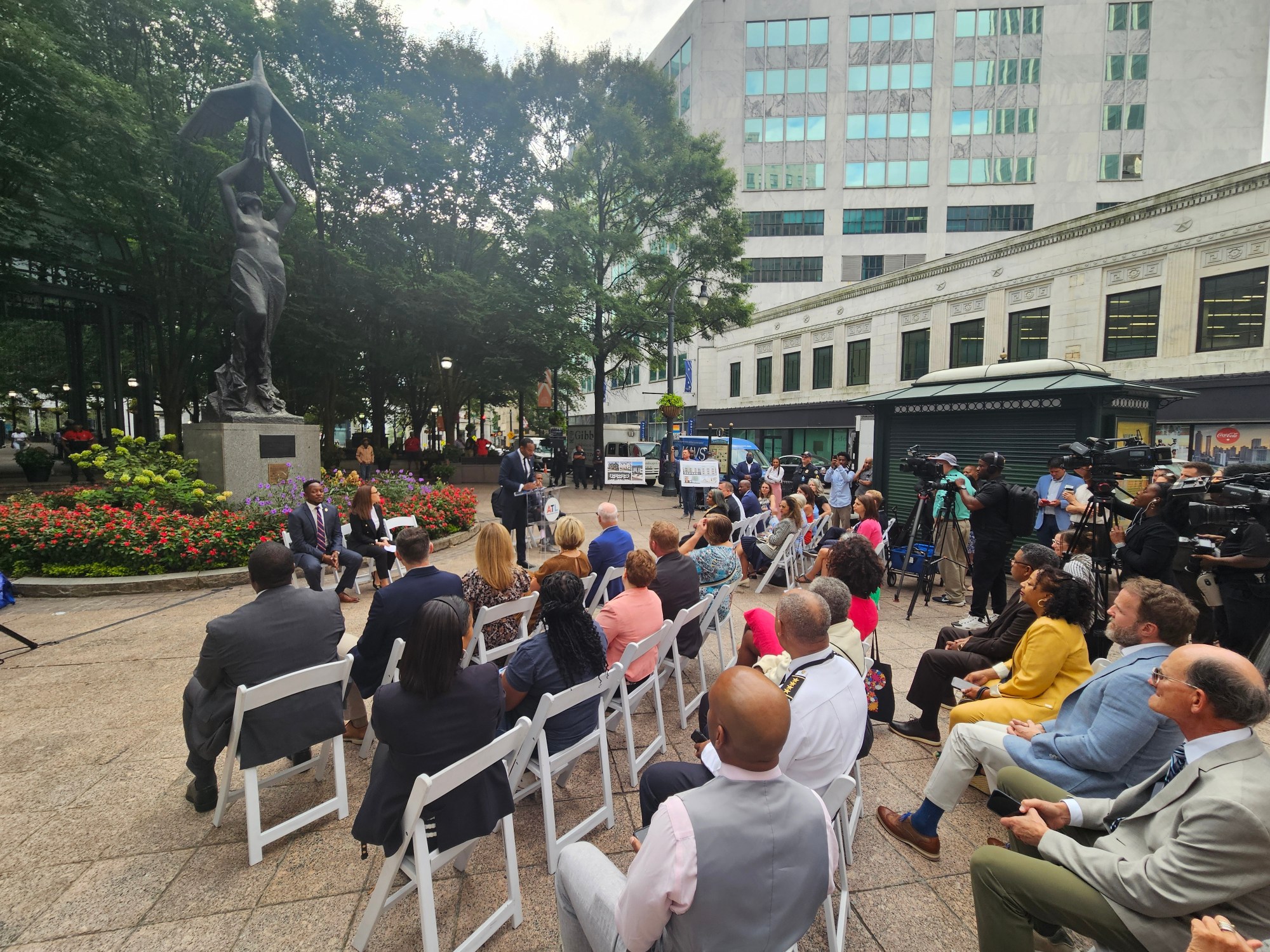
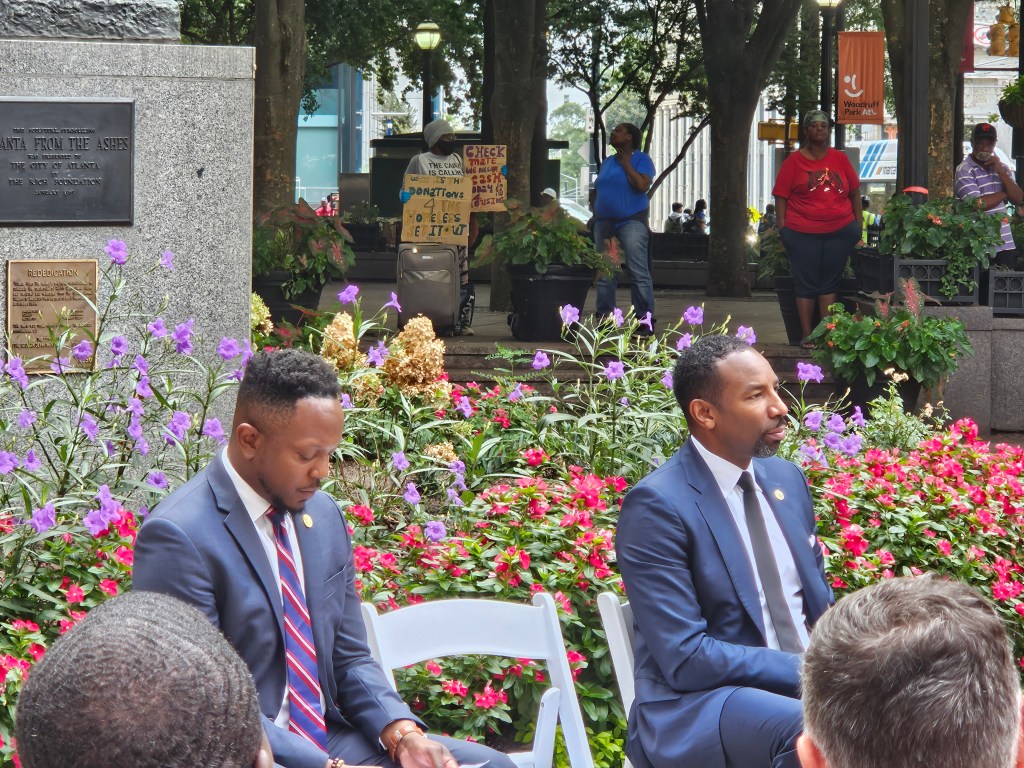
Mayor Andre Dickens on Tuesday unveiled an ambitious plan to spend $60 million to produce over 700 affordable housing units for unhoused Atlantans. During a press conference in downtown’s Woodruff Park, he called it the “single largest investment in homelessness in Atlanta history.”
Unhoused Atlantans in the park looked on as Dickens declared homelessness had reached “crisis levels” in Atlanta and nationwide. In response, he’s calling on the Atlanta City Council to authorize a $50 million bond issuance and draw $10 million from the city’s affordable housing trust fund to finance the proposed construction.
The proposed new mixed-income housing developments would materialize at two city-owned properties — one on Northside Drive near Westside Reservoir Park, and the other in Mechanicsville, just south of downtown.
The Westside development, dubbed the Waterworks Rapid Housing Project, promises 100 permanent supportive housing units, where tenants receive rent subsidies and wraparound services, alongside at least 70 townhomes, the mayor said at the Sept. 3 press conference.
And in Mechanicsville, another mixed-use, mixed-income project calls for 556 new income-restricted apartments, 100 of which would be permanent supportive housing.
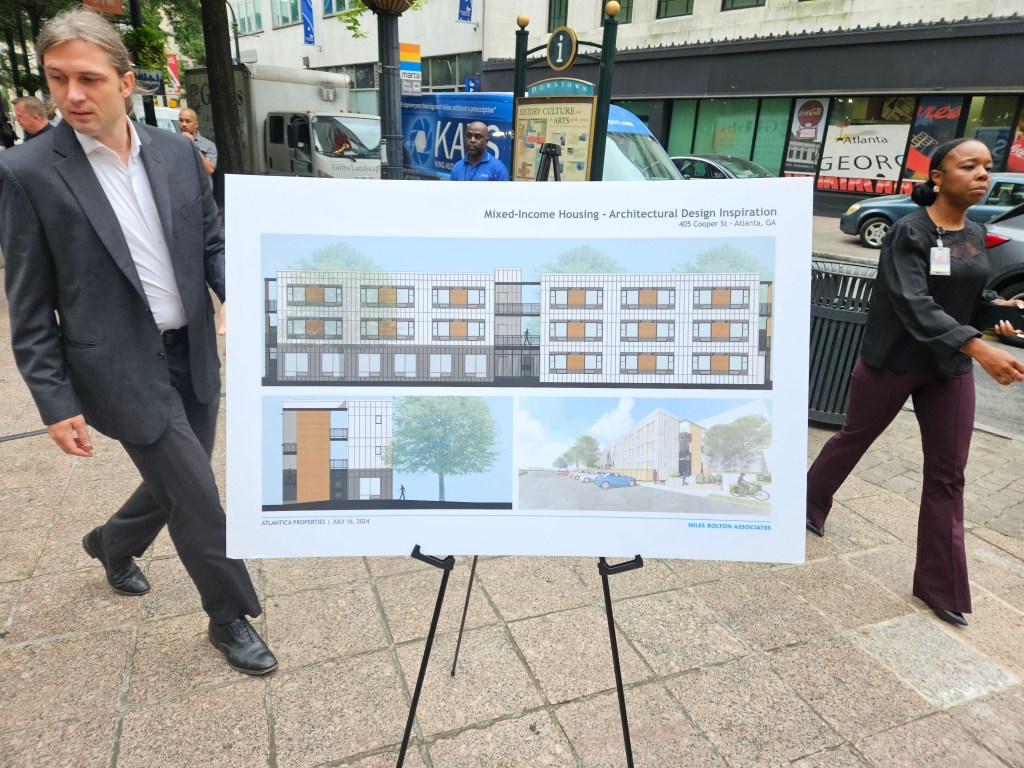
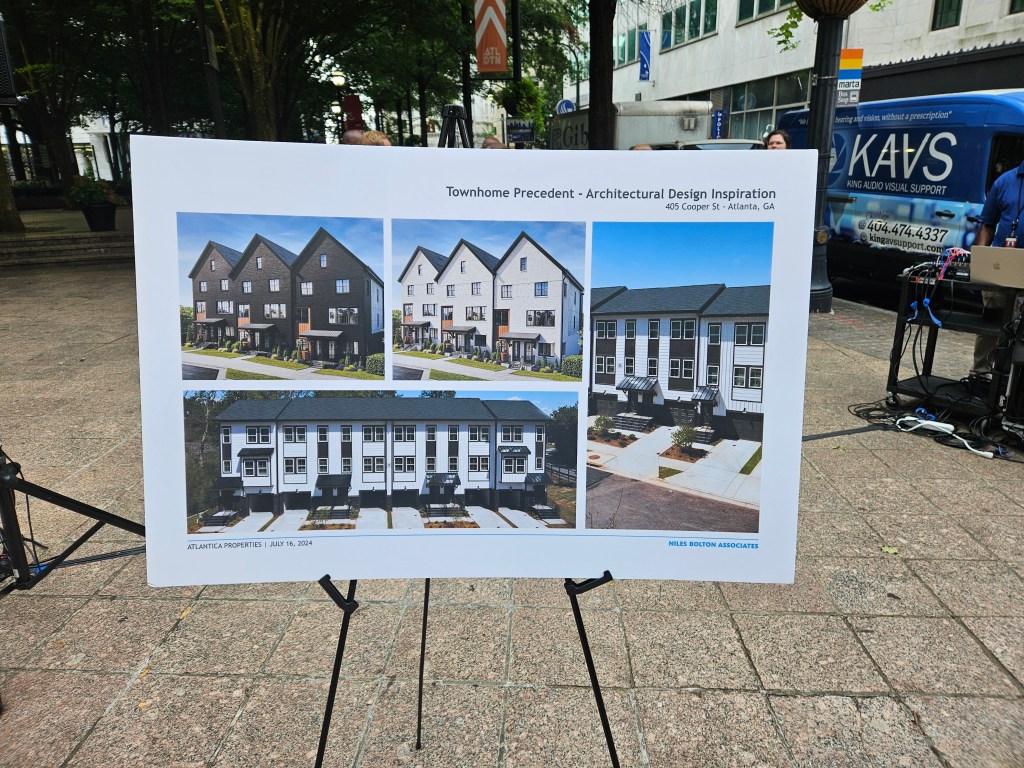
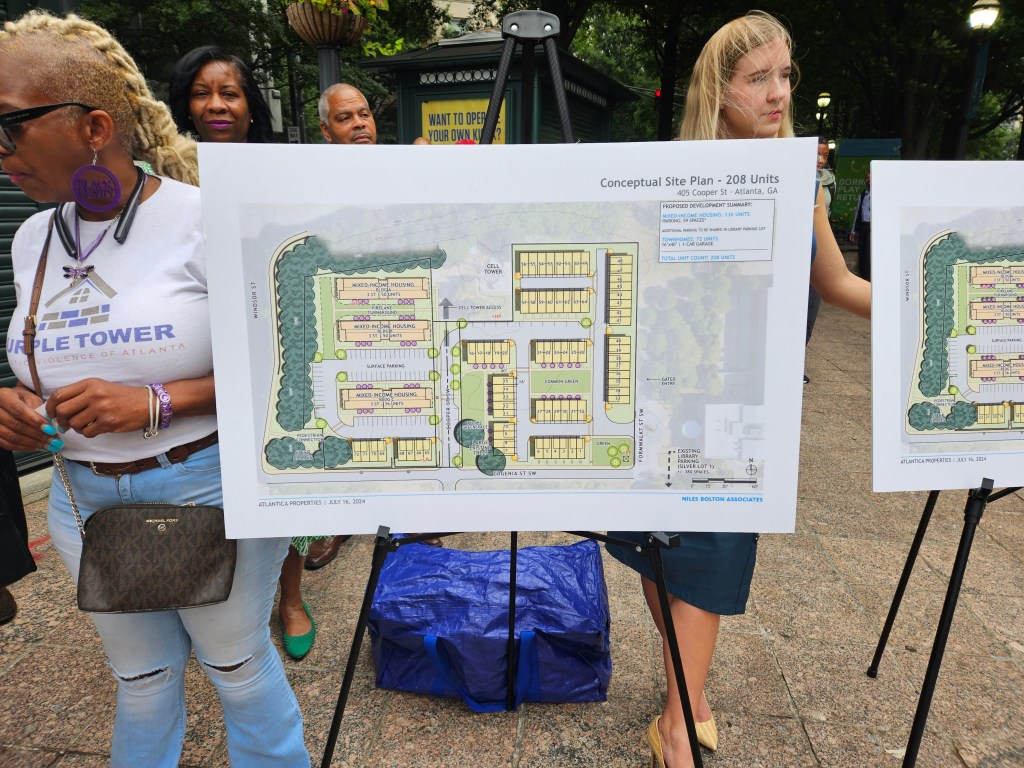
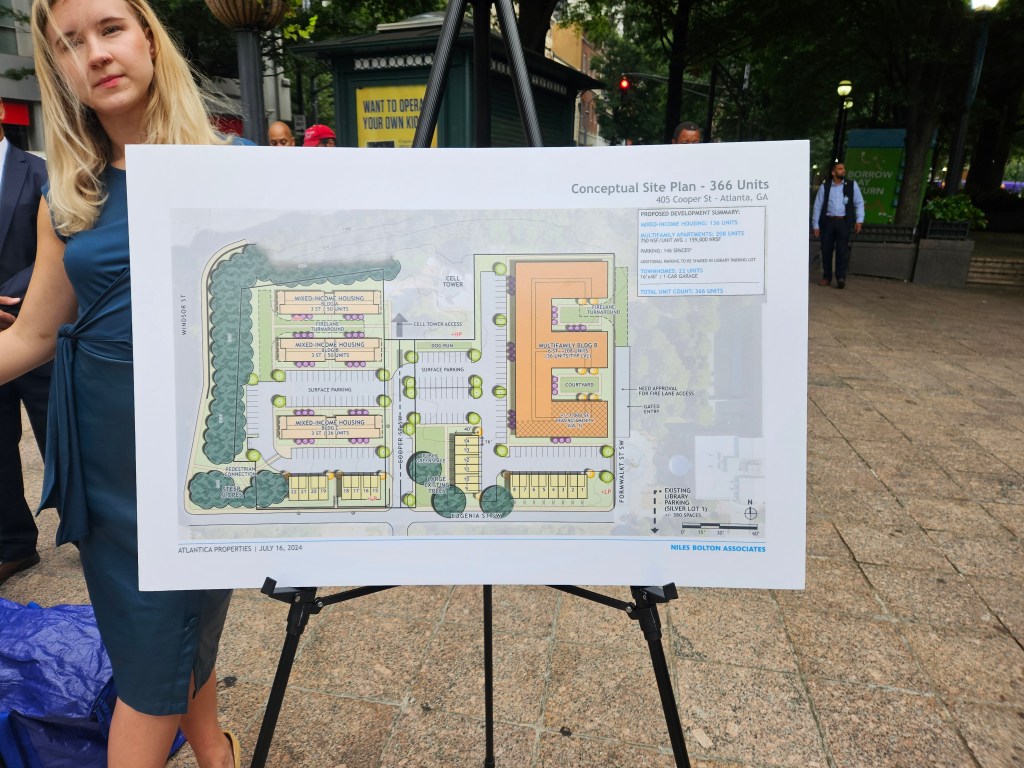
Five hundred of the units from the two projects are designated as “rapid rehousing,” which means they should be move-in ready before the end of 2025, said Cathryn Vassell, the head of the city’s go-to homelessness services nonprofit, Partners For Home, at the press conference.
The news marks a major step forward for Atlanta’s “rapid rehousing” plan, a Dickens administration pledge to create at least 500 rentals for people experiencing homelessness by the end of next year. The initiative kicked off last winter with The Melody, a 40-unit shipping-container village located downtown at 184 Forsyth Street.
Tuesday’s announcement underscored the challenges Atlanta’s mounting housing shortage poses for people trying to pull themselves out of homelessness.
“Until we get a hold of our affordable housing crisis, we will continue to have people coming into our homeless system,” said Vassell of Partners For Home. “We have to continue to invest with the right level of resources at the right pace and scale to exit people out of homelessness as quickly as humanly possible.”
Delivering the 500 proposed “quick-delivery units” and the 200 other affordably priced apartments will take more than $60 million from the city. Dickens said the city hopes to attract philanthropic contributions for the rest, claiming the $60 million in public funding could reach more than $120 million with private help.
The Community Foundation for Greater Atlanta pledged $10 million to Partners For Home to facilitate the rapid rehousing effort, the foundation’s chief executive, Frank Fernandez, announced during the press conference.
“Housing not only provides shelter, a place to call home, but it also is foundational to what kind of life any of us have,” Fernandez said. “It helps shape where our kids go to school, what kind of jobs we have access to, whether we feel safe walking down the street.”
“As someone who has experienced housing instability in his own life, I can tell you, no one — almost no one — chooses this,” he added.
As Atlanta’s unhoused population rises — up 7% in the past year — the city faces an uphill battle in building these 700 new units for unhoused people, due to community resistance.
The 556-unit Mechanicsville development, for example, has drawn the ire of some neighbors, who claim the city’s community engagement efforts were scant. Local opponents say the city has shoehorned the plan to include 100 units for unhoused people there because other, more affluent and white neighborhoods wouldn’t welcome it.
