


Update: The International Longshoremen’s Association (ILA) are officially on strike effective Oct. 1.
Strikes and other labor actions have been popping up across the country as we head into crunch time for the upcoming election. During election season, presidential candidates frequently seek endorsements from labor unions and the middle-class support that they can bring.
But prolonged labor disputes such as strikes can also affect elections, especially if they cause disruptions or financial strains for everyday voters. A massive strike of about 17,000 Southeastern AT&T workers who belong to the Communication Workers of America (CWA) resolved in mid-September. But a looming nationwide strike of over 45,000 port workers could cripple cargo movement across the country – starting Oct. 1.
As far as direct endorsements, many high-powered labor unions, including the AFL-CIO, United Autoworkers (UAW) and CWA endorsed Democratic presidential candidate Kamala Harris in late July, as she highlighted her pro-worker role as the head of the Biden administration’s task force on Worker Organizing and Empowerment.
However, the International Brotherhood of Teamsters announced last week that it won’t endorse any candidate for president. “We sought commitments from both Trump and Harris not to interfere in critical union campaigns or core Teamsters industries—and to honor our members’ right to strike—but were unable to secure those pledges,” said Teamsters president Sean O’Brien in the announcement.
The Teamsters’ decision to remain neutral followed its release of internal survey numbers showing their members significantly preferred former President Donald Trump to Harris. Teamsters members voted to endorse Trump by 58% over 31% for Harris, according to their latest poll ending Sept. 15.
Since both Harris and Trump have tried to make a play for union workers’ support, both endorsements and major strikes could be consequential in the election, given the expected narrow vote margin.
Here’s Atlanta Civic Circle’s roundup of recent labor activity that affects Atlanta, Georgia, and the Southeast.
Ports gearing up for historic dockworkers strike
The International Longshoremen’s Association (ILA) is preparing for the first dockworkers strike since 1977 – slated for Oct. 1, amid stalled contract negotiations with the United States Maritime Alliance (USMX) over wage increases.
The ILA contract covers over 45,000 dockworkers at USMX ports stretching all along the Atlantic and Gulf coasts – from Maine to Texas. That includes Georgia’s two major ports in Savannah and Brunswick.
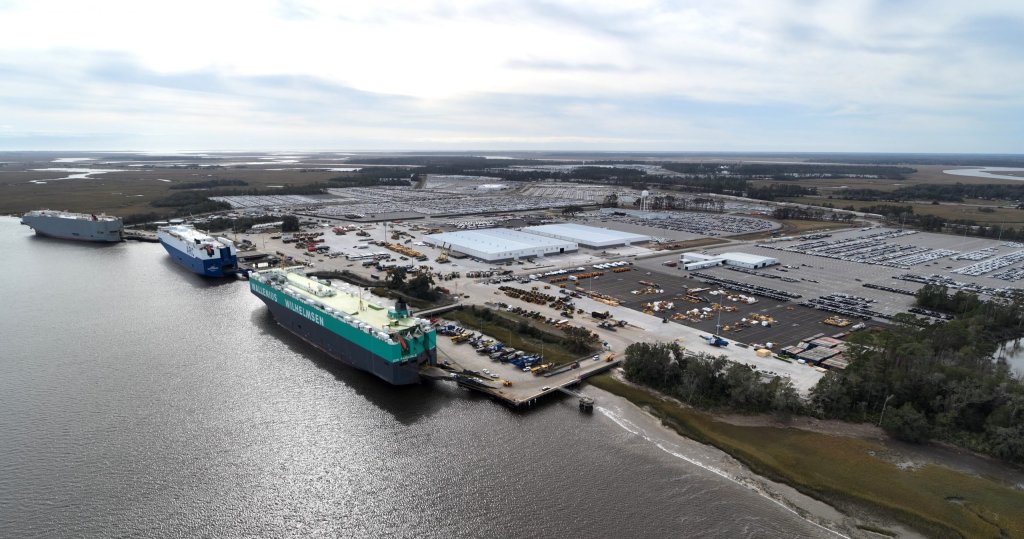
The current contract ends next week on Sept. 30, and dockworkers have approved striking the day after. The ILA says dockworkers “are ready to strike for wages that are commensurate with the billion-dollar profits earned by the ocean carriers,” adding that inflation is eating into their earnings. The dockworkers have rejected what the ILA’s chief negotiator, Harold Daggett, called a “low-ball wage package” from the USMX, which represents 36 ports handling roughly half of U.S. ship cargo.
Fearing a strike’s crippling effect on U.S. shipping, the U.S. Department of Labor has reached out to USMX, which likely signals federal mediators are willing to help broker a deal.
The Georgia Port Authority is preparing for the strike by extending the hours of truck gates at the Port of Savannah. They’ll be open all weekend as dockworkers put in extra hours to get ships unloaded before next Tuesday’s contract deadline.
CWA, AT&T reach tentative agreement after strike
Across the Southeast, 17,000 AT&T workers went on strike on Aug. 16 in an attempt to hammer out a new agreement with AT&T management. Their union, the Communications Workers of America, said wages and health care costs were key issues. CWA called the strike after accusing AT&T of bargaining in bad faith.
Meanwhile, 8,500 additional CWA members employed by AT&T’s West division (California and Nevada) rejected a separate tentative contract on Sept. 6 and by mid-September were threatening to strike. On Sept. 15, CWA announced it had reached “strong tentative agreements” with AT&T for both the Southeast and West divisions, which ended the 30-day Southeastern strike – the longest ever by Southeast AT&T workers.
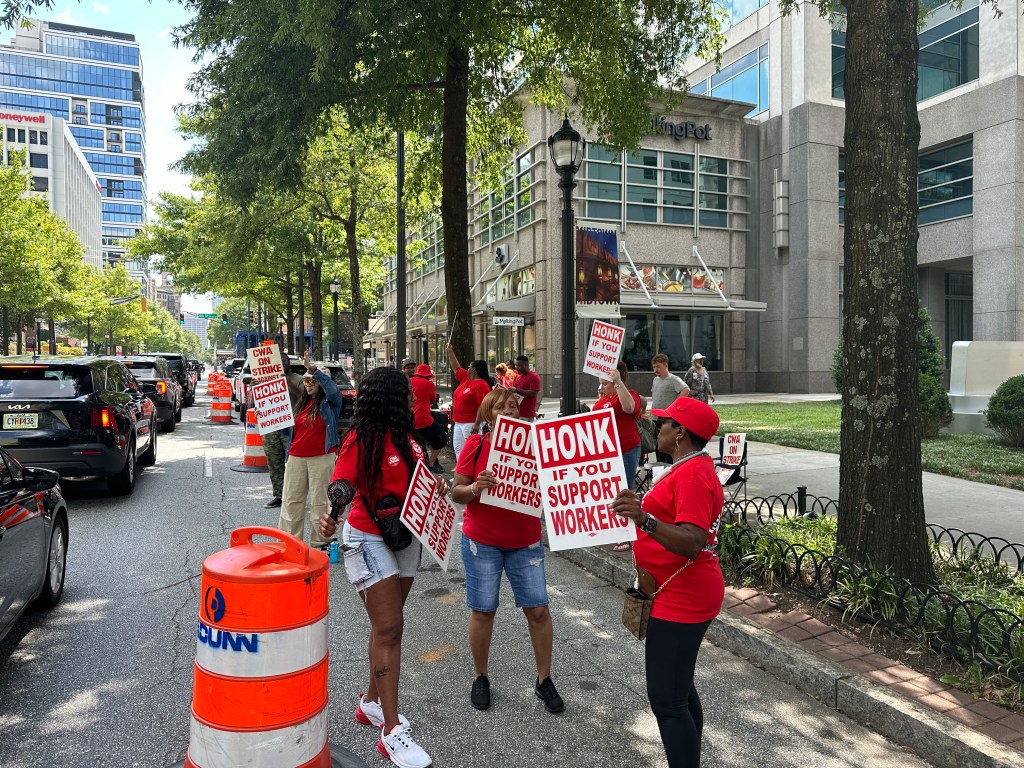
“I believe in the power of unity, and the unity our members and retirees have shown during these contract negotiations has been outstanding and gave our bargaining teams the backing they needed to deliver strong contracts,” said CWA president Claude Cummings in the announcement.
The new five-year contract for Southeastern AT&T workers includes across-the-board wage increases of 19.3% and holds health care premiums steady for the first year, reduces them in the second and third years, then factors in increases over the final two years, according to CWA.
Starbucks union wins big ruling in ongoing battle with coffee giant
Starbucks Workers United (SBWU) celebrated its third anniversary in August, which was quickly followed by a win in the courts. A National Labor Relations Board (NLRB) administrative law judge ruled on Sept. 13 that Starbucks violated labor laws in May 2023 by closing two unionized stores in Ithaca, NY.
According to the decision, Starbucks closed these stores to “chill unionism,” and the judge ordered it to reopen them.
The news came just as Starbucks Workers United unionized its 500th store. With 10 stores unionized in Georgia, it boasts an 86% election win rate. That’s 12 percentage points higher than the national average.
United Auto Workers, Volkswagen start contract negotiations
UAW members at a Volkswagen plant in Chattanooga began contract negotiations with the automaker last week after voting by to unionize in April. The negotiations cover 4,300 new UAW workers, who are looking to win higher wages, benefits, and safety protections. The UAW just released a video of the workers outlining their demands on Tuesday.
These negotiations come right after more than 1,000 UAW members at Cornell University won a new contract. This agreement provides the first-ever cost of living increase and raises wages up to 25.4% over four years. The maintenance, facilities, dining, custodial and gardener workers walked out on strike on Aug. 18. They withheld their labor for 10 days until reaching a tentative contract agreement with the university.
“Over the past four years, Cornell’s endowment has soared 39% to nearly $10 billion and tuition has increased 13% – all while workers’ buying power has fallen 5%,” said the UAW in the Aug. 18 strike announcement.
Atlanta Gas Light and Kroger warehouse workers vote to unionize
Workers at an Atlanta Gas Light facility in Riverdale and a Kroger fulfillment center in Forest Park both voted to unionize in mid-summer.
For the Atlanta Gas Light workers, the election unit was 178 employees. Of those, a supermajority – 140 employees – voted in favor of joining the International Brotherhood of Electrical Workers Local 1997. Just 11 workers voted no.
The Kroger warehouse employees also voted overwhelmingly to unionize, joining Teamsters Local 528. The vote finished with 24 in favor of joining the union and only one against it.
International Rescue Committee workers hold union vote
Workers at the International Rescue Committee’s Atlanta location are prepping for a union election today. The nonprofit’s Atlanta office provides resettlement services for refugees and immigrants in Georgia. The election unit is made up of 121 employees, and they’re attempting to unionize with International Union Local 179.
This brings to mind star bucks. Pouring coffee is not a skill! I read an article where one worker said he has worked full time at starbucks for 25 years! He should have been a regional manager by now. I’m sure the company tried to promote him but he probably want to just get by or did not graduate highschool. . And 25 years is more than enough time to level up with a real skill to command good wages.
Get people on the dock who want to work and fire those greedy dock workers. They make 50.00 per hours at entry level! That’s why companies are overseas now. Some low skilled laborer thinks turning 2 screws is worth 30.00 pere hour. That’s why all the companies in the 80s went to China and Mexican to avoid union bullies!