
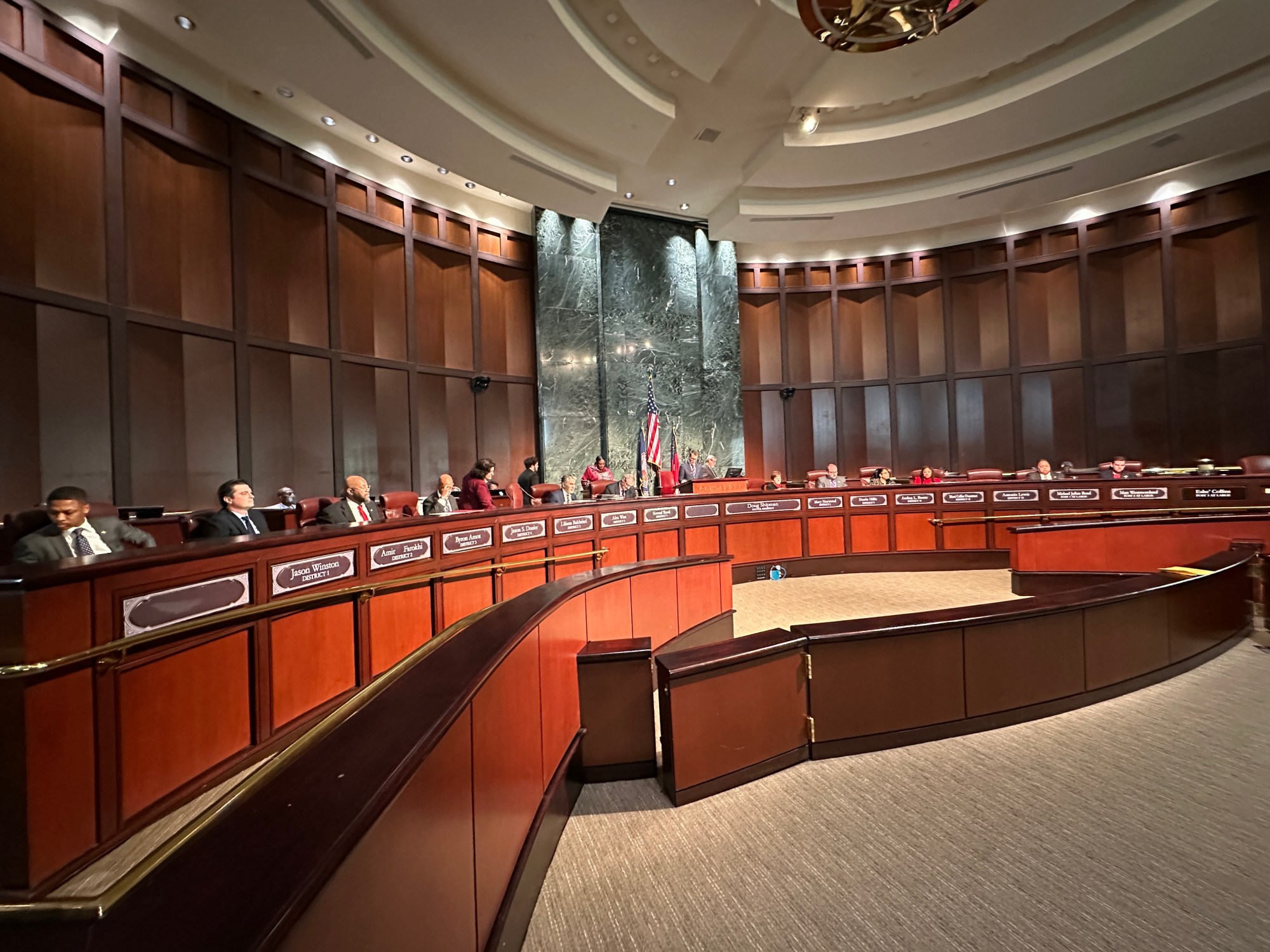


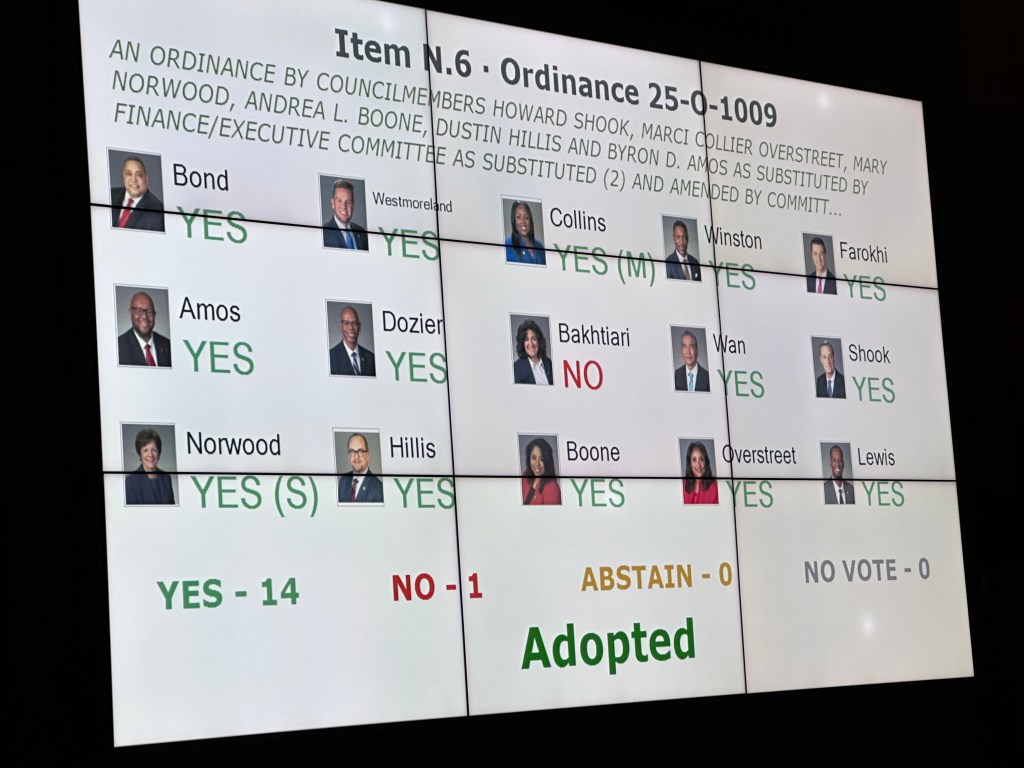
The Atlanta City Council voted 14–1 on Monday evening in favor of a contentious bill to overhaul the Office of the Inspector General (OIG) – just hours after the city’s Inspector General Shannon Manigault publicly resigned on the steps of City Hall.
Manigault and her supporters say the legislation, which amends the city charter, will sharply curtail the OIG’s investigative independence and powers. Manigault had led the independent watchdog agency for the city of Atlanta since 2020 – shortly after its launch by the city council in response to a federal corruption probe into City Hall.
The city council adopted the bill with no changes from its last revision by the full council two weeks ago. Councilmember Liliana Bakhtiari was the sole no vote.
The legislation was immediately sent to Atlanta Mayor Andre Dickens for his signature.
What does the bill do?
Currently, a joint citizen governing board oversees both the OIG and the Atlanta Ethics Office. The legislation dissolves that nine-member board in favor of separate boards for each agency – a change backed by Manigault and the current OIG/Ethics Office board.
But removing the OIG’s immediate and unfettered access to city records during investigations is a change that was opposed by Manigault, the Association of Inspectors General, and local civic organizations. The legislation that just passed requires prior approvals and advance notice to subjects of investigations. Critics say this process is laborious, would slow down investigations, and compromise their integrity.
The legislation also places strict limits on the OIG’s ability to issue third-party subpoenas to banks for individuals’ personal financial records, which Manigault says would similarly delay and compromise investigations.
It also forbids the OIG from using “covert surveillance technology” to investigate wrongdoing.
Bill glides through Committee on Council
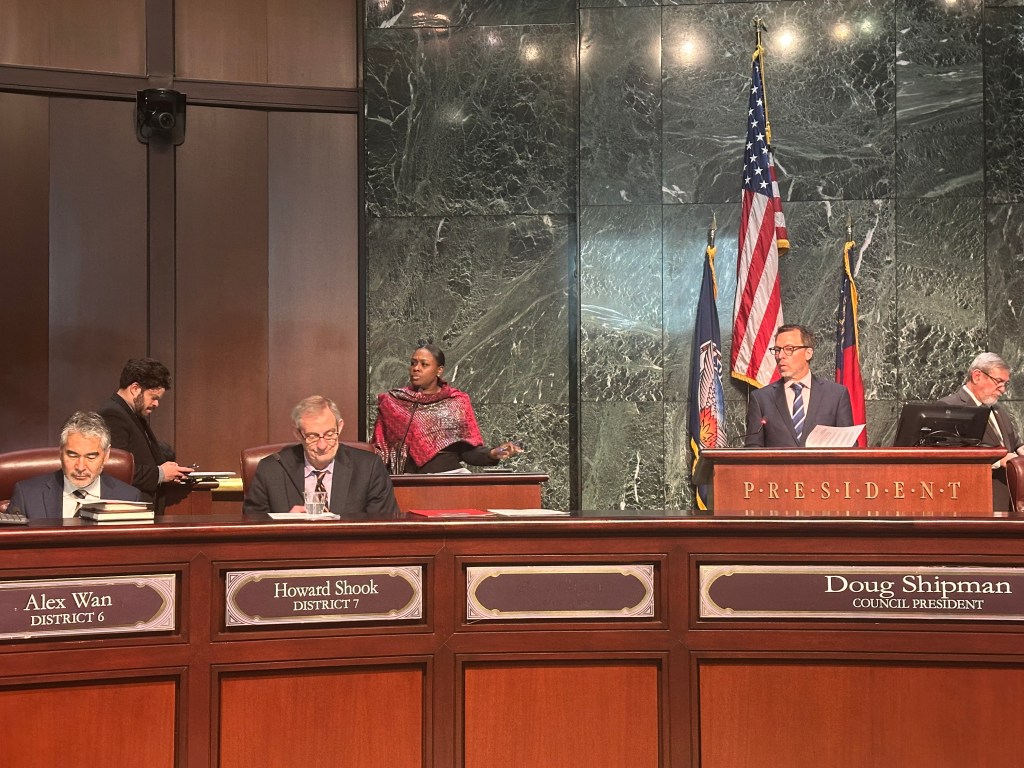
The Committee on Council initially reviewed the bill on Monday morning, before the full city council meeting in the afternoon. Two Atlanta residents spoke out against it during public comment.
Then Councilmember Howard Shook, who authored the legislation, made a motion for a vote, seconded by Councilmember Andrea Boone. The city council committee voted 6-1 for the legislation, without any discussion. Bakhtiari was the only council member to vote no..
Committee on Council Chair Eshé Collins lauded the city council’s work to get the bill to a place where it was “fair and balanced.”
Heated public comment
In the full city council meeting that afternoon, several speakers spoke in favor of the legislation to curtail the OIG’s independence. That included several union representatives for city employees, who claimed Manigault had abused the powers of her office.
When asked by a reporter what specific overreaches or abuses their members had suffered, the union representatives refused to answer. “She resigned. We’re done here,” Tracey Thornhill, the president of AFSCME Local 1644 told Atlanta Civic Circle as he left City Hall. (AFSCME stands for American Federation of State, County and Municipal Employees.)
However, many more Atlantans spoke against the bill, including representatives of the NAACP Legal Defense Fund, the Southern Center for Human Rights, and the Center for Civic Innovation.
Rohit Malhotra of CCI urged the council to hold the bill to work on it further. “This is not a policy discussion, this is political theater,” he said.
Former City Council President Felicia Moore added to the chorus of public opposition, asking for accountability from the mayor’s office and the city attorney.
“I watched with great sadness the [mayor’s] administration continuing to spread false narratives to the point of using the unions and other city employees as human shields,” she said, going on to accuse the mayor’s office of “gaslighting” the public.
“The public’s not fooled,” Moore said, “They’re asking what she [Manigault] has found.”
Susan Duran, who said she is an economist for the federal government – for now, took the federal Presidents’ Day holiday to come to City Hall and make a plea “public servant to public servant” for the city council to oppose the bill.
“We are facing an authoritarian crisis at the federal level […] but we’re also facing an authoritarian crisis here in my home in Atlanta,” said Duran during public comment. “If you’re against abuse of power or corruption, vote no. A vote yes tells us everything about you.”
No more voluntary interviews
Before the vote, Councilmember Michael Julian Bond asked whether the bill protected city employees from self-incrimination when compelled by subpoena to give OIG interviews.
A compelled interview with OIG staff is not admissible in a criminal prosecution, so city employees are already protected from self-incrimination.
The new legislation specifies that all interviews performed by OIG staff are considered compelled, not voluntary. That means no OIG interviews of city employees can be used in a criminal prosecution, said Amber Robinson, an attorney for the Atlanta Law Department.
The OIG opposed switching the status of all interviews to compelled, because it deprives the watchdog agency of the opportunity to solicit voluntary interviews.
Councilmember Eshé Collins asked what would happen under the new rules if an employee refused to give a statement to the OIG. Robinson said it would be up to their department.
“I am extremely proud of this work,” Collins said before moving for a vote. The bill passed 14-1 without further discussion.

The passage of this legislation marked the start of a troubling situation. Following Ms. Manigault’s resignation, an interim inspector general, appointed by Mayor Dickens and allegedly based on misinformation from HR Commissioner Calvin Blackburn, replaced her. Under the pretense of “working together” with City Hall, this interim IG has implemented changes and made decisions confirming initial suspicions. While maintaining an appearance of transparency and integrity, the OIG has become an extension of the Mayor’s administration. Now that the legislation is in place, the main proponents of these changes are no longer part of the City’s administration. As Whodini’s “Friends” puts it, “it was done so sweet, it had to be a plan.” The office is now a mere facade of integrity, and an investigation into potential fraud, waste, and abuse of the City of Atlanta’s citizens’ tax dollars is needed to determine if its continued existence is justified.