

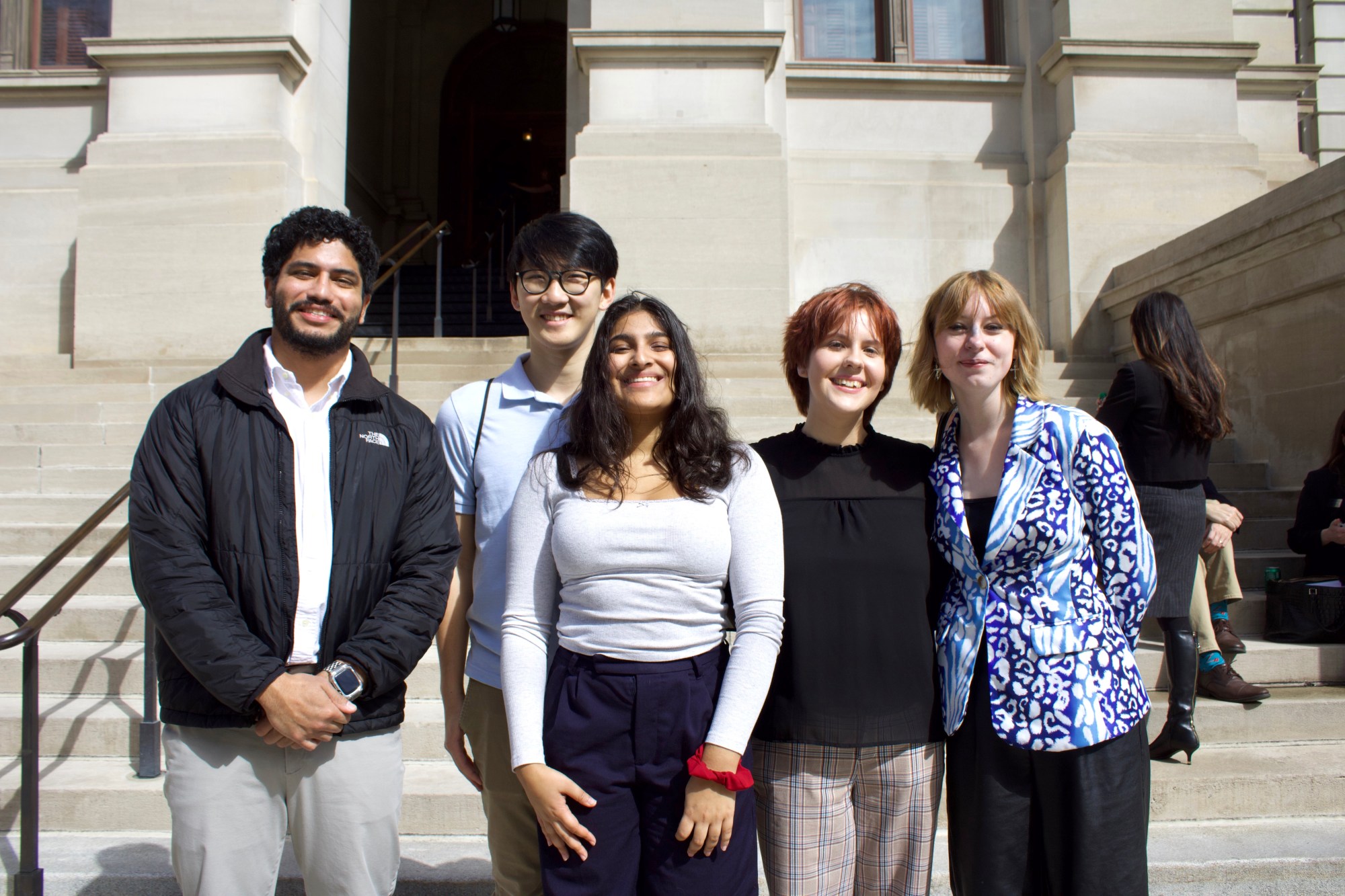

A new generation of young Georgians is making their voices heard under the Gold Dome – and unlike most student visitors, they’re advocates, not spectators. Instead of getting discouraged by the realities of policymaking, the Georgia Youth Justice Coalition (GYJC) is making its presence impossible to ignore.
Every Thursday during the 2025 legislative session, GYJC members – mostly college students – meet at the state Capitol as part of the group’s “Youth at the Capitol” program. What began in 2021 as a watchful eye on the legislative process has grown into a weekly mobilization effort, where students engage directly with lawmakers, track critical bills, and make their voices heard in committee meetings.
Jarrius Jackson, a 21-year-old junior at Morehouse College, said his first day at the Capitol was eye-opening. “I got such a new perspective on things,” said the senior GYJC fellow.
Jackson hopes to become an educator, and he sees policy advocacy as part of his future. “People often say, ‘This doesn’t affect me,’ but I ask them, ‘How does it affect people around you?’”
Engaging builds confidence
GYJC brings young people to the Capitol to participate in the legislative session – not just watch. “We want them to feel comfortable speaking on issues they care about. We do a tour and a scavenger hunt to make it fun, and we prepare them for calls to action,” said Andres Parra, 28, who is GYJC’s deputy executive director of organizing and training.
For their Capitol visit last Thursday, GYJC members attended an Education and Youth Committee hearing at the state House of Representatives on House Bill 268, which would allow public schools to share all students’ discipline records with other schools and law enforcement to create a statewide database, managed by the Georgia Emergency Management and Homeland Security Agency.
While the bill includes minimal suicide-prevention training requirements for middle and high school students (one hour per year) and funding for a mental health coordinator for each school system, GYJC is concerned about sharing students’ private educational records with law enforcement and the potential for racial profiling. “Some of the data sharing could put students at risk, as it is transferred through different departments,” Parra said.
The bill would also classify any threat that a student might make of death or serious injury as a “terroristic threat” and increase the charge for that from a misdemeanor to a felony, with a mandatory one-to-five-year prison sentence. “The major concerns are tied around racial profiling and the school-to-prison pipeline,” Parra said. “We know that Black and brown students are always disproportionately affected and profiled.”
Within 2,324 bills in play at the state legislature, the group is primarily monitoring education-related bills. In response to the mass shooting at Apalachee High School last fall, GYJC organized a student walkout to push legislators to pass gun-control laws, such as safe gun storage and universal background checks. Relevant bills are on the table this session.
It’s also keeping an eye on bills that affect LGBTQ+ rights, reproductive justice, climate change, and immigration. Here are a few specific bills GYJC is watching:
- House Bill 60: Aims to provide free meals to students qualifying for reduced-price meals, expand school breakfast programs, promote Georgia-grown products, and secure federal funding for local school systems.
- House Bill 18: Proposes adding a residency requirement for students to be eligible for dual enrollment in Georgia, where high school students can take classes at public colleges.
- Senate Bill 1: Bans transgender women from participating in female sports teams at middle school, high school, and college levels, while also limiting opportunities for transgender men to play on male teams.

Fighting for progressive change
The progressive youth activists have already experienced one notable defeat. One of the group’s student co-founders, Yana Batra, recalled the emotional aftermath when Senate Bill 140 passed in 2023. The Republican-sponsored law banned most gender-affirming care for transgender minors in Georgia.
GYJC had joined the widespread opposition and brought a group of LGBTQ+ youth to the Capitol before the vote to testify to state legislators about the bill’s adverse effects. “I mean, kids were crying. It was horrible,” said Batra, 20, who’s now a junior at Georgia Tech.
Afterward, the group gathered at a nearby Waffle House to support each other. “It was to say, ‘We are here. We are with you. We’re not going away,’” Batra said. “That, on its own, is so important — not giving people false hope, but reminding them that there are always people who have their back.”
Navigating Georgia’s conservative, Republican-majority legislature can be a challenge, Batra said. But the goal remains clear: getting young voices on the record. “Always having a record of opposition, of saying – we know this is not the way and we are standing with our community – is so important,” Batra said.
Batra also emphasized the importance of building relationships with Republican lawmakers. GYJC fellows meet with Republican legislators three to four times a week, she said, and those conversations have been productive.
“We’ve started with Republican legislators who have co-sponsored bipartisan legislation or bills with provisions we support,” she said. “For the HB 268 hearing, we can say, ‘Thank you for including measures that support mental health and suicide prevention.’ That lays the groundwork for the next meeting, where we can start pushing for changes to the pieces we have issues with.”