

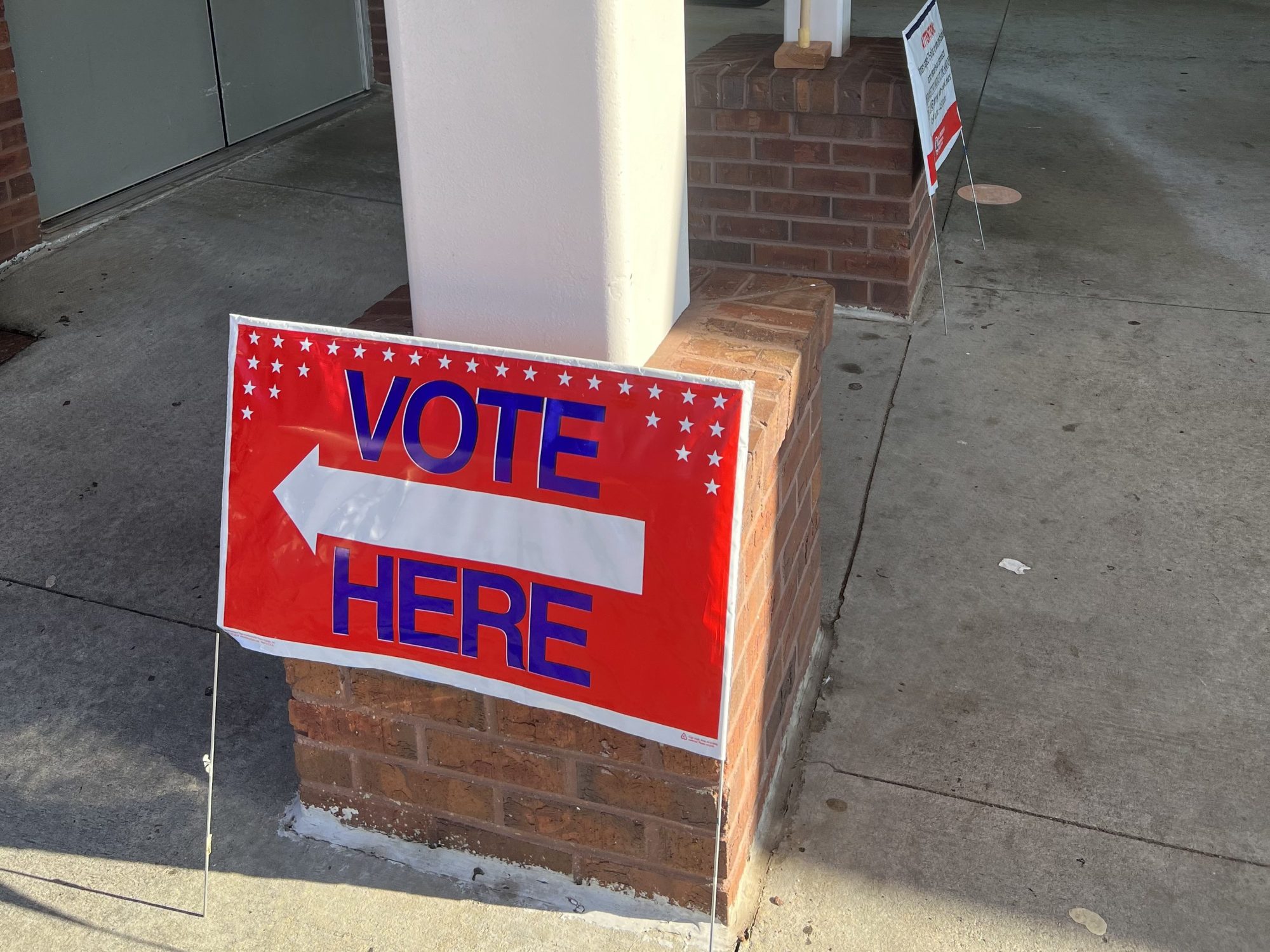
Atlanta Civic Circle will bring you voter voices and reporting in Clayton, Cobb, DeKalb, Fulton, and Gwinnett counties.
Follow along at our Runoff Election Day live blog.
If you’re unsure what races are on your ballot, use our Georgia Decides voter guide’s build-your-ballot feature.
You can also view your ballot using the My Voter Page on the Georgia Secretary of State’s website. If you voted by mail, you can also check the status of your ballot on the My Voter Page.
🗳️ Who can vote?
– You can vote in the runoff, even if you did not vote in the May 21 primary.
– You can only vote in a Democratic or Republican runoff election if you voted in that party’s primary election on May 21, or voted using a non-partisan ballot, or did not vote.
Polls open at 7 a.m. today and close at 7 p.m
😒 Tired of hitting the polls? What about ranked-choice voting?
It may be annoying to have to return to the polls just a month after voting in the primary, but that’s the election system Georgia has. If no candidate wins more than 50% of the vote in a multi-candidate race, the top two vote-getters go head-to-head in a runoff.
As a result, voter fatigue can drive down turnout, and counties must pay for an additional election. Does it have to be this way?
Ranked-choice voting is an alternative voting method that’s catching on in some cities and states, because it does away with runoffs. Read our story on how it works and how Atlanta voters feel about the option.
Runoffs matter, even if turnout is low
A number of important races will be decided today, depending on which county you reside in. DeKalb, for instance, will elect its next CEO, as well as a county commissioner and a judge. The CEO has significant power to shape key policy issues such as housing and infrastructure.
Check out our latest story about DeKalb’s CEO and District 4 commissioner candidates discussing their affordable housing priorities at a community forum last week.
Fulton also will be electing a county commissioner, where District 4 incumbent Natalie Hall faces a tough re-election bid against challenger Mo Ivory.
Meanwhile Clayton, will be electing a sheriff, and, in Cobb County a dispute over boundaries after redistricting is complicating the race for a county commission seat.
Here’s a run-down of some of the races that will be decided today:
Clayton County
- Democratic primary runoff for sheriff: incumbent Levon Allen v. Jeffrey Turner
- Democratic primary runoff for county commission chair: Alieka Anderson v. Terry Baskin
- Democratic primary runoff for county commissioner, District 3: Tashe’ Allen v. Attania Jean-Funny
Cobb County
- Democratic primary runoff for county commission, District 2: Jaha Howard v. Taniesha Whorton
- Democratic primary runoff for U.S. House District 14: Clarence Blalock v. Shawn “General” Harris
DeKalb County
- Democratic primary runoff for CEO: Lorraine Cochran-Johnson v. Larry Johnson
- Democratic primary for county commissioner, District 4: Lance Hammonds v. Chakira Johnson
- Nonpartisan judicial runoff for State Court Judge Division A-3: Yolanda Mack v. Dionne McGee
Fulton County
- Democratic primary runoff for county commissioner, District 4: incumbent Natalie Hall v. Mo Ivory
Gwinnett County
- Nonpartisan runoff for School Board, District 1: Karen Watkins v. Rachel Stone
- Nonpartisan runoff for School Board, District 3: Steve Gasper v. Shana White
State Legislature
- Democratic primary runoff for State Senate, District 55: Iris Knight-Hamilton v Randal Mangham (DeKalb and Gwinnett Counties)
- Democratic primary runoff for State Senate, District 38: RaShaun Kemp v. Ralph Long III (Fulton County)
- Democratic primary runoff for State Senate, District 34: Valencia Stovall v. Kenya Wicks (Clayton and Fayette Counties)
- Republican primary runoff for State Senate, District 7: J. Gregory Howard v. Fred Clayton (Gwinnett County)
- Democratic primary runoff for State House, District 96: Arlene Beckles v. Sonia Lopez (Gwinnett County)

VOTER PROFILE: BRIDGEMON BOLGER
Age: 39
Occupation: Public Advocate for the city of South Fulton; Political consultant
Neighborhood: Stone Mountain (DeKalb County)
Political Affiliation: Democrat
Did you vote in the May 21 primary? Yes.
Are you planning to vote in the runoff? Yes, I already voted early.
Are you planning to vote in November? Yes, I will.
What elections and issues are most important to you?
I’ve been saying this before everything happened in Atlanta with the water [crisis]. I feel like drainage, sewage and watershed is the most important issue of DeKalb County. It’s not one of the sexier issues – instead, people focus on economic development and crime.
But if you’ve been in DeKalb County for a number of years, you know that when we have heavy rains, certain areas just turn into lakes and puddles – and you know that is having a negative impact on our infrastructure across the county, because we live in a flood zone.
It messes up the roads, messes up the sidewalks, gets into people’s basements, and the county hasn’t really done a good job maintaining proper drainage. That’s resulted in a lot of the other problems that we see.
What other issues do you care about?
Economic development and jobs, particularly in South DeKalb, I feel like there’s a lot of focus on developing North DeKalb, i.e. Dunwoody, Chamblee, Brookhaven, Doraville, Tucker.
If you live in South DeKalb, and you’re a white collar worker, you’ve got to go to North DeKalb or the airport or into the city to find employment to maintain your lifestyle. I think that we need to do a better job of selling ourselves to corporations. I definitely think that’s something that the next CEO needs to prioritize.
How would things change if people agreed with you more?
Everybody talks about crime. Crime is — It’s not a non-issue. It’s certainly an issue, especially where I live — but if you look historically, and I’ve been here since 1989, crime is down compared to even 10, 20 years ago. We’ve gotten back to pre-pandemic crime levels, but the media and all of the candidates – everybody focuses so much on crime and that takes up all the energy, all the focus.
And now we’ve got this Cop City (the Atlanta Public Safety Training Center) being built that I think is unnecessary. To tie that back to sewer and drainage, Cop City is being built in a floodplain on the banks of a river, and that development is causing a lot of erosion. It’s going to result in exacerbating the problem of sewage and drainage.
So if people looked at it the way I look at it, we wouldn’t be putting the unnecessary police training facility in an area that needs to be protected to ensure we have proper drainage. People are more focused about crime than they are on drainage, and as a result, we have more money being spent on public safety instead of infrastructure. Indirectly, a lot of the infrastructure problems tie into [negative] economic issues, which often leads people to a life of crime.
(Photo courtesy of Bridgemon Bolger)
Today’s Democracy Digest was written by Alessandro Marazzi Sassoon. It was edited by Meredith Hobbs.

