

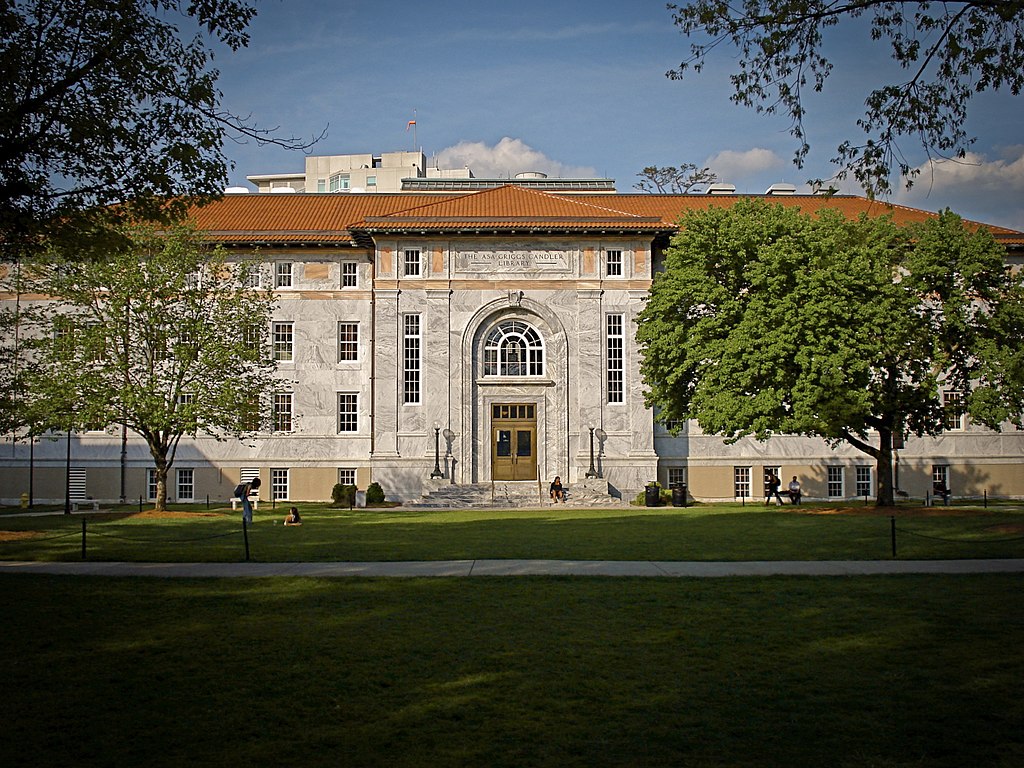
Newly introduced Atlanta City Council legislation aims to give $200,000 to Emory University’s artificial intelligence experts to create an online portal that will allow city of Atlanta residents to apply for subsidized housing units.
The aim is to show lower-income Atlantans what rental units are available that accept federal Housing Choice, or Section 8, voucher subsidies — or, as is often the case, which aren’t. In theory, the digital platform will simplify the process renters must navigate to secure apartments at the increasingly elusive complexes where landlords accept government-backed housing vouchers.
Drawing from the city’s affordable housing trust fund, the online application will “make [Atlanta’s] publicly subsidized housing units easily accessible to residents,” according to the legislative language.
That’s a herculean undertaking. Due to the staggering shortage of affordable housing in Atlanta, more than 20,000 renters are stuck on Atlanta Housing’s (AH) waitlist for Housing Choice vouchers. Even more Atlantans are scrambling for the rare units where landlords may not accept vouchers, but rent is still affordable for folks earning less than the area median income.
The online application will feature a map that shows what housing options are available to lower-income renters and would-be homeowners. ”It’ll also help us, from a resident-connection standpoint, provide the different agencies, housing providers, and otherwise” to people who need it, said Joshua Humphries, Mayor Andre Dickens’ top housing advisor.
The proposed housing-application portal will augment the city’s new Housing Help Center, intended as a one-stop-shop for Atlantans negotiating the rocky terrain of the city’s housing market.
“Without a centralized platform that shows real-time availability for housing units and is updated on a regular basis, the Housing Help Center can only direct residents seeking housing opportunities to dozens of separate waitlists without any transparency into the application process or timeline,” the legislation says.
The initial $200,000 for the Emory academics is intended as seed funding for a more expansive online portal that will connect residents to nonprofits providing supportive services, like job training, mental health and substance-use assistance, education opportunities, and eviction-prevention help, Humphries said.
“Our goal with it is a system that can build over time and become even more useful as more resources come available, as more housing opportunities come available … on top of this framework,” he said in an interview with Atlanta Civic Circle.
The city is also exploring the notion of a “common application” via this proposed Emory partnership, which lower-income Atlantans can fill out to receive a breakdown of all available housing options for them, Humphries said.
“We’re working with Emory and the brain trust over there on the best processes and systems to make it as easy as possible for residents to get the housing they need,” Humphries said.
Professor Joe Sutherland, the director of Emory’s Center for AI Learning, told Atlanta Civic Circle in an email that Emory and the city “are in the planning phases for a potential research project on the design considerations and best practices associated with digital affordable housing platforms.”
“The final scope has yet to be determined,” he added. “We should have more detail by Dec. 23.”
