

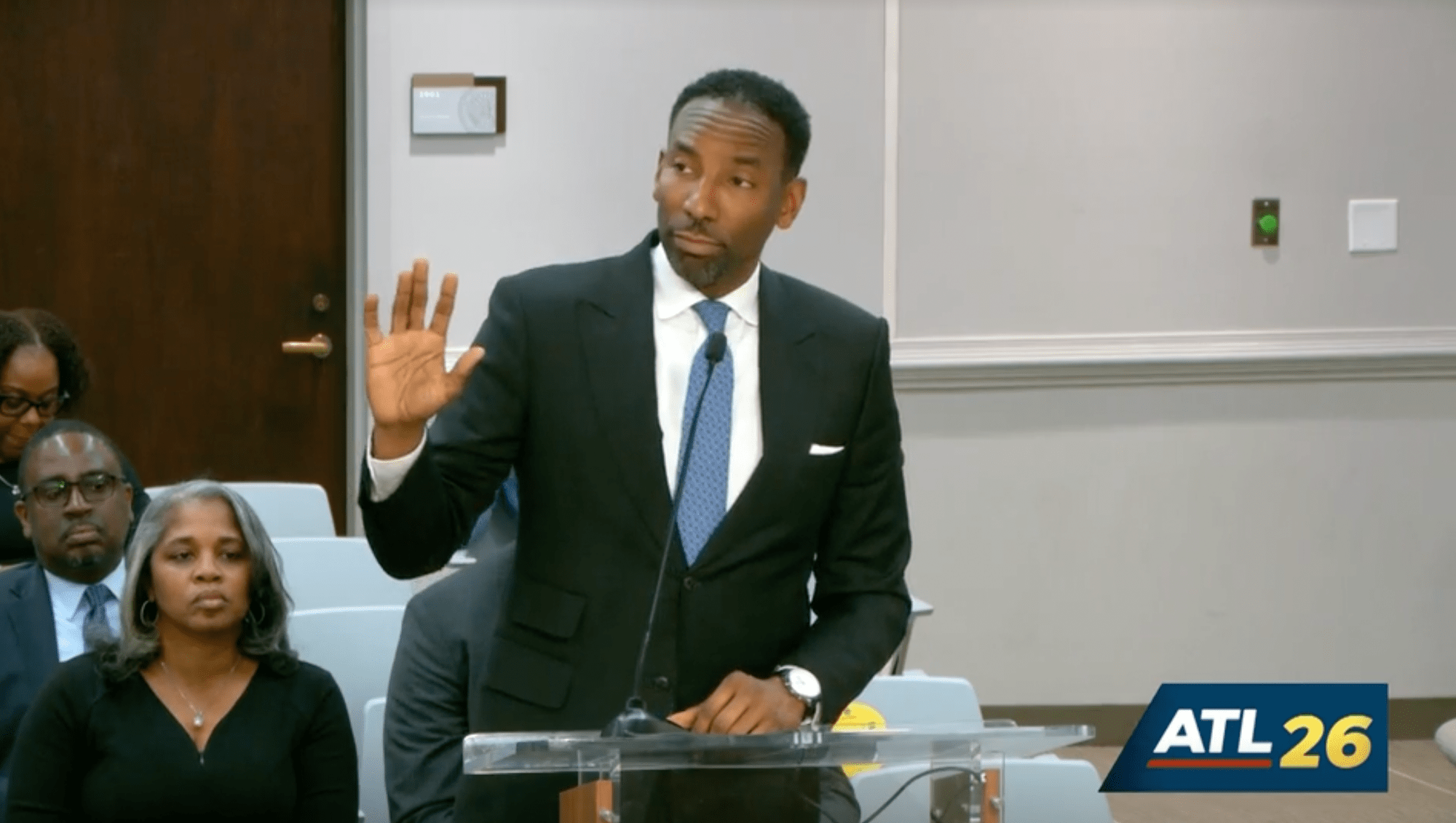
As bubbling tensions between the city of Atlanta and the city’s Inspector General Shannon Manigault heat up, Mayor Andre Dickens made a surprise appearance at a specially called meeting of the Office of Inspector General’s (OIG) governing board last week.
The OIG board met Nov. 26, on the eve of the Thanksgiving recess, to decide how to respond to controversial recommendations to curtail the power of the OIG’s office, released Nov. 6 by a special task force convened by Atlanta City Council. If the city council adopts them, the city’s top watchdog has said she would resign in protest.
The task force recommendations are set to come before the city council’s Committee on Council and, possibly, the full city council on Monday. The Atlanta City Council created the task force Sept. 3 at the request of the mayor’s office. That was after Manigault in May appeared during public comment at a city council meeting to allege a widespread effort within the city to obstruct her office’s work.
Proposed changes include requiring the OIG to notify subjects as soon as an investigation is opened, previewing findings with the city council before releasing them to the public, prohibiting the OIG from making criminal referrals to law enforcement without OIG board approval, and limiting the magnitude of malfeasance the OIG can investigate.
The Atlanta City Council created the Office of Inspector General in 2020, with Manigault as its first chief, in response to a long-running federal investigation during former Mayor Kasim Reed’s administration that exposed high level corruption in City Hall. Made public in 2017, the investigation involved a “pay-to-play” scheme where city officials took bribes in exchange for city contracts.
The Atlanta OIG currently has 120 open investigations and has issued dozens of reports of its findings to the public, such as exposing a pay-to-play scheme in the city’s permit department. While funded by the city, the OIG is fully independent and reports to a citizen board. Tasked with rooting out corruption, the office has the power to investigate city contracts and city employees for waste, fraud, nepotism and abuse. It can issue subpoenas, conduct voluntary interviews, and make criminal referrals.

Mayor’s surprise appearance
Dickens’ appearance at the OIG board meeting — after months of silence about Manigault’s public accusations of obstruction and concerns about the task force recommendations — prompted one board member, Lisa Liang, to ask: “Why are you here? What do you want?”
Dickens said he wanted to clear the air, and he distanced himself from any suggestion that he was trying to restrict the Inspector General Office’s power out of self-interest. “Everybody feels like if you’re making recommendations as an elected official, you’re trying to get yourself off on something, to eliminate oversight, to reduce the burdens that you have. That is far from where I am,” he said.
Dickens voted in favor of creating the Inspector General’s office in 2020, when he was a city council member. “I want us to have an independent OIG,” he reiterated Nov. 26 at the OIG board meeting.
The mayor cast the effort to reign in the powers of the Inspector General’s Office as a matter of checks and balances. “I do not believe I should have absolute power,” he said. “I don’t believe the OIG or the ethics office should have absolute power.” (The task force also reviewed Atlanta’s Ethics Office.)
Another board member, Rebecca Brubaker, told the mayor that the OIG board called the Nov. 26 special meeting to provide its input on the task force’s recommendations to the city council before its Monday meeting. “We were fearful that something was going to go before the city council for a vote that did not have our comments,” Brubaker said.
In response, Dickens said he expects the city council will merely “receive” the recommendations, and not adopt the changes. In other words, he said, the council would formally acknowledge that the task force had made the recommendations.
The OIG board ultimately took no action at its Nov. 26 meeting — taking the mayor at his word that nothing would be legislated Monday.
Manigault was not present at the specially called OIG board meeting. Following Dickens’ comments to the board her office said it was reserving comment until Monday, after the holiday.
But since the task force released its recommendations to curb the Atlanta OIG’s powers on Nov. 6, Manigault has been speaking out publicly against them, saying they would curtail her office’s independence.
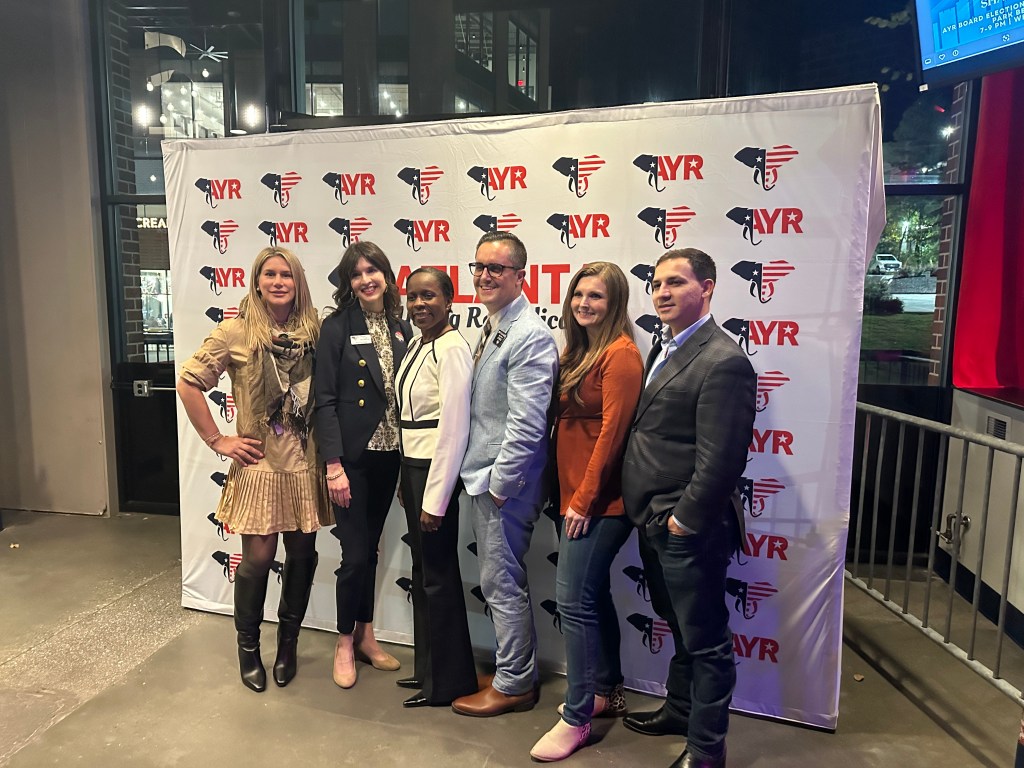
She’s made appearances on NPR’s A Closer Look with Rose Scott, penned an op-ed in the Atlanta Journal-Constitution, and spoke at a meeting hosted by the Atlanta Young Republicans on Nov. 20, which also drew a number of Young Democrats of Georgia members.
Her message: Call your city council member and urge them to reject the task force recommendations.
At the OIG board meeting, Dickens accused Manigault of creating a “political spectacle” over the task force recommendations and chastised her for speaking at a partisan political event.
The proposed changes to the OIG
Manigault has said she agrees with some of the city council task force’s recommendations, such as creating an in-house counsel for the Inspector General’s Office and informing city employees of their rights.
But she has taken issue with a number of other recommendations in her numerous media appearances and in memos released by her office in the past month — saying they run contrary to accepted best practices, and would compromise the OIG’s independence and the integrity of its investigations.
Some of the proposals Manigault opposes are:
- The OIG should not “undertake overly broad speculative exploratory inquiries.”
- The OIG should only investigate allegations of wrongdoing that meet a threshold of “substantial misconduct, such as gross mismanagement, gross waste of funds, or a substantial violation.” What constitutes “substantial” or “gross” is not defined in the recommendations.
- OIG reports should be disclosed first to the OIG board, then the mayor and city council, prior to release to the public. Currently, Manigault releases the city’s OIG reports directly to the public.
- The OIG board, rather than the OIG, should decide whether to make criminal referrals.
- The OIG should provide written notification to subjects of an investigation of their role in the investigation. This, Manigault says, would allow subjects to cover their tracks or coordinate testimony, contradicting basic investigative principles.
- The OIG should give notice to impacted parties when a subpoena is issued to a city employee.
The Association of Inspectors General, which sets best practices for government OIG offices nationally, has also raised concerns about the task force’s recommendations.
The group’s president, Will Fletcher, told the mayor and Atlanta City Council in a Nov. 18 letter that it “has extremely serious concerns with the merit of the report and thus, the use of the report as the foundation for legislation.”
Fletcher called the task force report “flawed” and urged the city council to reject the recommendations or defer them until further review. “The appearance of government oversight is worse than no oversight at all,” he wrote.
Manigault and the OIG board have criticized the task force for allotting her office only 15 minutes to present its input over the month it spent crafting recommendations. They also say the task force forewent a meeting with the Association of Inspectors General, even though Fletcher offered to do a teleconference, because he could not make it to Atlanta on short notice.
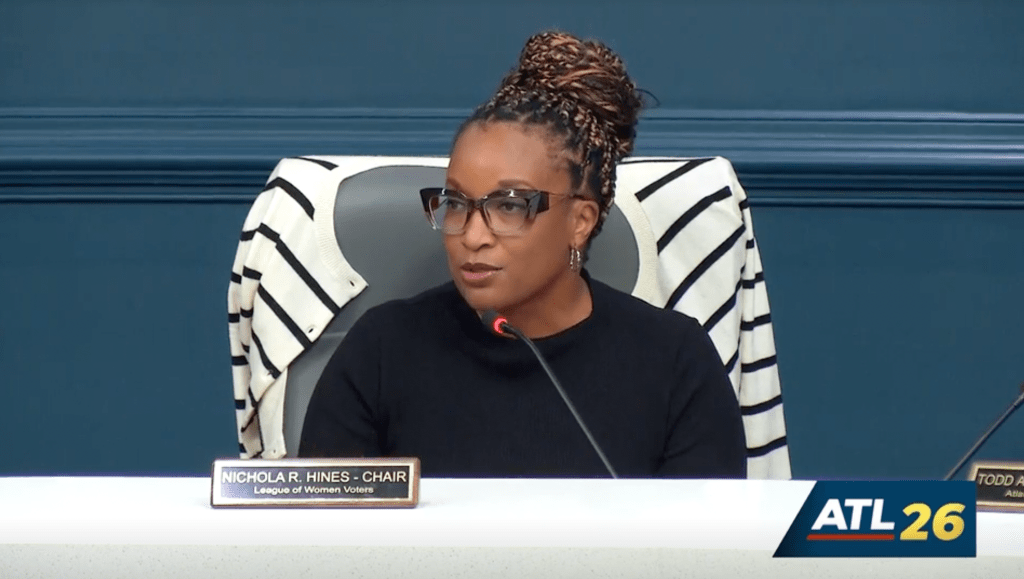
That sidelining of professional expertise was another concern the board raised to Dickens on Nov. 26. “The subject experts were not in the room,” Nichola Hines, the OIG board chair, said of the task force’s work.
“Our position is: a lot of the recommendations set forth by the task force are not reflective of best practices,” board member Terri Simmons added.
Accusations of subterfuge
Manigault has accused Dickens of going behind her back to create the task force with the city council — saying its purpose was merely to “give the illusion of legitimacy to pre-planned legislation” from the mayor and the city council to curtail the OIG’s power.
A timeline document for the task force’s activity from the mayor’s office, obtained by the Atlanta Community Press Collective, shows what appears to be a game-plan for the task force’s recommendations to be legislated into city law by November. The document is undated, but the filename includes “09042024,” indicating a Sept. 4 date, which was the day after city council created the task force.
“The mayor began executing a plan to effectively shut us down,” Manigault said in a video posted by her office in October in response to the reporting by Atlanta Community Press Collective.
Manigault reiterated those accusations at a Nov. 20 Atlanta Young Republicans event, alleging that the mayor had called an OIG board member to say her office had to be “reigned in” and that she was “out of control.”
Dickens has not responded directly to that accusation, but at the OIG board’s meeting last week, he said, “I have not said a single solitary word, negatively, about the office of inspector general [or] ethics officer.”
- The Atlanta City Council’s Committee on Council meets at 11 a.m. on Dec. 2 at the Larry M. Dingle Committee Room at City Hall.
- The City Council meets at 1 p.m. on Dec. 2 in the Council Chamber at City Hall.
- Contact information for City Council members can be found here.


I filed a complaint with OIG’s office back on October 14, 2024. I know firsthand of the corruption that exists in the city of Atlanta. My hope and prayer is that God will continue to use Ms Manigault as a “rod of correction” for this city, before it is too late. We don’t have as much time as we think.