

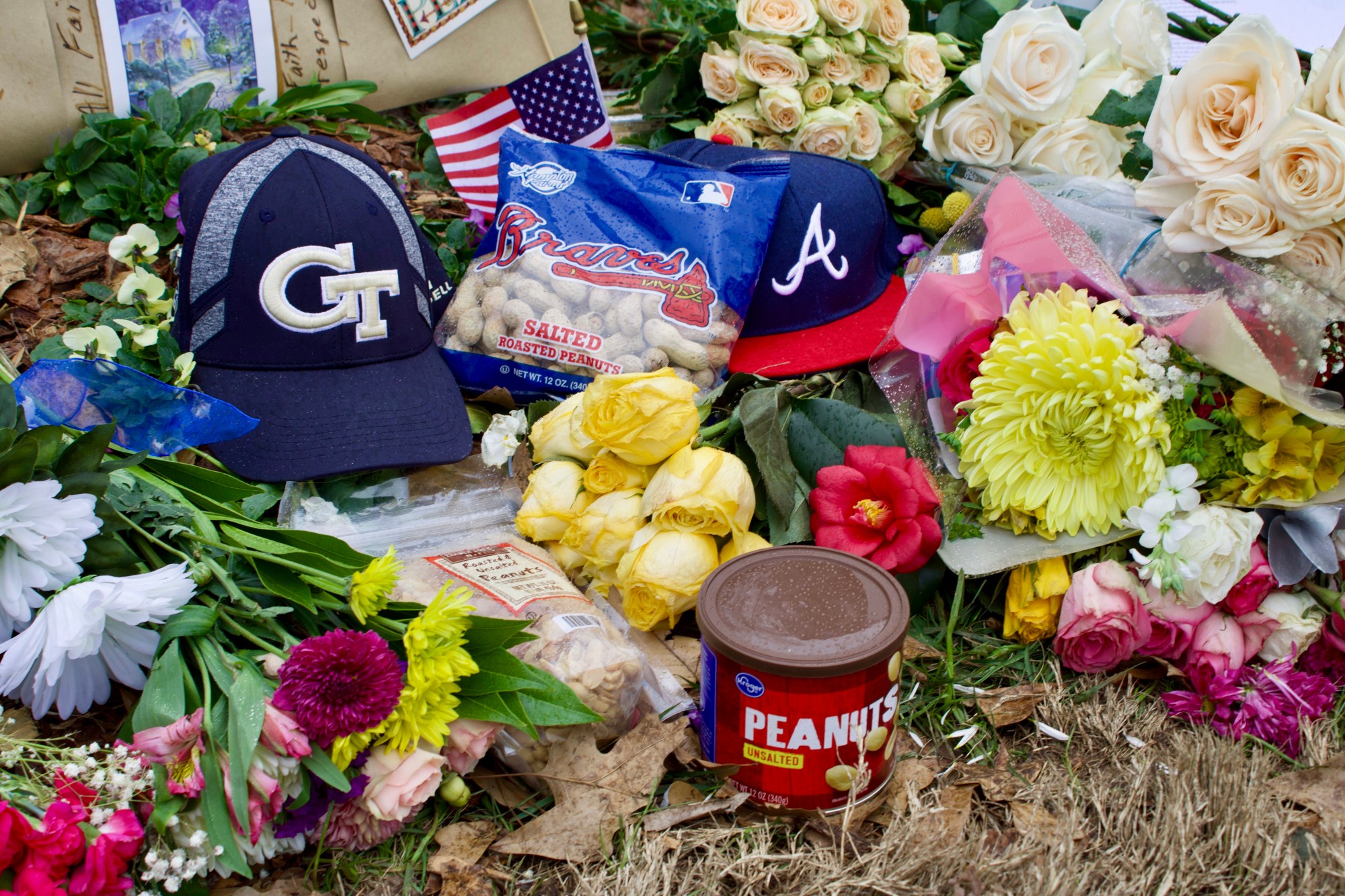
Inside the Carter Center on Sunday afternoon, hundreds of visitors paid tribute to former President Jimmy Carter, a man whose impact – from the peanut fields of rural Georgia to the global stage – continues to ripple through generations. Carter’s body was transported from his hometown of Plains, Georgia, to the Carter Center in Atlanta on Saturday, Jan. 4, starting a week-long public memorial to honor his 100-year life.
For many who came to honor the 39th president, the experience was deeply personal and profoundly reflective.
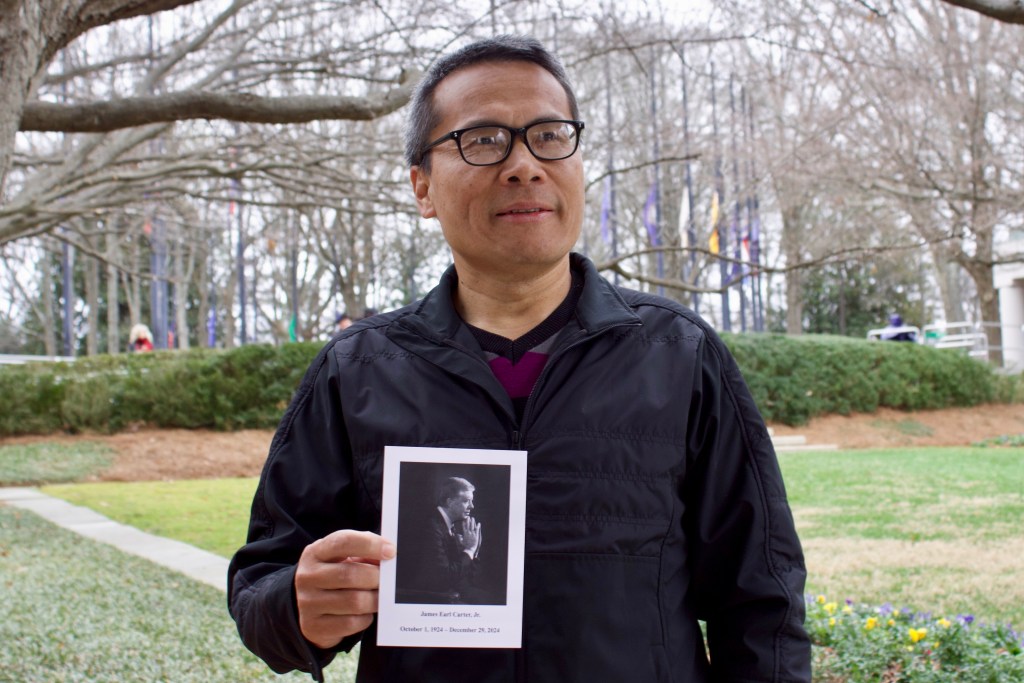
Michael Guo, a Chinese immigrant who has lived in Atlanta for 25 years, bowed three times before Carter’s casket in a gesture of respect rooted in Chinese culture. For Guo, Carter’s presidency is the foundation of his family’s story.
“He helped to open China to the world,” Guo said, standing outside the Carter Center. “That gave me and my family the opportunity to come here to this great country and establish my family here.”
“He’s very underestimated, but the more I’ve learned about him, the more I think he may be one of the greatest presidents. He started policies that had a long-lasting impact to the country, like energy policies and military initiatives,” Guo said. “And, he probably made even more of an impact after his presidency than when he was president.”
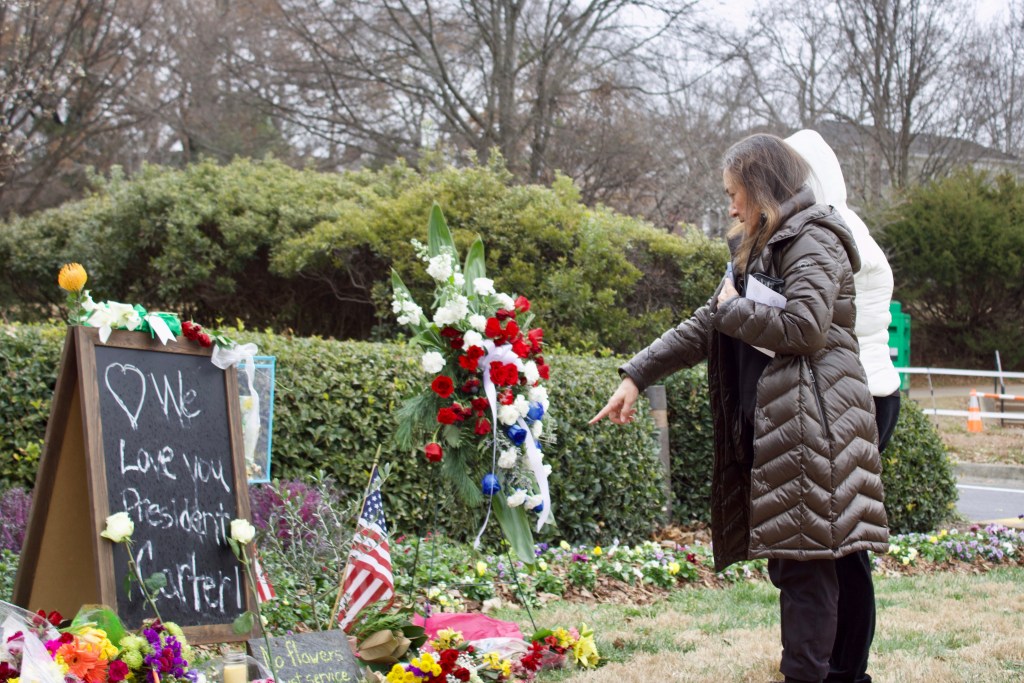
For two best friends from Smyrna, Linda Boatright and Jeannie Rochelle, Carter’s legacy is intertwined with their youth. Now entering their 60s, they both grew up watching Carter rise from governor to president.
“Jeannie and I were in grade school when President Carter was our governor, and by the time we were in high school, he was president,” said Boatright, 60, her voice catching as she remembered her grandmother’s work on Carter’s 1976 campaign for president. “She bought us T-shirts, and we all participated in that. I’ve loved him all my life.”
Boatright said her third-grade class’s field trip to the Georgia Governor’s Mansion when Carter was governor remains a cherished memory. She also recalled attending one of his speeches with her mom at Emory University in 1979, a moment that solidified her admiration for him. “He was already president, so it was a big deal for him to come back.”
Rochelle brought an olive tree wrapped in burlap to symbolize Carter’s dedication to global peace and his peanut-farming roots.
“I have a little note on there that says, ‘On a scale of one to 10, you’re a 100 of eternal love and gratitude’,” Rochelle said, smiling through tears. “The purity of his heart, his dedication, and his love for humanity — it was his destiny to be this remarkable man that we’re very lucky to have experienced.”

Rochelle reflected on the partnership between Jimmy and Rosalynn Carter, describing it as “something written in the stars.” “He made me proud to be a Georgian and a Democrat,” she said.
Visitors to the Carter Center immersed themselves in Carter’s life story as they walked through the museum that led to the main rotunda, where his body lay in respose in a casket draped in the American flag. After paying their respects, many signed one of the numerous guest books, leaving messages of gratitude.
The museum’s exhibits include Carter’s childhood report cards, inauguration speech, and hand-written drafts of important documents from his years in office, along with mementos from his long post-presidency career at the Carter Center, and copies of the 32 bestselling books he wrote – 30 after leaving office. Carter won a Nobel Prize in 2002 for his work at the Carter Center as an international peace negotiator, election monitor, and eradicating Guinea worm disease.
Carter’s body lay in repose for public viewing at the Carter Center until 6 a.m. on Tuesday, then was flown to Washington, D.C. He will lie in state at the Capitol Rotunda, starting Tuesday evening, and state funeral observances will conclude Thursday with a National Funeral Service at the National Cathedral in Washington. That will be followed by a private funeral service in Plains and Carter’s burial next to his wife of 77 years, Rosalyn Carter.
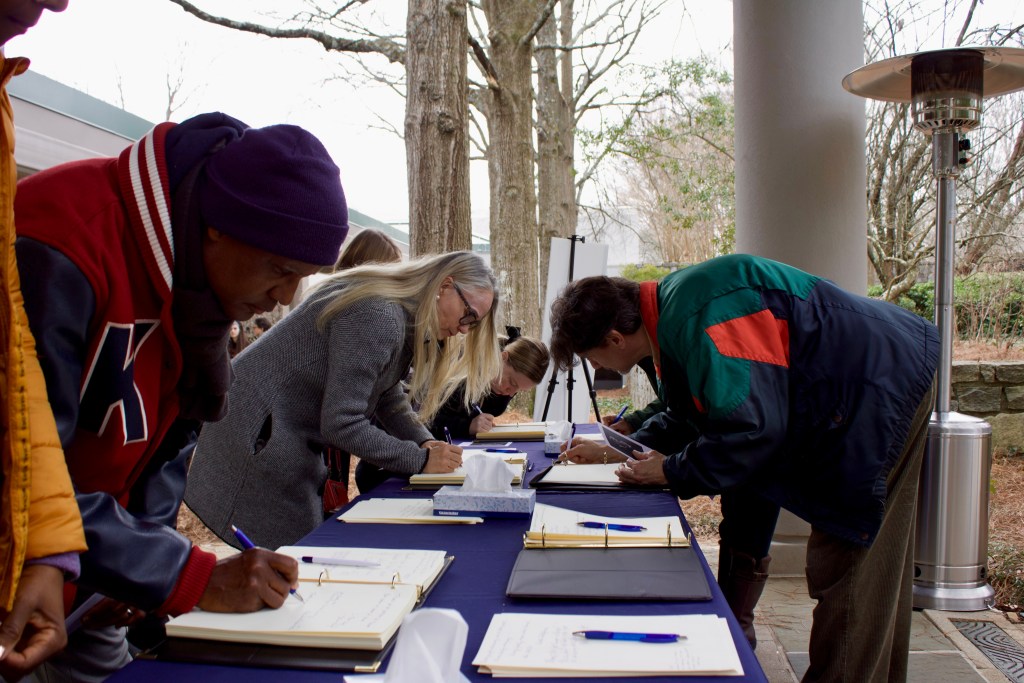
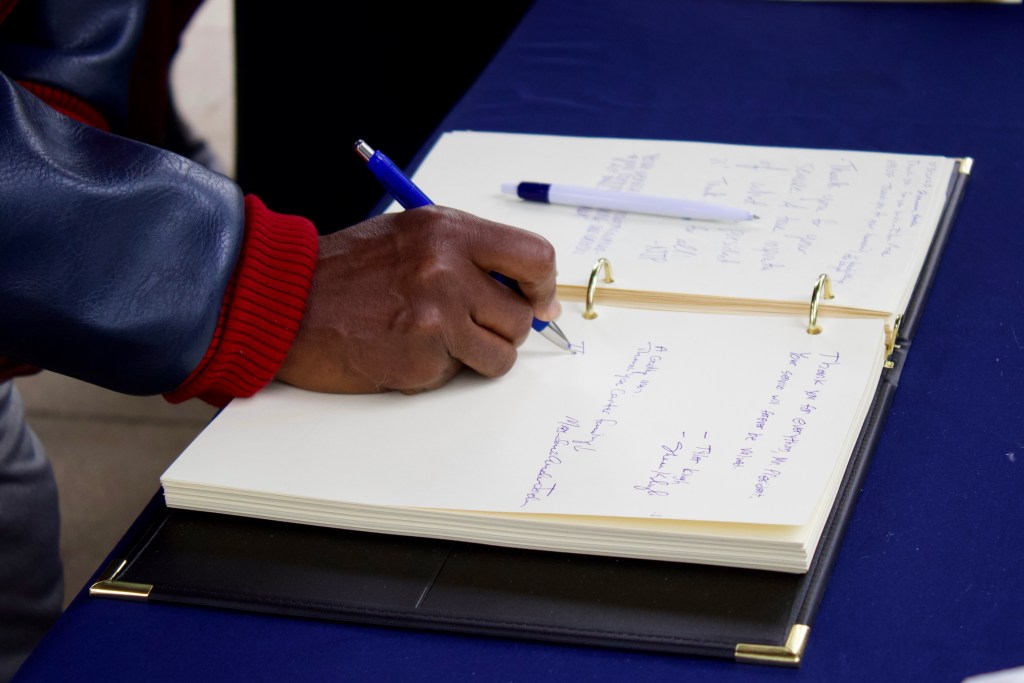
Visitors sign the guest books at the Carter Center, leaving personal messages to honor Carter’s legacy. (Photo/Claire Becknell)
