

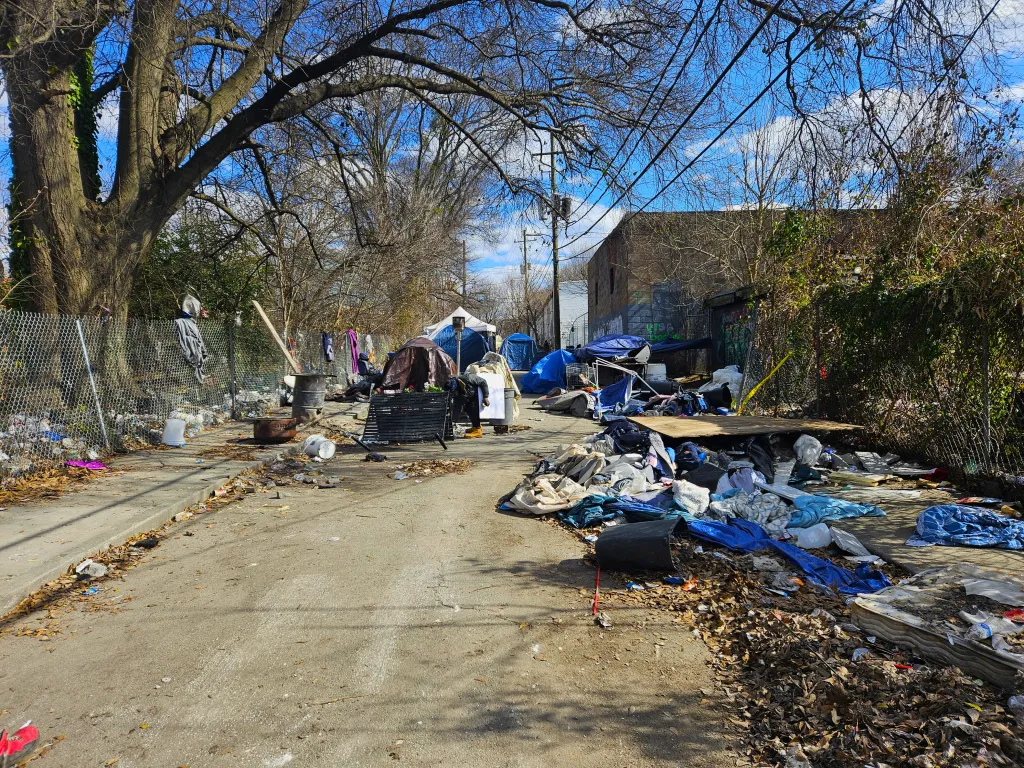

The city of Atlanta this week agreed to rehouse more than double the number of people living at a Sweet Auburn homeless encampment than it initially planned, responding to pressure from the Justice for Cornelius Taylor Coalition, which claimed officials had sharply undercounted the number of people who called the tent city home.
The Justice for Cornelius Taylor Coalition, made up of advocates from Housing Justice League, American Friends Service Committee, and other groups, is named for the unhoused man fatally hit by a bulldozer during the city’s first attempt to clear the Old Wheat Street encampment in January.
The city and its go-to homeless services nonprofit Partners for Home initially planned to clear out the Old Wheat Street encampment on Thursday and place 14 people in supportive housing — but the housing advocates spotted a glaring problem: There were at least twice that many people living on the small street next to Ebenezer Baptist Church.
After staging a protest at Atlanta City Hall on Monday, the Justice for Cornelius Taylor Coalition negotiated to delay the closure until Friday. That would give activists and city leaders more time to reconsider the 14-person headcount.
By Thursday, the two embattled groups came to an agreement: The city would find apartments or shelter beds for not 14, but 34 people.
Fifteen people signed leases at Welcome House, a permanent supportive housing complex downtown; ten have been put up in nearby hotels; one moved into Veterans Affairs housing; and the rest have temporarily moved into homeless shelters while the unlikely alliance of city officials and activists find more permanent housing for them.
The Old Wheat Street residents have packed up their belongings and relocated. On Thursday morning, a team of Atlanta police, firefighters, and public works employees disposed of the remaining tents to reopen the long-occupied roadway. (The city ended up clearing the street on Thursday, after all, because everyone had been relocated earlier in the week. The road reopened to automobile traffic on Friday.)
Many of the Old Wheat Street residents were at first wary of shelters and supportive housing, so it wasn’t easy convincing them to pack up and leave, said Annie Hyrila, Partners for Home’s chief program officer.
“The deep relationships of our street outreach partners, including members of the Justice for Cornelius Taylor Coalition, played a key role in helping residents feel heard and supported,” Hyrila said in a statement. “Many were able to tour Welcome House in advance, ask questions, and get a clear understanding of what to expect.”
“[Thursday] marked a historic day in the city of Atlanta — a powerful testament to what is possible when everyday people commit to love, dignity, and justice for our unhoused neighbors,” coalition leader Tim Franzen of the American Friends Service Committee said in a press release. “This major step forward was made possible through direct action by the Justice for Cornelius Taylor Coalition and through weeks of persistent negotiation and collaboration with the city of Atlanta.”
Franzen added: “This achievement reflects a rare and necessary partnership between community organizers and municipal leaders, demonstrating that, when the city truly listens to the voices of the people most impacted — and those who serve them directly — transformational change can happen.”
Editor’s note: This story was corrected on July 17 to note that the encampment clearing operation took place on Thursday, July 10, instead of Friday, July 11. The city decided not to delay the closure because it had already relocated everyone who lived on Old Wheat Street earlier in the week.
Why weren’t any of the 34 people given a voice for this article? Would appreciate a quote from them, since they are central to the story.