

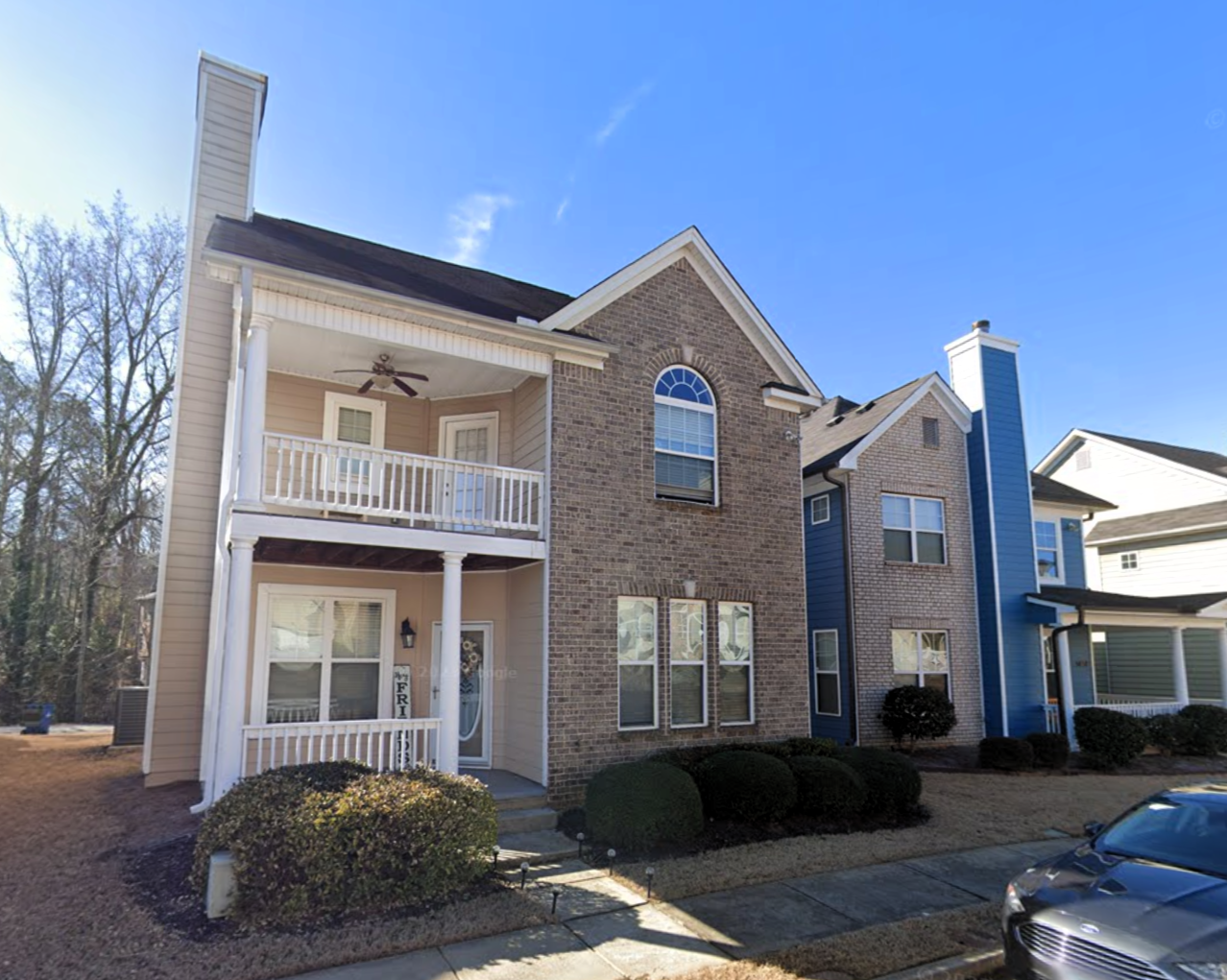
Several bills to rein in corporate mega-homebuyers failed to make it from one Gold Dome chamber to the other by Crossover Day on March 6 — but one Republican-backed Senate bill to dial back their buying power in the Georgia housing market still has a shot at becoming law.
Senate Bill 463 would prohibit corporations from purchasing more than 500 single-family homes statewide. It passed the Senate on March 3 for consideration in the House, as Sine Die, the last day of the legislative session on April 2, fast approaches.
SB 463 would not impact investors that already own over 500 homes, but, starting in 2027, it would prevent them from purchasing more. The measure would also allow people to file civil suits against companies that violate the law.
But several other bills to regulate mega-homebuyers sputtered out before Crossover Day. House Bill 1228, for instance, proposed more than doubling property tax assessments for investors that own 1,000 or more single-family rental homes, but it never made it out of committee.
The House is on track, however, to create a study committee to assess institutional investors’ impact on local housing markets and ways to expand homeownership for regular Georgians. House Resolution 656 passed out of committee and will likely receive a full House vote. Since it’s just a House study committee resolution, HR 656 doesn’t need Senate approval.
Relatedly, a new website called “Who Owns Atlanta?” maps ownership of the city’s residential property by corporations, institutional investors, individual investors, and single owners. The searchable map uses data gathered by Georgia State University geographer Taylor Shelton and Rutgers University urban planning professor Eric Seymour. (Shelton also presented research on these investors’ dominance in local housing markets during last week’s Atlanta Regional Housing Forum.)
“From the researcher tracking 1000s of parcels to residents trying to find absentee landlords, this is for you,” a new Bluesky account of the same name posted on Sunday. “You, too, nosy neighbors.”
Accessory dwelling bill moves forward, but another for denser housing failed
On Crossover Day, the House voted overwhelmingly to pass House Bill 1166, a measure that would override local zoning restrictions in single-family neighborhoods and allow homeowners to add tiny homes, often called accessory dwelling units (ADUs), to their backyards that measure 400 square feet or less.
Urbanists and housing advocates hailed HB 1166 as a major step toward embracing increased residential density, which they say will boost housing stock statewide and increase affordability.
But HB 400, a bill incentivizing local governments to allow duplexes and triplexes in single-family residential areas, failed to make it to a floor vote on Friday. Called the Community Housing Options Increase Cost Efficiency (CHOICE) Act, it would have given preference to cities and counties that relaxed single-family zoning restrictions for federal infrastructure and economic development grants administered by state agencies.
What else crossed over?
- HB 295: Called anti-homelessness legislation by housing advocates, this bill would allow property owners to demand a property-tax refund for expenses incurred from a city or county, if it declines to enforce laws against urban camping, loitering, obstructing roadways, panhandling, public intoxication, or urination — or if it does not cooperate with federal immigration authorities.
- HB 61: Billed as a way to prevent “unlawful squatting,” this measure would identify extended-stay hotel residents as guests, not tenants, no matter how long they’ve lived at the hotel. That would make it easier for innkeepers to remove people living in motels.
- SB 476: This Republican-backed bill to cut the state income tax from 5.19% to 4.99% would cut several tax credits and exemptions to offset the loss in income. That includes paring back the state’s tax credits for affordable housing projects. As of Jan. 1 2027, the law would limit the state tax credit for an affordable housing project to half the amount of the federal Low Income Housing Tax Credit (LIHTC) that it receives.
- HB 689: Following Gov. Brian Kemp’s $50 million FY 2026 grant to the state’s Housing Trust Fund for the Homeless, this bill would add homelessness prevention services to the trust fund, such as emergency rental assistance and eviction defense, to help low-income Georgians stay housed.
CORRECTION: Taylor Shelton and Eric Seymour’s research informed the Who Owns Atlanta? project, but they did not create the website or accompanying social media page, as the March 10 Housing Happenings newsletter said.
