The Atlanta City Council will hold a public work session this Thursday to discuss a controversial bill that could significantly impact the independence and authority of both the city’s Ethics Office and Office of Inspector General (OIG). Last week, five civil rights and policy advocacy groups, including the Southern Center for Human Rights, urged the city council to do just that.
The work session will give council members an opportunity to engage with Mayor Andre Dickens’ administration, which backs the measure, as well as representatives from the Ethics Office and OIG, which have raised concerns. It’s open to the public and scheduled for 10 a.m. to 12:00 p.m. in the council’s chambers.
Atlanta Inspector General Shannon Manigault has strongly opposed the legislation, warning that it would leave her office “a shell,” incapable of carrying out its mission to root out waste, fraud, abuse, and corruption in city government.
Atlanta Ethics Officer Jabu Sengova has raised her own concerns about proposed changes to her office’s governing board. The legislation would replace seats appointed by citizen groups with appointees selected by the mayor and city council.
The city council assigned the bill to the Finance and Executive Committee and the Committee on Council for review earlier this month, and the Committee on Council has held it, pending the work session. The proposed legislation advanced through the Finance and Executive Committee with modifications on Jan. 15 by a 5-2 vote.
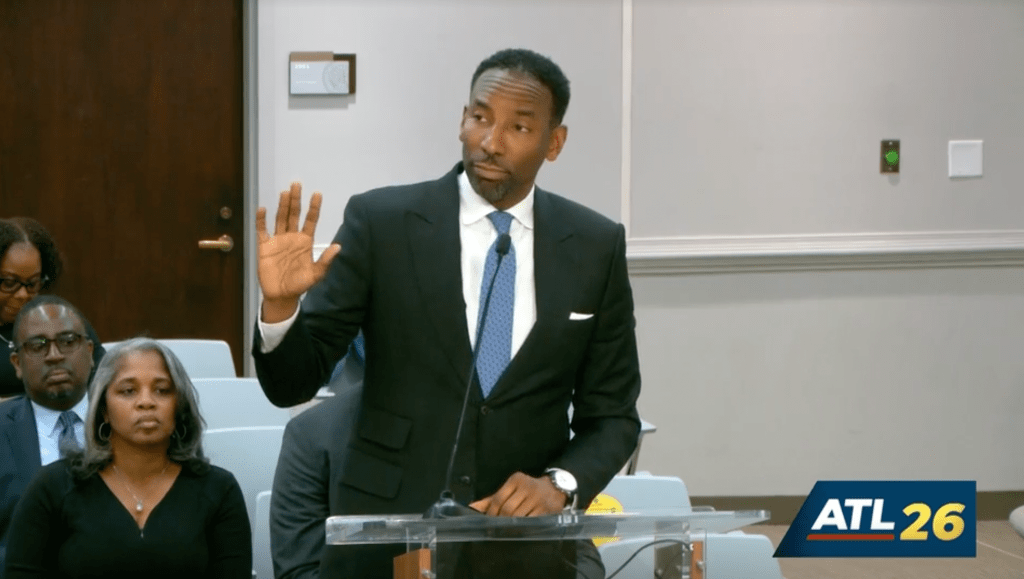
An opportunity for engagement?
The leaders of the two committees will determine the work session’s structure — Committee on Council Chair Eshé Collins and Finance and Executive Committee Chair Howard Shook. Neither returned Atlanta Civic Circle’s requests for comment.
It’s expected that the two-hour session will include time for public comment on the proposed changes, such as prohibiting the OIG from referring any findings of potential criminal wrongdoing to prosecutors and barring both offices from releasing investigative findings to the public. But according to City Council Assistant Policy Analyst Jared Evans, only the Dickens administration and the city’s two watchdog offices have been formally invited to present.
“I would encourage the public to attend, and if they can’t, to watch [online] and then reach out to their council members with thoughts,” said City Council President Doug Shipman. “Typically, this is when you can really get into the nitty-gritty of the intricacies of something like this piece of legislation.”
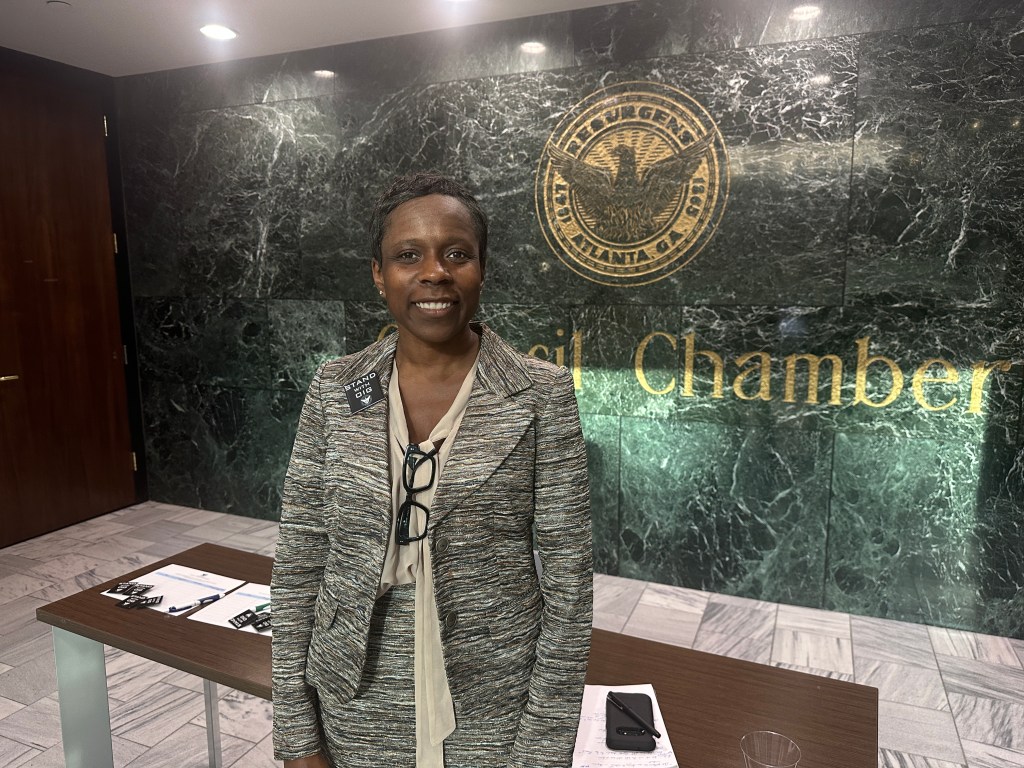
One group that hasn’t been asked to present to the council is the Association of Inspectors General (AIG), which sets best practices nationally for inspector general offices. Earlier this month, the group urged the council to reject the bill, saying it would render Atlanta’s OIG incapable of performing its independent watchdog function.
The group’s spokesperson, Dave McClintock, said he plans to travel from St. Augustine, Florida to attend the work session. He’s hoping for an opportunity to “meaningfully engage” with council members and the Dickens administration beyond the two minutes of public comment allotted to those who sign up to speak.
McClintock again expressed concern that the city council task force issuing the recommendations on which the bill is largely based hadn’t consulted with the Association of Inspectors General or other cities’ inspectors general.
Clarifying concerns
Former City Council President Felicia Moore first suggested holding a work session to hash out points of contention in the bill during public comment at the Finance and Executive Committee meeting on Jan. 15. Moore said she hopes the session will offer an opportunity to clarify and resolve the sticking points between the Dickens administration and the OIG.
“I just haven’t seen that done all in one spot,” Moore said. “Then we can better identify what the problems are, what the hiccups are, and what we’re trying to fix.”
The Dickens administration has said that some of the OIG’s investigative methods violate city employees’ rights. In a video shared on the city’s social media channels Jan. 17, City Attorney Patrise Perkins-Hooker alleged that OIG investigators “were coming into people’s offices and taking their personal cell phones and personal computers in addition to the city computers and city cell phones … even though nothing ever came of the investigation.”
The OIG denied the claims and demanded a retraction, calling the two-minute, 30 second video “a crafted fiction” in an open letter to Perkins-Hooker last week, which the OIG posted on its own social media channels.
“By stating lies in the city’s video attack on government oversight, you defamed OIG, engaged in professional misconduct, and violated the public trust,” the OIG’s response concluded.
Perkins-Hooker did not respond to a request for comment. “As we move forward, it’s important to examine OIG’s practices and processes to ensure they are effective and fair, while maintaining accountability and trust within our city,” said the city’s Jan. 17 Instagram post.
“I want to know what’s correct and what’s not correct,” said Moore, the former city council president, of the imbroglio.
The city council work session on the OIG-Ethics Office legislation is scheduled for Jan. 30 from 10 a.m.-12 p.m. It will be held in the Marvin Arrington City Council Chamber at City Hall, located at 55 Trinity Ave. SW. Members of the public may attend in person or follow proceedings online.